Hoi An World Cultural Heritage Conservation Center
Some Events Related to Historical Monuments in Hội An During Horse Years
In traditional Vietnamese culture in particular, and East Asian culture more broadly, the horse is a sacred animal ranked seventh among the twelve zodiac animals corresponding to the twelve Earthly Branches (Tý, Sửu, Dần, Mão, Thìn, Tỵ, Ngọ, Mùi, Thân, Dậu, Tuất, Hợi). The horse symbolizes strength, power, endurance, loyalty, aspiration, and success.
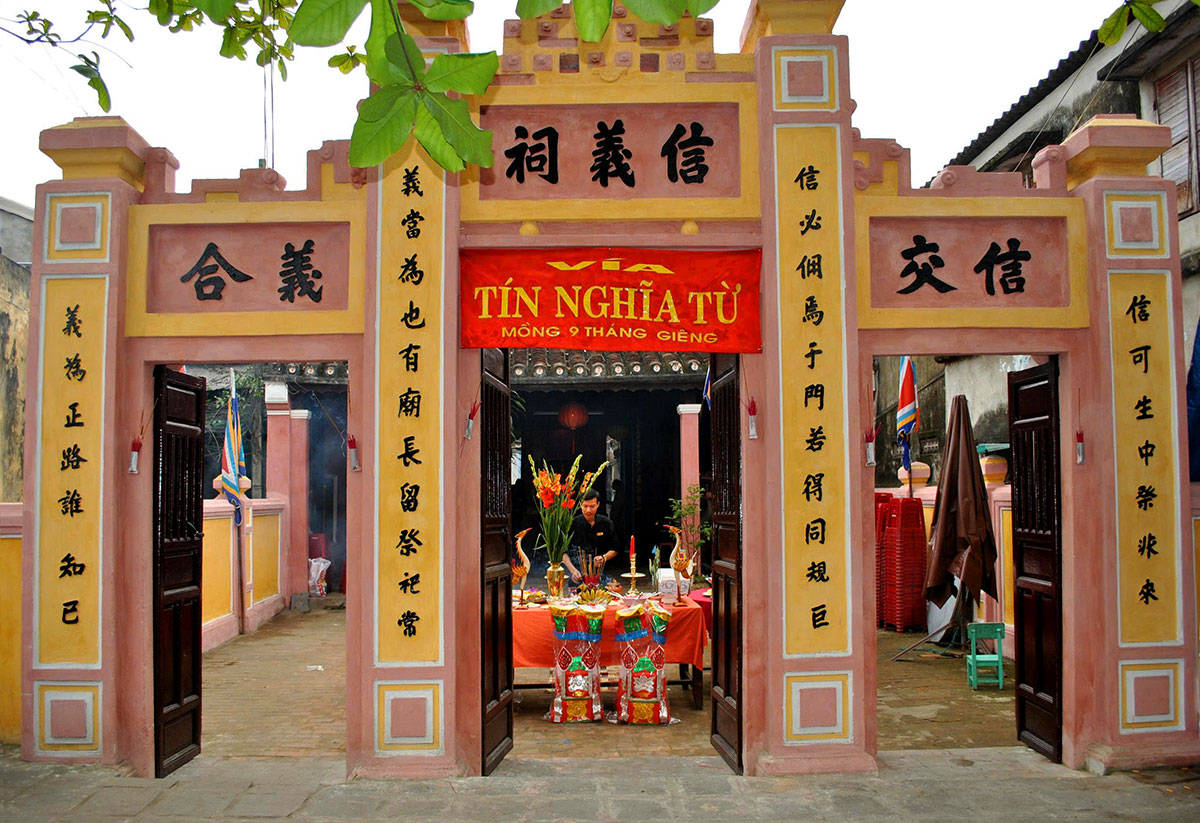
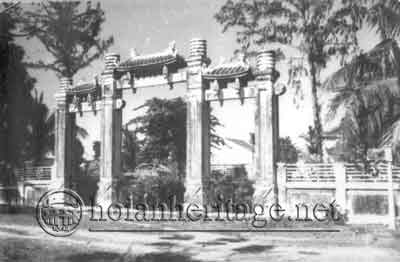
Tín Nghĩa Từ relic
For this reason, in visual arts from ancient times to the present, the image of the horse has been depicted by artisans and painters in diverse, vivid forms imbued with profound meanings. According to the lunar calendar, the years of the Horse (Ngọ) include Giáp Ngọ, Bính Ngọ, Mậu Ngọ, Canh Ngọ, and Nhâm Ngọ, and are believed to be years of luck and development.
In the Ancient Town of Hội An, beyond paintings, statues, and ancient reliefs of significant historical, cultural, and artistic value such as the statues of Xích Thố and Bạch Thố at Quan Công Temple, reliefs on the roof of the Phước Kiến Assembly Hall, or on the altar at Quan Âm Pagoda, there are also many important events recorded and preserved in monuments or associated with them, especially those relating to construction and restoration. Numerous horizontal lacquered boards, parallel couplets, ritual objects, and sacred items in these sites were also created and dedicated during Horse years.
The stele of the ancestral tomb of the Trần clan (erected around 1945) in Võng Nhi hamlet, Hội An Đông ward, records that Võng Nhi village was established in the Cảnh Thống Mậu Ngọ year, that is, 1498. This is considered one of the earliest-established villages in the Hội An region.
In 1822, the Nhâm Ngọ year, a great bronze bell was cast for Phước Lâm Pagoda. This pagoda is one of the ancient temples in Hội An granted imperial recognition (sắc tứ). According to the stele “Kế hòa thượng thuật” about Venerable Minh Giác, placed at the stele house in front of the courtyard, in the Nhâm Ngọ year (1822), Venerable Minh Giác “gathered the monks to discuss casting a large bronze bell in accordance with the spirit of Buddhist iconography, harmonized with the image of Bồ Lao[1], so that its sound might proclaim the Dharma, resonate through the four elements to form its shape, follow the cosmic order to awaken delusion, echo in purity to stimulate meditation, and ring through the quiet night to dispel worldly dreams.” The great bell remains intact at the pagoda to this day. The same stele also records that earlier, in the Mậu Ngọ year (1798), the followers of Di Đà Pagoda invited him to serve as abbot and to open a grand ordination platform, giving him the title Minh Giác Hòa thượng. Later, he returned to Phước Lâm Pagoda, where he had lived in his youth, and undertook restorations that made the pagoda increasingly dignified.
In 1894, the Giáp Ngọ year, Chúc Thánh Pagoda was restored. This pagoda is the ancestral temple of the Lâm Tế Chúc Thánh Zen lineage in Hội An and is also among the ancient temples granted imperial recognition. Founded by Zen Master Minh Hải around the late 17th to early 18th century, it has undergone multiple restorations. According to a restoration stele erected in the Duy Tân Ất Mão year (1915), “During the Ất Tỵ years of Emperor Thiệu Trị and the Kỷ Dậu years of Emperor Tự Đức (1845–1849), Venerable Quán Thông carried out several restorations of immeasurable merit. In the Nhâm Thìn year of Emperor Thành Thái (1892), the abbot Quảng Viên refurbished the structure, making it more beautiful. In the Giáp Ngọ year of Thành Thái (1894), the chief monk Chứng Đạo together with the deputy monk Quảng Đạt further renovated it. Continuing into the Tân Hợi year of Duy Tân (1911), the abbot Phổ Bửu and his master gathered contributions from all directions, combining countless rays into radiant brilliance. Only then were the beams and rafters expanded, the terraces and roofs broadened, and the walls and lotus thrones properly arranged.”
Chúc Thánh Pagoda currently preserves numerous artifacts, statues, and inscriptions related to the introduction and development of Buddhism in Đàng Trong and Vietnam. Among the eleven sets of parallel couplets at the pagoda, one set was established in the Canh Ngọ year (1930) with the content: “Buddha comes from the Western realm, the wondrous Dharma fully contained within the world; The Patriarch arrives in the Southern land, the transmitted Way illuminates the entire Zen forest.”
In 1906, the Bính Ngọ year, Tín Nghĩa Shrine of the Tín Nghĩa association was rebuilt. This shrine is currently located at 05 Nguyễn Huệ Street, Hội An ward, and annually holds a ritual for peace on the 9th day of the first lunar month. The reconstruction event is recorded on a crossbeam and two stone steles at the shrine. The crossbeam inscription in Chinese characters reads:
“In the eighteenth year of Thành Thái, cyclical year Bính Ngọ, on the tenth day of the sixth month, the Minh Hương community of the Tín Nghĩa association jointly constructed [this shrine].”
The stele inscription states: “At that time, prosperity could be seen. In the Ất Hợi year[2], our association, inspired by faith and righteousness, gathered at the charitable cemetery to arrange offerings and rituals. Initially, conditions were modest, and there was not yet a proper building for worship. Later, although a shrine existed, access roads were inadequate, so the old foundation was removed and a better site selected. In the following year, devoted men and women chose an auspicious day to renovate and renew, deciding to demolish the old and rebuild on that land. (…) Construction began in the fifth month and was completed in the seventh month. The entire process has been clearly recorded on this stone stele to be preserved for generations.”
In 1918, the Mậu Ngọ year, the reconstruction of Thanh Minh Shrine of Minh Hương village was completed. Thanh Minh Shrine, originally located in the Cửa Suối area of Thanh Hà village, was built long ago to worship wandering spirits. In the second year of Khải Định (Đinh Tỵ, 1917), it was relocated and rebuilt at a new site, with completion in the first lunar month of Mậu Ngọ (1918). The shrine faces the direction of Cấn Sửu toward Khôn Mùi. The existing stele inscription[3] states: “Graves abandoned on desolate battlefields, spirits wandering year after year without proper rites, where can these souls rely? The ancients said that even animals pity their own kind; moreover, people of the same origin should feel compassion for one another. Building this shrine is an act of righteousness, and conducting rituals is likewise righteous. Only then can it truly be called an act of benevolence. The bell of Chúc Thánh Pagoda and the drum of Phước Lâm Pagoda echo faintly in the ear. Facing Thanh Minh Shrine of the Five Communities to the south, their sounds resound in waves, left and right across the vast expanse. This is indeed a site of auspicious feng shui.”
At other monuments such as Vạn Đức Pagoda, Viên Giác Pagoda, Sơn Phong Communal House, Sơn Phô Communal House, Quan Công Temple, and the Cẩm Nam Whale Temple, many horizontal lacquered boards and parallel couplets established and dedicated during Horse years are still preserved, including pieces such as “Trừng Hán Cung” and “Phật Pháp Vương Chương.”
In the Ancient Town of Hội An, beyond paintings, statues, and ancient reliefs of significant historical, cultural, and artistic value such as the statues of Xích Thố and Bạch Thố at Quan Công Temple, reliefs on the roof of the Phước Kiến Assembly Hall, or on the altar at Quan Âm Pagoda, there are also many important events recorded and preserved in monuments or associated with them, especially those relating to construction and restoration. Numerous horizontal lacquered boards, parallel couplets, ritual objects, and sacred items in these sites were also created and dedicated during Horse years.
The stele of the ancestral tomb of the Trần clan (erected around 1945) in Võng Nhi hamlet, Hội An Đông ward, records that Võng Nhi village was established in the Cảnh Thống Mậu Ngọ year, that is, 1498. This is considered one of the earliest-established villages in the Hội An region.
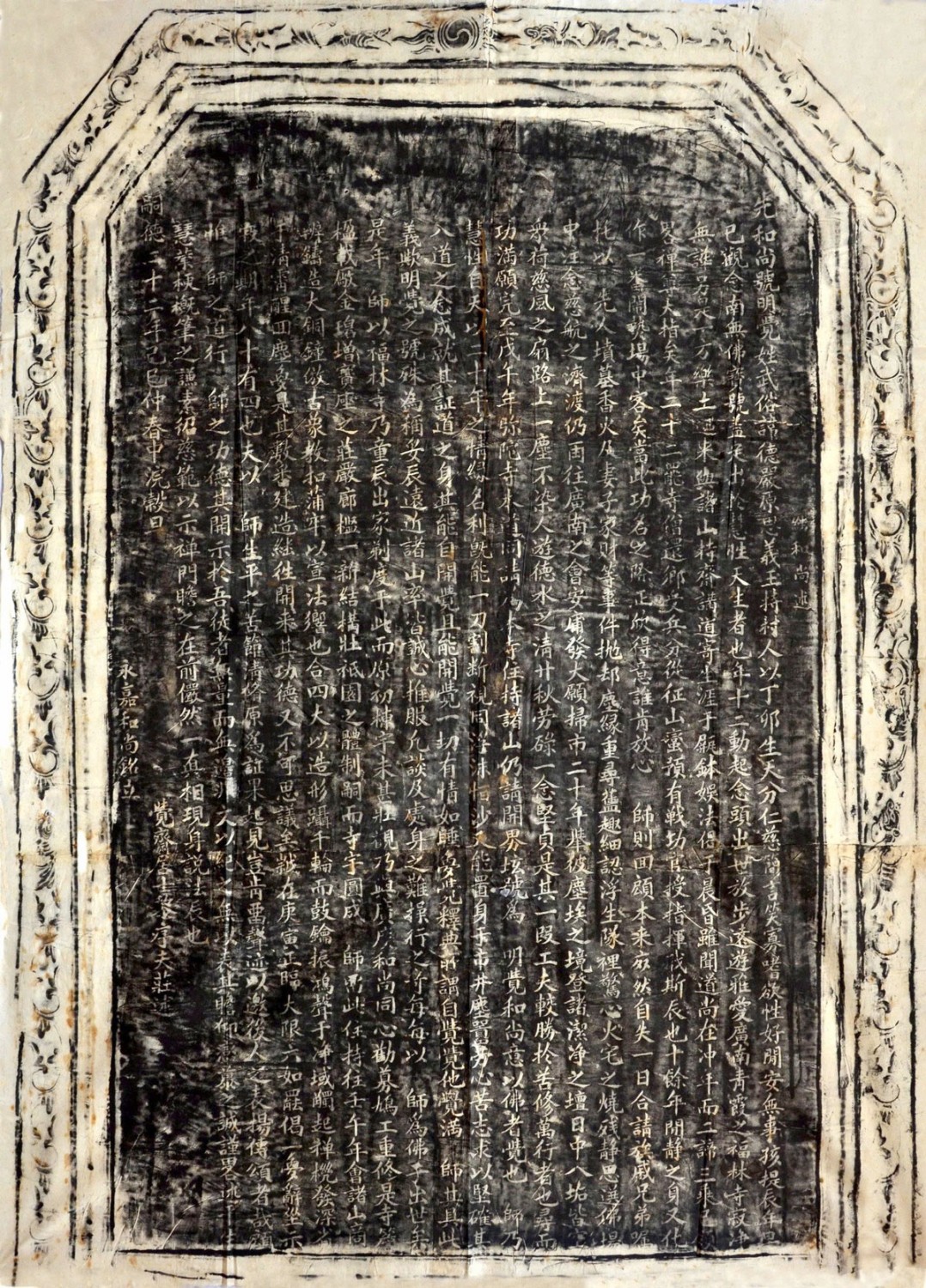
Rubbing of the ‘Ke Hoa Thuong Thuat’ stele inscription at Phuoc Lam Pagoda
In 1822, the Nhâm Ngọ year, a great bronze bell was cast for Phước Lâm Pagoda. This pagoda is one of the ancient temples in Hội An granted imperial recognition (sắc tứ). According to the stele “Kế hòa thượng thuật” about Venerable Minh Giác, placed at the stele house in front of the courtyard, in the Nhâm Ngọ year (1822), Venerable Minh Giác “gathered the monks to discuss casting a large bronze bell in accordance with the spirit of Buddhist iconography, harmonized with the image of Bồ Lao[1], so that its sound might proclaim the Dharma, resonate through the four elements to form its shape, follow the cosmic order to awaken delusion, echo in purity to stimulate meditation, and ring through the quiet night to dispel worldly dreams.” The great bell remains intact at the pagoda to this day. The same stele also records that earlier, in the Mậu Ngọ year (1798), the followers of Di Đà Pagoda invited him to serve as abbot and to open a grand ordination platform, giving him the title Minh Giác Hòa thượng. Later, he returned to Phước Lâm Pagoda, where he had lived in his youth, and undertook restorations that made the pagoda increasingly dignified.
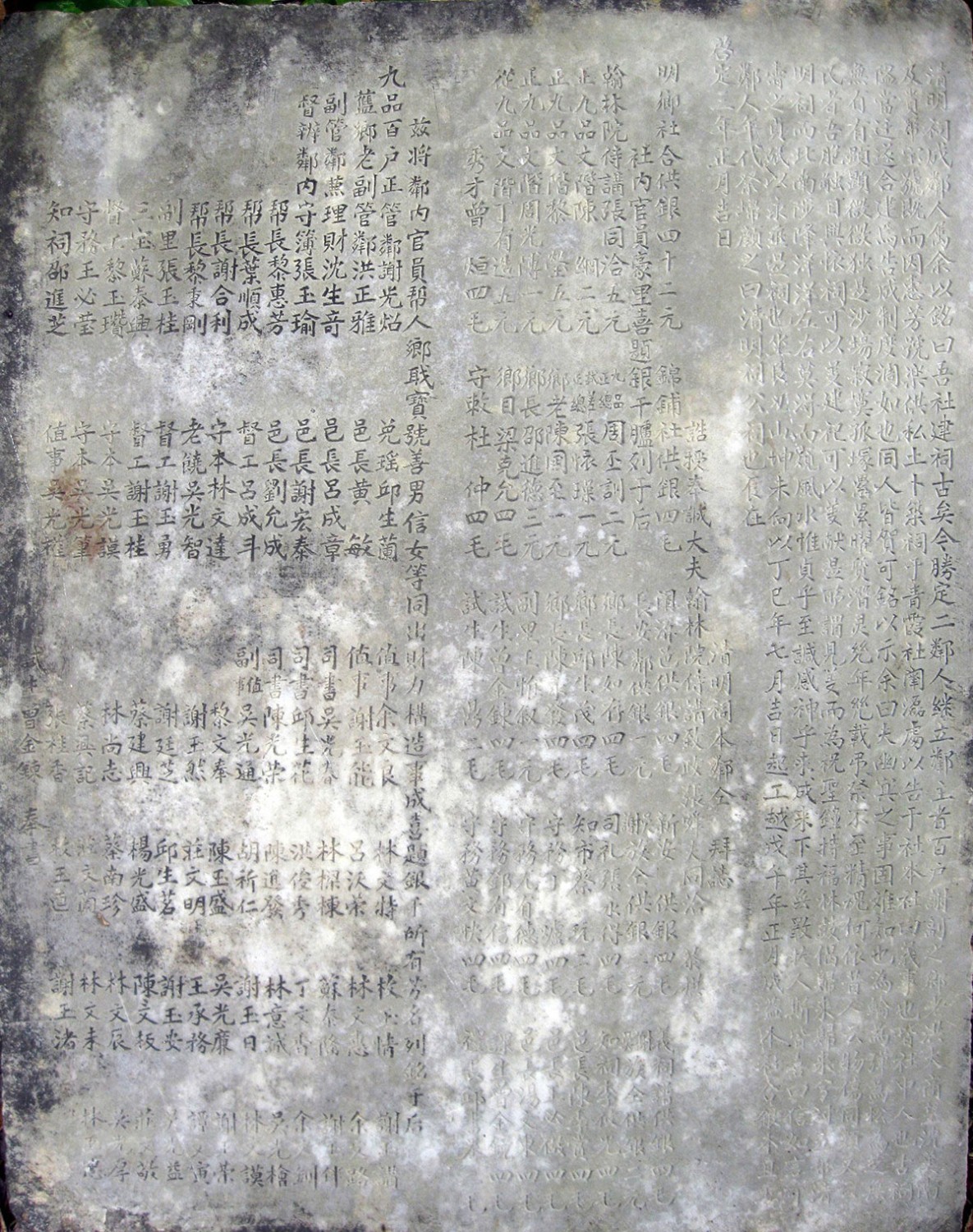
Stele Inscription of Thanh Minh Tu of the Minh Huong Community
In 1894, the Giáp Ngọ year, Chúc Thánh Pagoda was restored. This pagoda is the ancestral temple of the Lâm Tế Chúc Thánh Zen lineage in Hội An and is also among the ancient temples granted imperial recognition. Founded by Zen Master Minh Hải around the late 17th to early 18th century, it has undergone multiple restorations. According to a restoration stele erected in the Duy Tân Ất Mão year (1915), “During the Ất Tỵ years of Emperor Thiệu Trị and the Kỷ Dậu years of Emperor Tự Đức (1845–1849), Venerable Quán Thông carried out several restorations of immeasurable merit. In the Nhâm Thìn year of Emperor Thành Thái (1892), the abbot Quảng Viên refurbished the structure, making it more beautiful. In the Giáp Ngọ year of Thành Thái (1894), the chief monk Chứng Đạo together with the deputy monk Quảng Đạt further renovated it. Continuing into the Tân Hợi year of Duy Tân (1911), the abbot Phổ Bửu and his master gathered contributions from all directions, combining countless rays into radiant brilliance. Only then were the beams and rafters expanded, the terraces and roofs broadened, and the walls and lotus thrones properly arranged.”
Chúc Thánh Pagoda currently preserves numerous artifacts, statues, and inscriptions related to the introduction and development of Buddhism in Đàng Trong and Vietnam. Among the eleven sets of parallel couplets at the pagoda, one set was established in the Canh Ngọ year (1930) with the content: “Buddha comes from the Western realm, the wondrous Dharma fully contained within the world; The Patriarch arrives in the Southern land, the transmitted Way illuminates the entire Zen forest.”
In 1906, the Bính Ngọ year, Tín Nghĩa Shrine of the Tín Nghĩa association was rebuilt. This shrine is currently located at 05 Nguyễn Huệ Street, Hội An ward, and annually holds a ritual for peace on the 9th day of the first lunar month. The reconstruction event is recorded on a crossbeam and two stone steles at the shrine. The crossbeam inscription in Chinese characters reads:
“In the eighteenth year of Thành Thái, cyclical year Bính Ngọ, on the tenth day of the sixth month, the Minh Hương community of the Tín Nghĩa association jointly constructed [this shrine].”
The stele inscription states: “At that time, prosperity could be seen. In the Ất Hợi year[2], our association, inspired by faith and righteousness, gathered at the charitable cemetery to arrange offerings and rituals. Initially, conditions were modest, and there was not yet a proper building for worship. Later, although a shrine existed, access roads were inadequate, so the old foundation was removed and a better site selected. In the following year, devoted men and women chose an auspicious day to renovate and renew, deciding to demolish the old and rebuild on that land. (…) Construction began in the fifth month and was completed in the seventh month. The entire process has been clearly recorded on this stone stele to be preserved for generations.”
In 1918, the Mậu Ngọ year, the reconstruction of Thanh Minh Shrine of Minh Hương village was completed. Thanh Minh Shrine, originally located in the Cửa Suối area of Thanh Hà village, was built long ago to worship wandering spirits. In the second year of Khải Định (Đinh Tỵ, 1917), it was relocated and rebuilt at a new site, with completion in the first lunar month of Mậu Ngọ (1918). The shrine faces the direction of Cấn Sửu toward Khôn Mùi. The existing stele inscription[3] states: “Graves abandoned on desolate battlefields, spirits wandering year after year without proper rites, where can these souls rely? The ancients said that even animals pity their own kind; moreover, people of the same origin should feel compassion for one another. Building this shrine is an act of righteousness, and conducting rituals is likewise righteous. Only then can it truly be called an act of benevolence. The bell of Chúc Thánh Pagoda and the drum of Phước Lâm Pagoda echo faintly in the ear. Facing Thanh Minh Shrine of the Five Communities to the south, their sounds resound in waves, left and right across the vast expanse. This is indeed a site of auspicious feng shui.”
At other monuments such as Vạn Đức Pagoda, Viên Giác Pagoda, Sơn Phong Communal House, Sơn Phô Communal House, Quan Công Temple, and the Cẩm Nam Whale Temple, many horizontal lacquered boards and parallel couplets established and dedicated during Horse years are still preserved, including pieces such as “Trừng Hán Cung” and “Phật Pháp Vương Chương.”
[1] A kind of creature which, upon encountering a great fish (whale), runs and roars loudly; therefore, when casting bells, people shape the handle (loop) in the form of a Bồ Lao so that the bell produces a loud sound.
[2] It may be the year 1875
[3] There are three stone steles inscribed with Chinese characters, all of which are hậu steles recording the reasons for establishing the shrine and the merits of those who contributed labor and resources to its construction. The steles are dated to the third year of the Khải Định reign.
Author: Võ Hồng Việt
Source: Hoi An Center for the Conservation of World Cultural Heritage
Newer articles
Older articles