Hoi An World Cultural Heritage Conservation Center
Early Spring Rituals in Hội An through Archived Hán-Nôm Documents
In recent years, the Hội An Center for Cultural Heritage Management and Preservation has carried out extensive efforts to collect Hán-Nôm documents relating to Hội An. These efforts have resulted in the acquisition of thousands of pages of valuable archival materials, including both originals and copies.
The collected Hán-Nôm sources span many different genres, such as stele inscriptions, genealogies, imperial ordinations, contracts, cadastral records, and Buddhist scriptures, and appear in various material forms including rubbings, dó paper manuscripts, and woodblocks. This body of documentation provides important information on the history and culture of Hội An, the migration and settlement of lineages and villages, and the processes through which different areas of the Hội An region were formed. In addition, it contains detailed records on customs, belief practices, ritual worship, and ceremonial observances during the early spring and New Year period, showing that the worship of tutelary deities at communal houses was accorded particular attention and significance.
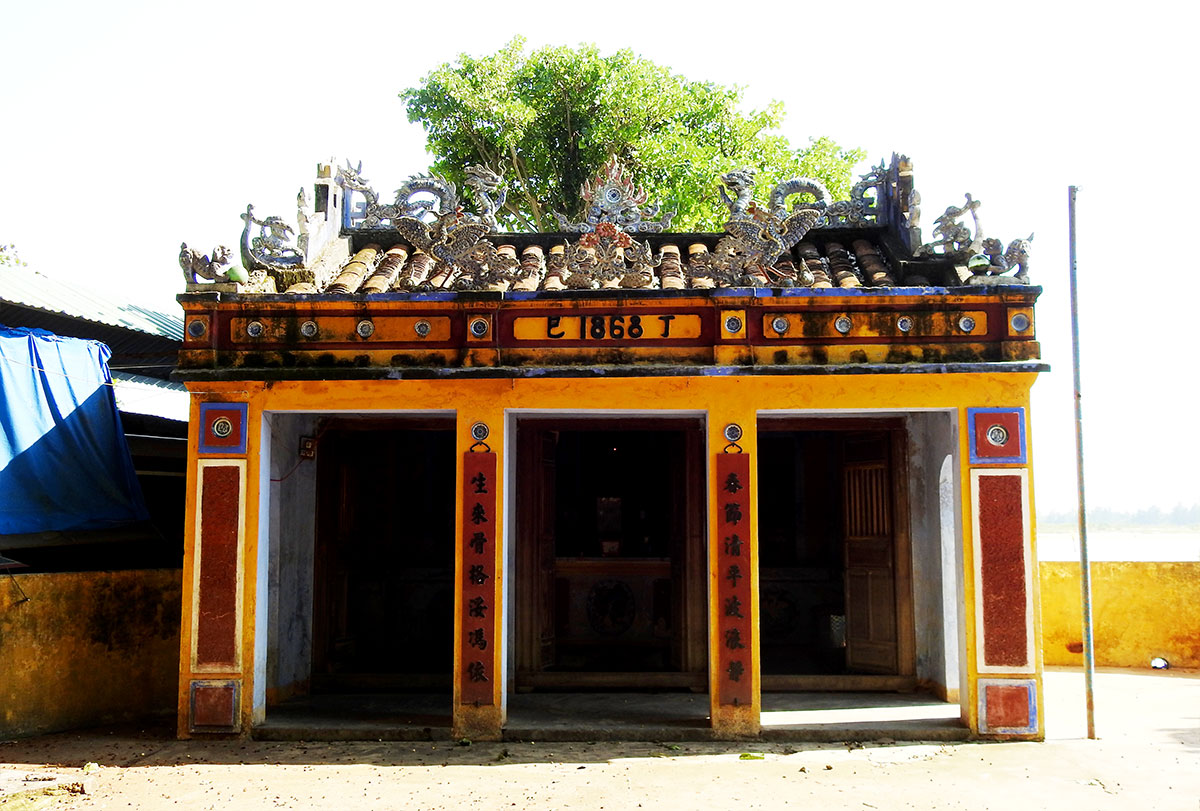
Photo: Hồng Việt
In the spiritual consciousness of the Vietnamese people, Lunar New Year is not only the nation’s most important traditional festival but also carries profound sacred meaning as a time for people to express gratitude toward their roots and origins. Within this framework, ancestor worship and ritual offering have become essential spiritual practices. The ways in which the spiritual life of a residential community or village was organized, including local ritual regulations, the major ceremonial dates, the types of offerings used on specific festive occasions, the places of worship, and even the communal rice fields or urban land plots leased out to generate income for incense and ritual expenses, were all specifically recorded in the Tam Bửu Vụ registers. Among the preserved archival materials are annual listings of ritual observances and expenditures maintained by the Lý Tam Bửu Vụ. In this group of documents, the Regulations on Ritual Observances at Shrines and Communal Houses, compiled in 1765, is considered the earliest known document of this type. It is an important source for understanding the customs, cultural life, and religious and belief practices of a segment of the community in Hội An. The document records numerous ceremonial occasions, including Lunar New Year, Khai Hạ, the Lantern Festival, the Thượng Nguyên Festival, the Túc Yết Rite, Thanh Minh, and the Thần Nông Offering Ceremony.
Regarding these ceremonial occasions, especially Lunar New Year and Thượng Nguyên, the Nguyễn emperors paid considerable attention to them. Đại Nam Thực Lục records an imperial directive concerning the Thượng Nguyên festival as follows:
“Thus the Ministry of Rites was ordered to examine past and present precedents, weigh them carefully, and submit recommendations to the throne. When the proposals were presented, the emperor decreed: henceforth, on the occasions of the Winter Solstice, Thượng Nguyên, Trung Nguyên, and Hạ Nguyên, offerings of food trays shall be made at the temples and at Phụng Tiên Palace, with rituals following the precedent of the Đoan Dương Festival (except that if Thượng Nguyên coincides with a birthday observance at Phụng Tiên Palace, the ritual offerings shall follow existing custom and no additional trays are required)… As for Thượng Nguyên and the Mid-Autumn Festival, lanterns shall be hung throughout the night to highlight these festivals occurring in beautiful seasonal weather.”
Lunar New Year marks the first festival of the year, beginning with New Year’s Eve and the Trừ Tịch rite. The term Nguyên Đán itself carries the meaning of “the first dawn”, with Nguyên meaning “beginning” and Đán meaning “early morning”. It signals the beginning of a new year and the start of all work and activity, when all things are renewed in welcome of spring. This observance was held at most monuments and heritage sites in Hội An, and ritual offerings and taboos during this period were therefore treated with particular seriousness. Typical offerings included fruit trays, oil lamps, lamp oil, ngũ sinh cakes, votive gold and silver paper, incense, and candles. Tết was also a time for visiting one another and exchanging meaningful New Year greetings. During this period, lanterns were often floated or hung at gateways and along the streets, carrying the wishes and hopes of the people for the coming year.
The Khai Hạ ceremony, also known as the lowering of the New Year bamboo pole or the thanksgiving rite for the New Year, is the custom of taking down the cây nêu, usually held on the seventh day of the first lunar month each year. The bamboo pole, erected during the New Year season, was decorated for Tết, and white lime-drawn bows and arrows were often marked in front of houses to ward off evil spirits and misfortune. On this day, the pole would be lowered to welcome the joyful days of the new spring and to pray for good fortune throughout the year. In Hội An in particular, the erection of the New Year bamboo pole has become a regular annual practice at religious and cultural heritage sites, and as a result, the Khai Hạ ceremony continues to be maintained every year.
The Hoa Đăng Festival, or Lantern Offering Ceremony, is a ritual of illuminated flower-shaped lanterns held on the evening of the twelfth day of the first lunar month. This ceremony was performed at monuments such as the Japanese Covered Bridge, Quan Âm Pagoda, and Tụy Tiên Hall, using offerings such as candles, oil lamps, firecrackers, incense materials, votive paper, tea, alcohol, cakes, fruit, betel, and areca. On these days, lanterns were lit to honour spiritual, sacred, and cultural values during important festive occasions, especially those at the beginning of the year. Each illuminated lantern represented a wish offered at the start of spring.
The Nguyên Tiêu Festival, also known as the Thượng Nguyên Festival, begins on the night of the fourteenth and continues through the fifteenth day of the first lunar month, and is one of the major ritual occasions of the year. This observance took place at many heritage sites, including the Japanese Covered Bridge, Quan Âm Hall, Hải Bình Palace, Cẩm Hà Palace, and Trừng Hán Palace. Offerings for the Thượng Nguyên ceremony commonly included oil lamps, candles, lanterns, tea, wine, cakes, fruit, betel, areca, votive paper, incense materials, multicoloured ritual paper, and inscribed ceremonial papers, all carefully arranged on ritual trays. These offerings expressed prayers for peace and wellbeing in the new year, as well as reverence and gratitude for divine protection and prosperity in the year that had passed.
The Túc Yết Rite was held at Tụy Tiên Hall on the first day of the second lunar month. This ceremony served as the formal presentation of village functionaries before the deities and honoured the former sages who first reclaimed the land, the later sages who established the village foundations, and those who had contributed to the protection of the settlement and communal house. One particularly distinctive feature of this rite was the inclusion of a live pig, together with ngũ sinh, tam sinh, candles, cakes, fruit, votive paper, betel, areca, incense, lamps, and incense materials. This is one of the ritual practices that clearly embodies the Vietnamese moral principle of remembering the source of one’s blessings.
Next comes the Thanh Minh observance, usually held at ritual altars and family burial grounds during the third lunar month. Typical offerings included votive paper, incense, candles, tea, alcohol, firecrackers, fruit, cakes, red inscribed ceremonial paper, wax candles, and porridge. When people speak of Thanh Minh, they often think immediately of grave-sweeping rituals. It is a time when descendants turn toward their roots and remember their ancestors, and therefore ritual preparation had to be carefully completed. The days of Thanh Minh thus became, in effect, a kind of family festival, a time for reunion and for descendants to demonstrate filial piety toward those who had passed away.
The Thần Nông Offering Ceremony was held toward the end of the third lunar month in remembrance of the deity overseeing agriculture. Offerings for this rite included wax candles, boxed cakes, votive paper, ngũ sinh, a red cloth, incense, betel, areca, tea, alcohol, firecrackers, and sticky rice. Ritual worship of Thần Nông was conducted both at the imperial court and in local communities across the country, reflecting the high importance accorded to agricultural production. It also expressed reverence and gratitude toward the deity, together with prayers for divine protection in farming and for peace and prosperity throughout the nation in the new year.
The body of Hán-Nôm documentation in Hội An has made a major contribution to the study of the city’s history and culture, the histories of its villages, migration and settlement processes, the formation of residential communities, everyday life, customs and traditions, and patterns of trade and commercial exchange with other countries. However, after a long period marked by war damage and the impacts of a harsh climate, the preservation of these ancient and precious materials has become increasingly difficult and challenging, and many are at risk of deterioration and loss. For this reason, timely collection efforts and stronger public awareness of the need to protect this documentary heritage are both extremely necessary and urgent, not only in the present but also for the future.
Author: Lê Thị Lưu
Source: Hoi An Center for the Conservation of World Cultural Heritage
Newer articles
Older articles