Hoi An World Cultural Heritage Conservation Center
Female Deity Worship in Kim Bồng Village
The worship of female deities is one of the most widespread forms of belief in Vietnamese society. It centers on the veneration of female figures, rooted in a long-standing cultural tradition that values the role of women, especially mothers, within the family and the broader community. From this foundation, religious institutions, rituals, festivals, and related practices have developed, contributing to the diversity of Vietnamese culture. In Hội An in general, these female deities are commonly referred to by the honorific “Bà,” expressing a shared sense of reverence.
In the past, in Kim Bồng Village, the worship of female deities was an important aspect of local spiritual life. This is evidenced by the construction of religious structures dedicated to these deities and the organization of ritual activities to honor their merits. Previously, each deity had its own separate place of worship. However, due to historical upheavals, many of these structures were partially destroyed. As a result, some communal houses and shrines today incorporate multiple deities in shared worship alongside the principal tutelary spirit.
Field surveys and documentation indicate that the female deities worshipped in Kim Bồng Village include the Five Element Goddesses (Ngũ Hành Tiên Nương), the Nine Heavens Mysterious Lady (Cửu Thiên Huyền Nữ), the Water Spirit Goddess (Thủy Tinh Thần Nữ), and the Water Dragon Holy Mother (Thủy Long Thánh Nương). As in many other communities in Hội An, local residents collectively venerate these female deities as “Bà,” and their places of worship are commonly referred to as lăng Bà (Lady shrines).
At present, the only surviving site dedicated specifically to the Five Element Goddesses in Kim Bồng Village is the Phước Thắng Lady Shrine (now in Phước Trung hamlet). The Five Element Goddesses represent a group of five natural deities: the Metal Goddess, Wood Goddess, Water Goddess, Fire Goddess, and Earth Goddess. In folk belief, the Five Elements are closely linked to all aspects of human life, regardless of occupation or place of residence. Worshippers pray to these deities for protection, health, good fortune, and relief from misfortune in the course of daily life[1].
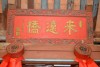
The exact date of construction of the Phước Thắng Lady Shrine remains unknown. However, based on oral accounts from local elders as well as its architectural scale, layout, and decorative motifs, it is estimated to have been built in the early decades of the twentieth century. The shrine features Sino-Nôm parallel sentences praising the deity, such as: “Manifest in sacred brilliance, truly a divine lady; radiant in virtue, revealed as an immortal mother,” and “Assisting the Three Powers to sustain eternity; transforming the Five Virtues across the ages.” On the main altar, ceramic inlay forms the inscription “Ngũ Hành miếu” (Temple of the Five Elements). Each year, the local community conducts formal rituals at the shrine on the 10th day of the first lunar month and the 10th day of the seventh lunar month.
At Trung Giang Shrine (Trung Hà hamlet), in addition to the principal deity Quan Thánh Đế Quân, there is also combined worship of the Village Tutelary Spirit and the Five Element Goddesses. Similarly, at Phước Thắng Communal Mausoleum (now Phước Trung hamlet), the Five Element Goddesses are worshipped in a separate compartment, with spirit tablets lacquered in red and gilded, intricately carved.
In Đông Hà hamlet, there were formerly several religious and belief-related structures such as Hội Nguyên Pagoda, Lady shrines, Thiện Nghệ Phổ Shrine, and a communal hall. Unfortunately, natural disasters and warfare led to their complete destruction. Only in recent years have local Buddhist followers and residents been able to restore Hội Nguyên Pagoda and the Lady shrine. According to tradition, an annual offering ceremony at the Lady shrine is still maintained on the 16th day of the first lunar month.
In the past, rituals honoring craft ancestors were held at Thiện Nghệ Phổ Shrine. After its destruction, these ceremonies were relocated to the Kim Bồng Ancestral Hall of Founding Ancestors. This activity carries deep cultural significance, expressing gratitude to the craft founders and village pioneers while praying for favorable conditions in the coming year. Notably, it includes reverence for the Nine Heavens Mysterious Lady, who is venerated in Vietnamese tradition as the patron deity of carpentry and construction trades.
In Trung Hà hamlet today, along the riverside road, there remains a Lady shrine belonging to the Tân Tịnh community, located about 100 meters northeast of Trung Giang Shrine. Originally, the Tân Tịnh Lady Shrine was relatively large but suffered riverbank erosion and collapsed into the river. It was later rebuilt on a smaller scale. A sandstone slab believed to be from the original structure is still preserved there, featuring refined carvings in a “three-peak” composition, with a central motif of a stylized foliate dragon motif supporting a sun disc, surrounded by a border of the Buddhist swastika motif (卍), and flanked by decorative elements of Vase in the East (left), Fruit in the West (right).
At Phước Thắng Communal Mausoleum, in addition to the principal deity Cao Các Đại Vương, there is also combined worship of several female deities, including the Five Element Goddesses, the Water Spirit Goddess, and the Water Dragon Holy Mother. Each of these deities has a separate wooden spirit tablet, lacquered and gilded, with finely executed decorative details.
Regarding their origins, scholars have identified the Water Dragon Holy Mother as a female deity associated with aquatic environments, commonly found in the belief systems of coastal communities in central and southern Vietnam. As a benevolent deity protecting those engaged in riverine and maritime livelihoods, she was officially recognized and granted imperial titles by the Nguyễn dynasty, allowing her worship across various localities. The spirit tablet at the shrine bears a Sino-Nôm inscription invoking her as a divinely endowed, responsive sacred being.
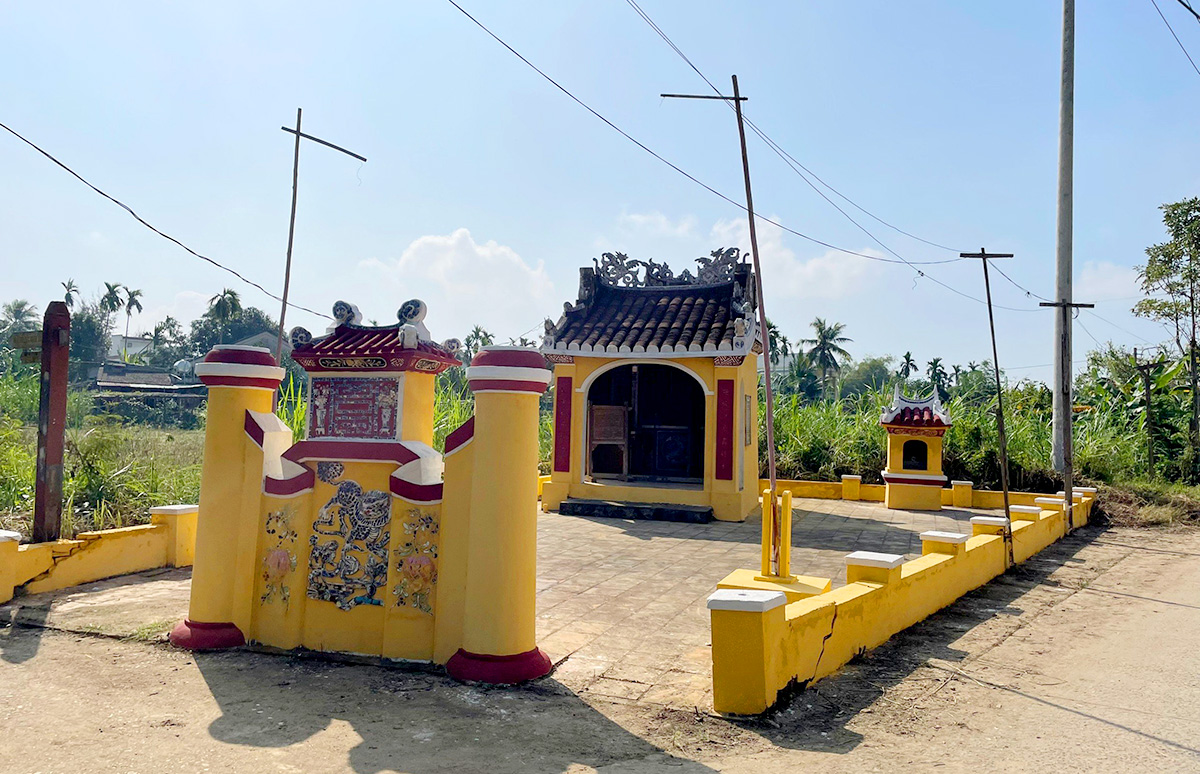
Lăng Bà is a temple dedicated to a female deity.
The Water Spirit Goddess is likewise a deity of the aquatic realm, bearing the title of the Second Palace Water Spirit Lady. Like the Water Dragon Holy Mother, she is believed to provide spiritual protection for occupations connected to rivers and the sea. Her spirit tablet bears an invocation identifying her as a revered divine lady of the water domain.
Through this system of worship, the important role of female deities in the spiritual and cultural life of Kim Bồng Village becomes evident. Their presence within the local pantheon contributes to a distinctive belief system that reflects the historical processes of cultural contact and exchange in Kim Bồng in particular and Hội An more broadly. At the same time, it enriches the diversity of intangible cultural heritage in the region.
References:
Through this system of worship, the important role of female deities in the spiritual and cultural life of Kim Bồng Village becomes evident. Their presence within the local pantheon contributes to a distinctive belief system that reflects the historical processes of cultural contact and exchange in Kim Bồng in particular and Hội An more broadly. At the same time, it enriches the diversity of intangible cultural heritage in the region.
References:
- Hội An Center for Cultural Heritage Management and Preservation (2015), Research Information on Kim Bồng - Cẩm Kim.
- Phạm Hữu Đăng Đạt (2002), Craft Villages of Quảng Nam, Đà Nẵng Publishing House.
- Heritage site dossiers in Hội An, archived at the Hội An Center for Cultural Heritage Management and Preservation.
Author: Trần Phương
Source: Hoi An Center for the Conservation of World Cultural Heritage
Newer articles
Older articles