Hoi An World Cultural Heritage Conservation Center
Spring Strolling Amid the Fragrance of Trà Quế Herbs
The seventh day of the first lunar month is the day of the Cầu Bông Festival of the vegetable-growing community in Trà Quế hamlet, Cẩm Hà commune, Hội An City. Visiting Trà Quế Vegetable Village during this occasion, travellers are invited into a journey through many refreshing emotional shades amid the bright atmosphere of spring.
Whoever comes to our Trà Quế homeland
Will find green herbs, fragrant and tender as ever
Will find green herbs, fragrant and tender as ever
The seventh day of the first lunar month is the day of the Cầu Bông Festival of the vegetable-growing community in Trà Quế hamlet, Cẩm Hà commune, Hội An City. Visiting Trà Quế Vegetable Village during this occasion, travellers are invited into a journey through many refreshing emotional shades amid the bright atmosphere of spring.
Strolling leisurely along the neat brick-paved paths winding through the vast vegetable gardens, spring visitors seem to step right into the heart of the green season, where herbs and flowers are sprouting lush and vibrant, and where the breath of spring softly lingers throughout the landscape. It is a gentle and tranquil way to begin the year in peace and wellbeing.
Along those winding baked-brick paths, in this small village of around two hundred households, every family prepares an altar to worship the craft ancestors from the very early morning before gathering at the village’s Cầu Bông ritual ground for the communal festival. As a result, from dawn onward, the whole village is already filled with lively excitement and festive anticipation. Each household’s offering tray is placed at the front gate, featuring a boiled young rooster as the central offering, accompanied by dishes made with herbs freshly harvested from the home garden, such as tam hữu and cao lầu, all glowing with fresh and youthful colours.
Right in front of the Cầu Bông ritual yard on the day of the Khai Hạ ceremony, the village’s Tết Nêu pole still stands tall, bright with flags and decorative lanterns, while the incense altars are carefully arranged in readiness to receive the offerings brought in procession to honour the tutelary deities of the village and the vegetable-growing profession.
When the time comes for the ritual offerings, spring visitors are drawn into the shared festive atmosphere of the village, with the feeling of drifting back into a distant realm of memory through curling incense smoke and the resonant sounds of gongs and drums in the ceremonies dedicated to the village founders and ancestral forerunners.
The springtime journey gradually becomes more animated as villagers head out to the fields for the year’s first tilling. Festival participants are invited to join local farmers in every stage of planting a new crop of vegetables according to traditional cultivation methods: hoeing the soil, preparing raised beds, applying seaweed fertiliser, transplanting seedlings, and carrying water to irrigate the crops.
Visitors fortunate enough to come to Trà Quế Vegetable Village during major festival years may also witness the lively and exciting ghe ngang boat race on Trà Quế Lagoon. This charming and poetic lagoon beside the small village not only provides the community with fish and shrimp for daily life, but also produces the soft aquatic seaweed used as fertiliser, helping the vegetables here grow lush and acquire their distinctively rich fragrance.
Taking part in the seedling transplanting competition in preparation for a new growing season is both an enjoyable and meaningful experience. Visitors will have the chance to learn about the community’s rather distinctive cultivation methods, which remain in harmony with nature, while also gaining a deeper appreciation of the many hardships endured by vegetable growers on this sandy land:
Strolling leisurely along the neat brick-paved paths winding through the vast vegetable gardens, spring visitors seem to step right into the heart of the green season, where herbs and flowers are sprouting lush and vibrant, and where the breath of spring softly lingers throughout the landscape. It is a gentle and tranquil way to begin the year in peace and wellbeing.
Along those winding baked-brick paths, in this small village of around two hundred households, every family prepares an altar to worship the craft ancestors from the very early morning before gathering at the village’s Cầu Bông ritual ground for the communal festival. As a result, from dawn onward, the whole village is already filled with lively excitement and festive anticipation. Each household’s offering tray is placed at the front gate, featuring a boiled young rooster as the central offering, accompanied by dishes made with herbs freshly harvested from the home garden, such as tam hữu and cao lầu, all glowing with fresh and youthful colours.
Right in front of the Cầu Bông ritual yard on the day of the Khai Hạ ceremony, the village’s Tết Nêu pole still stands tall, bright with flags and decorative lanterns, while the incense altars are carefully arranged in readiness to receive the offerings brought in procession to honour the tutelary deities of the village and the vegetable-growing profession.
When the time comes for the ritual offerings, spring visitors are drawn into the shared festive atmosphere of the village, with the feeling of drifting back into a distant realm of memory through curling incense smoke and the resonant sounds of gongs and drums in the ceremonies dedicated to the village founders and ancestral forerunners.
The springtime journey gradually becomes more animated as villagers head out to the fields for the year’s first tilling. Festival participants are invited to join local farmers in every stage of planting a new crop of vegetables according to traditional cultivation methods: hoeing the soil, preparing raised beds, applying seaweed fertiliser, transplanting seedlings, and carrying water to irrigate the crops.
Visitors fortunate enough to come to Trà Quế Vegetable Village during major festival years may also witness the lively and exciting ghe ngang boat race on Trà Quế Lagoon. This charming and poetic lagoon beside the small village not only provides the community with fish and shrimp for daily life, but also produces the soft aquatic seaweed used as fertiliser, helping the vegetables here grow lush and acquire their distinctively rich fragrance.
Taking part in the seedling transplanting competition in preparation for a new growing season is both an enjoyable and meaningful experience. Visitors will have the chance to learn about the community’s rather distinctive cultivation methods, which remain in harmony with nature, while also gaining a deeper appreciation of the many hardships endured by vegetable growers on this sandy land:
If you wish to come and visit Trà Quế,
Think of the hardship of carrying water till your shoulders harden.
Think of the hardship of carrying water till your shoulders harden.
Out of such toil and hardship, generations of Trà Quế farmers have diligently gathered, preserved, and made the most of nature’s gifts to create enduring value in everyday life:
Whoever comes to Trà Quế to wander,
Carries water by yoke without spilling a single drop.
Carries water by yoke without spilling a single drop.
As the day moves toward noon, the culinary competition featuring dishes made from Trà Quế herbs brings even greater excitement to everyone present. Across the years, the competition menu has featured traditional Hội An dishes that make generous use of fresh herbs, such as cao lầu, tam hữu, and bánh xèo. In the past, the people of Trà Quế primarily made their living through fishing and shrimping along the Cổ Cò River. Since the day these sweet and wholesome herbs took root in the village soil and spread the name and fragrance of Trà Quế far and wide, they have added another fortunate bond, allowing the produce from riverbank and boat alike to come together in flavours found nowhere else. When the competition ends, visitors are then invited into one of the most eagerly awaited and delightful adventures of the festival day. It is truly an adventure of the palate, tasting and experiencing the celebrated fragrance of Trà Quế herbs through the skilful hands and generous hearts of the people who cultivate and prepare them.
As the village festival comes to a close, the village’s Tết bamboo pole is lowered, marking the opening of the year’s first planting season and welcoming new groups of visitors to the craft village.
Amid the atmosphere of spring festivities, a stop at Trà Quế allows one to fully appreciate the remarkable qualities of a craft village in Hội An that has had the honour of being inscribed on the National Intangible Cultural Heritage List.
As the village festival comes to a close, the village’s Tết bamboo pole is lowered, marking the opening of the year’s first planting season and welcoming new groups of visitors to the craft village.
Amid the atmosphere of spring festivities, a stop at Trà Quế allows one to fully appreciate the remarkable qualities of a craft village in Hội An that has had the honour of being inscribed on the National Intangible Cultural Heritage List.
If you wish to go to Trà Quế, then go,
For Trà Quế is known for sprouting mung beans.
In the morning, selling chives and scallions,
In the evening, still watering the crops before sleep.
For Trà Quế is known for sprouting mung beans.
In the morning, selling chives and scallions,
In the evening, still watering the crops before sleep.
As reflected in this old folk verse, visitors to Trà Quế Vegetable Village can still take part in a variety of engaging tourism experiences on a daily basis, such as A Day as a Trà Quế Farmer, joining in the full vegetable-growing process, or taking part in cooking classes to learn how to prepare dishes featuring Trà Quế herbs.
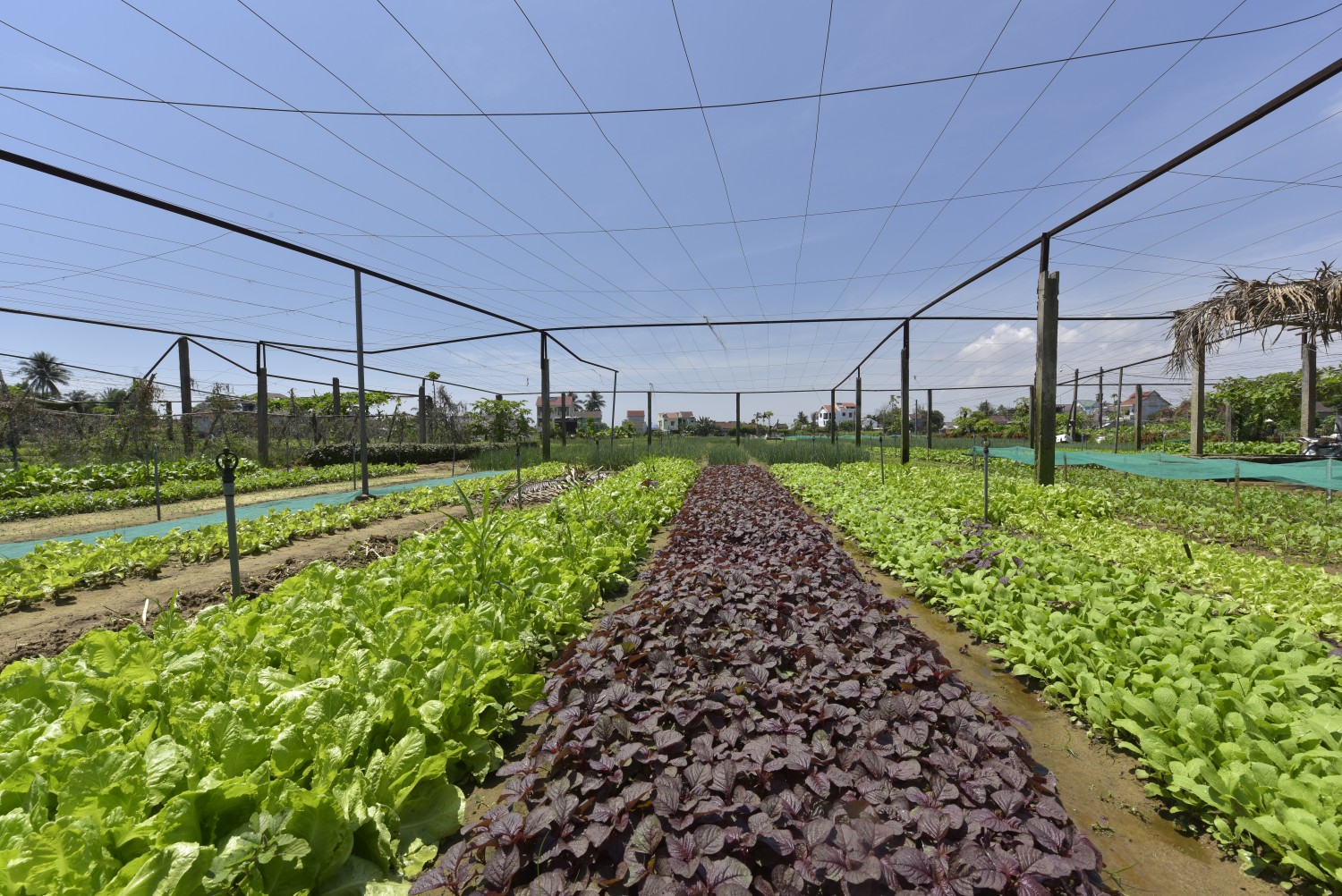
What Trà Quế offers is not only the peaceful scenery of a rural village fragrant with herbs throughout the four seasons. Visitors are truly immersed in a fresh and wholesome atmosphere, enjoying a slower pace of life and the values of green living and warm-hearted human connection. Walking through the lush green colours of herbs and flowers here under the bright spring sky, one cannot help but hope that Hội An will continue to develop more clean vegetable villages like Trà Quế and Thanh Đông, moving toward a greener agriculture for community health and for the growing green trend in tourism and culinary services.
What Trà Quế offers is not only the peaceful scenery of a rural village fragrant with herbs throughout the four seasons. Visitors are truly immersed in a fresh and wholesome atmosphere, enjoying a slower pace of life and the values of green living and warm-hearted human connection. Walking through the lush green colours of herbs and flowers here under the bright spring sky, one cannot help but hope that Hội An will continue to develop more clean vegetable villages like Trà Quế and Thanh Đông, moving toward a greener agriculture for community health and for the growing green trend in tourism and culinary services.
Author: Thái Thị Liễu Chi
Source: Hoi An Center for the Conservation of World Cultural Heritage
Newer articles
Older articles