Hoi An World Cultural Heritage Conservation Center
Trading with the Upland Source Regions in Hội An through Folk Poetry
Hội An was once a major trading port, where commercial activity flourished and attracted not only domestic merchants but also traders from many countries. As a result, a wide range of trading forms and methods emerged here, from small-scale to large-scale exchange.
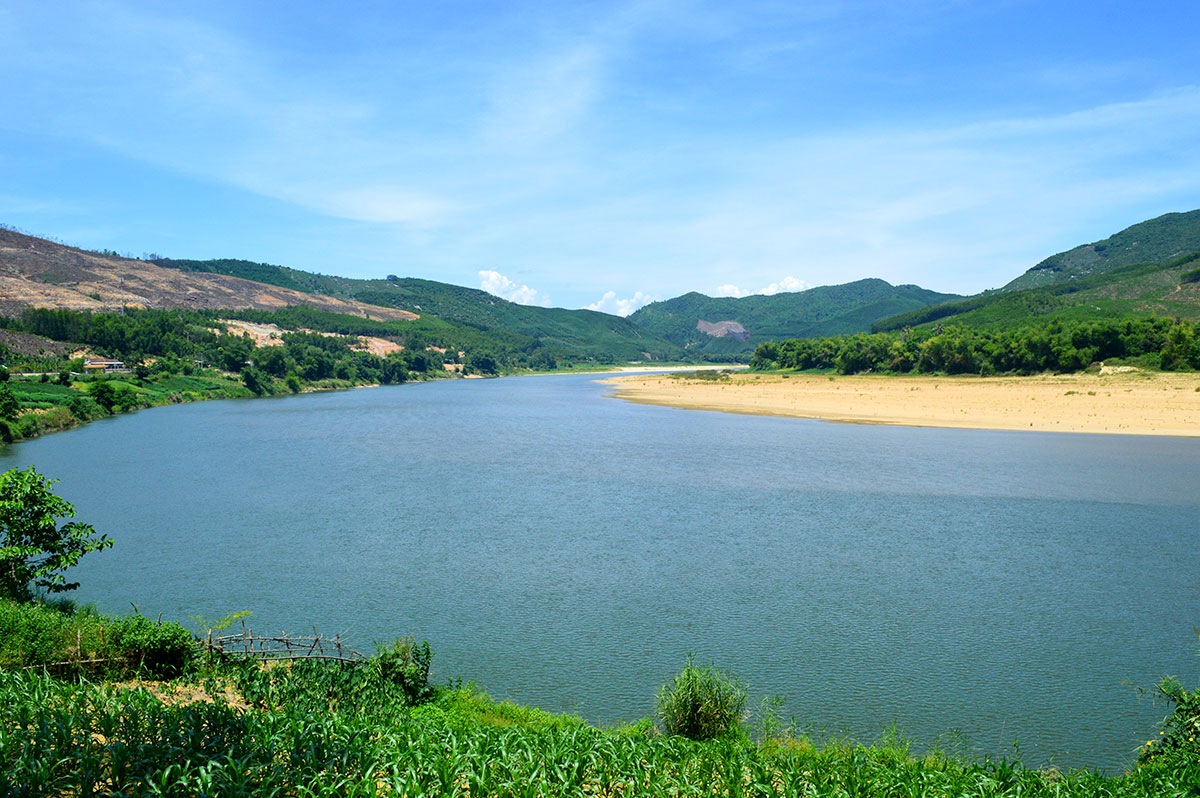
Thu Bon River in front of the Lady Thu Bon Temple - Photo: Hồng Việt
These ranged from petty trade carried out by itinerant peddlers, to upland trade, short-distance and long-distance trade by boat and merchant vessels, as well as intermediary roles such as brokers and agents, and more concentrated forms of exchange such as fairs. Together, these activities created a vibrant and diverse commercial life, marked by the distinctly international character of this port town.
In Hội An, buôn nguồn [upland trade, literally “trading with the source regions”] was a particularly characteristic form of commerce. It was a type of short-distance trade, but one that extended into the mountainous regions of Quảng Nam. Traders typically travelled by medium-sized boats such as ghe săn, ghe mê, or ghe trường, with broad hulls for carrying goods and roofed covers to protect them. These boats were rowed by hand or equipped with small sails. Later, when engines became available, motorised boats were used instead.
A folk verse on the place names of Quảng Nam records that the region had four sea gates and six upland gateways:
In Hội An, buôn nguồn [upland trade, literally “trading with the source regions”] was a particularly characteristic form of commerce. It was a type of short-distance trade, but one that extended into the mountainous regions of Quảng Nam. Traders typically travelled by medium-sized boats such as ghe săn, ghe mê, or ghe trường, with broad hulls for carrying goods and roofed covers to protect them. These boats were rowed by hand or equipped with small sails. Later, when engines became available, motorised boats were used instead.
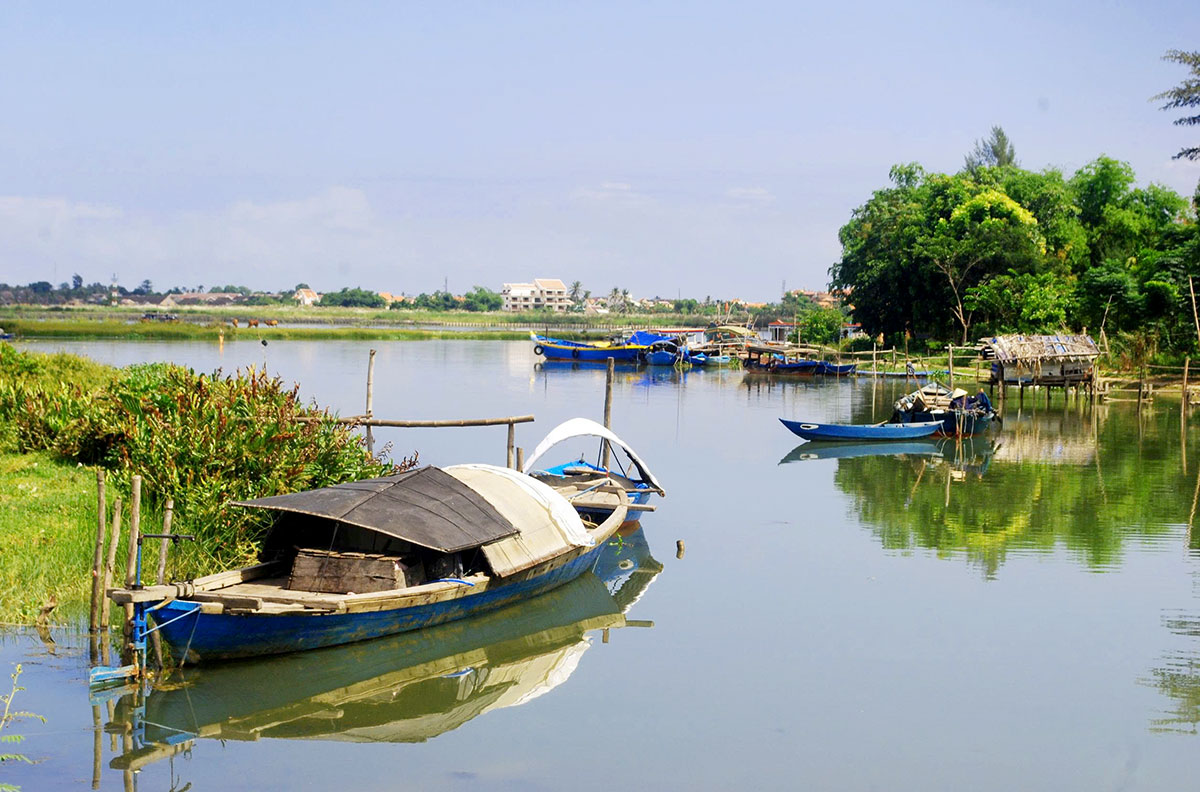
Trading boat for upstream commerce in Cam Kim - Photo: Hồng Việt
Trade developed out of the needs of Hội An’s internationally oriented commercial economy and the ecological-geographical advantages of Quảng Nam. Stretching from west to east, Quảng Nam encompasses vast forested mountains, midland hills, alluvial plains, estuarine and coastal zones, and islands offshore. The western forested areas, where many of the province’s major rivers originate, were commonly referred to in folk language as nguồn [the uplands or headwaters].A folk verse on the place names of Quảng Nam records that the region had four sea gates and six upland gateways:
“Ngõ nguồn có sáu phải thông tên gì?
Hũu bang sát núi Trà Mi
Chiên Đàn nguồn ấy ở về phía trong
Thu Bồn một dãi quanh vòng
Ô Da thì ở trên dòng sông Côn
Lỗ Đông sát núi Cao Sơn
Cu Đê thì ở gần hòn Hải Vân
Lại xem đến dưới hải phần
Cửa biển có bốn ở gần đâu đâu
Cu Đê Thuỷ Tú có cầu
Đà Nẵng hải khẩu nước sâu đậu tàu
Phố cùng Đại Chiêm gần nhau
Còn cửa Đại Yểm ở sau Tam Kỳ”
(“There are six upland gateways, what are their names?
Hữu Bang lies close to Trà Mi Mountain,
Chiên Đàn is located farther inland,
Thu Bồn winds in a long stretch,
Ô Da lies upstream on the Côn River,
Lỗ Đông rests by Cao Sơn Mountain,
Cu Đê lies near Hải Vân Pass.
And now, below toward the coast,
There are four sea gates close at hand:
Cu Đê, Thủy Tú, where bridges span,
Đà Nẵng’s estuary, deep enough for ships,
The town and Đại Chiêm close together,
And Đại Yểm farther south near Tam Kỳ.”)
Hũu bang sát núi Trà Mi
Chiên Đàn nguồn ấy ở về phía trong
Thu Bồn một dãi quanh vòng
Ô Da thì ở trên dòng sông Côn
Lỗ Đông sát núi Cao Sơn
Cu Đê thì ở gần hòn Hải Vân
Lại xem đến dưới hải phần
Cửa biển có bốn ở gần đâu đâu
Cu Đê Thuỷ Tú có cầu
Đà Nẵng hải khẩu nước sâu đậu tàu
Phố cùng Đại Chiêm gần nhau
Còn cửa Đại Yểm ở sau Tam Kỳ”
(“There are six upland gateways, what are their names?
Hữu Bang lies close to Trà Mi Mountain,
Chiên Đàn is located farther inland,
Thu Bồn winds in a long stretch,
Ô Da lies upstream on the Côn River,
Lỗ Đông rests by Cao Sơn Mountain,
Cu Đê lies near Hải Vân Pass.
And now, below toward the coast,
There are four sea gates close at hand:
Cu Đê, Thủy Tú, where bridges span,
Đà Nẵng’s estuary, deep enough for ships,
The town and Đại Chiêm close together,
And Đại Yểm farther south near Tam Kỳ.”)
Over the course of history, generations of local residents came to understand the close ecological and economic ties between the uplands and the coast:
“Sông Dinh khúc lở khúc bồi
Khúc mô lở lở hết khúc mô bồi bồi luôn
Trời sinh ra có biển có nguồn
Có ta có bạn bạn buồn nỗi chi”
(“The Dinh River erodes here and deposits there,
Where one bank gives way, it gives way deeply; where another silts up, it silts up higher,
Heaven created both sea and source,
As long as we have one another, why be sad?”)
Khúc mô lở lở hết khúc mô bồi bồi luôn
Trời sinh ra có biển có nguồn
Có ta có bạn bạn buồn nỗi chi”
(“The Dinh River erodes here and deposits there,
Where one bank gives way, it gives way deeply; where another silts up, it silts up higher,
Heaven created both sea and source,
As long as we have one another, why be sad?”)
Through these upland gateways, the mountainous regions of western Quảng Nam, and even farther toward Laos, supplied a wide variety of products, from everyday goods to rare and precious commodities such as agarwood, pepper, cinnamon, gold, ivory, and honey. These goods were especially attractive to merchants, particularly foreign traders, in the port of Hội An. The exchange of goods between upland and lowland, between the headwaters and the coast, therefore developed quite early and remained lively for generations.
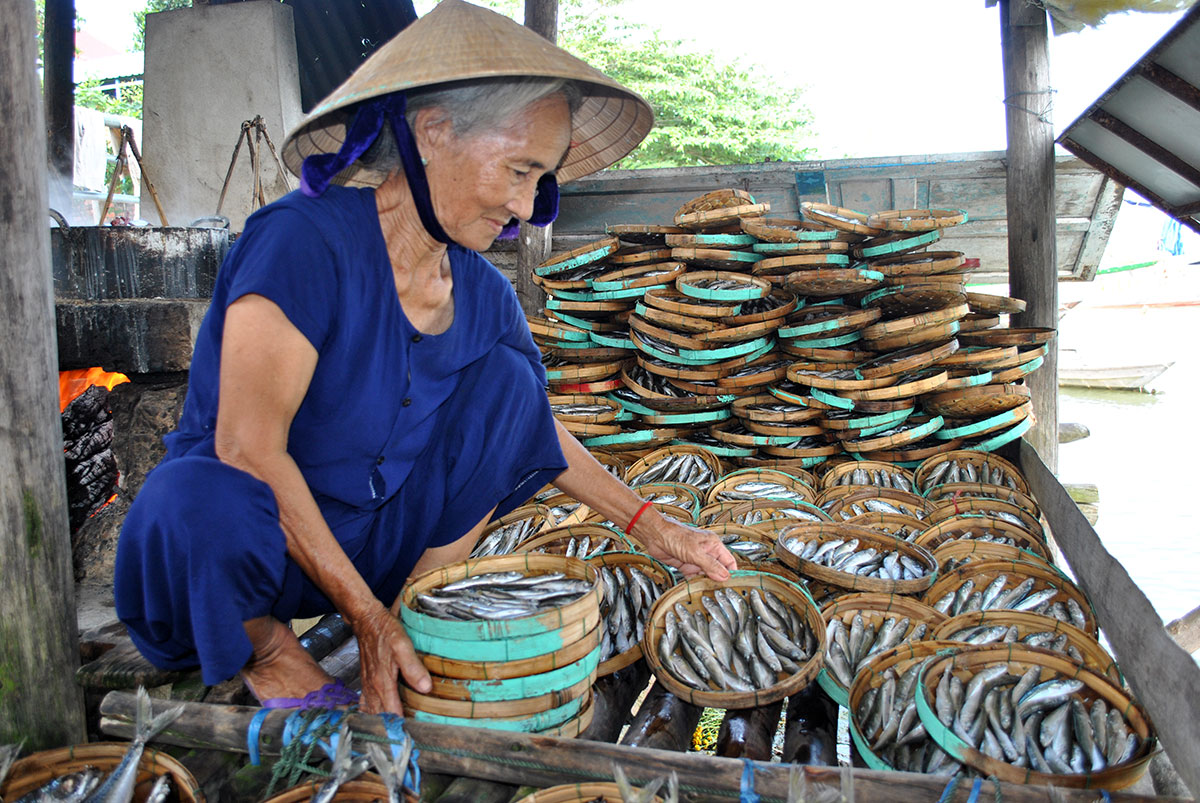
Steamed fish – An important commodity in trade between lowland and upland regions - Photo: Hồng Việt
“Ai về nhắn với bạn nguồn
Mít non gửi xuống có chuồn gửi lên”
(“Whoever returns, send word to our friends upstream,
Send down young jackfruit, send up fish sauce.”)
Mít non gửi xuống có chuồn gửi lên”
(“Whoever returns, send word to our friends upstream,
Send down young jackfruit, send up fish sauce.”)
This trade relationship took concrete form in the practice of buôn nguồn or đi nguồn[1] [going upriver / going to the uplands for trade], which was once common in places such as Cẩm Kim, Cẩm Phô, Thanh Hà, and Thanh Châu, and is vividly reflected in many pieces of folk poetry from Hội An.
“Em về học tập chuyên cần
Nước nhà phồn thịnh nhân dân phú cường
Nông thôn, thành thị an khương
Trên nguồn dưới biển có đường bán buôn
Ai về nhắn với bạn nguồn
Mít non gửi xuống cá chuồn gửi lên
Ai về dưới biển chớ quên
Cá tươi nước mắm gửi lên Hiệp Hòa”
(“Go home and study with diligence,
So the nation may prosper and the people thrive.
Countryside and town alike in peace,
Uplands and coast connected through trade.
Whoever returns, send word to our friends upstream,
Send down young jackfruit, send up fish sauce.
Whoever returns from the coast, do not forget
To send fresh fish and fish sauce up to Hiệp Hòa.”)
Another folk line says:
Nước nhà phồn thịnh nhân dân phú cường
Nông thôn, thành thị an khương
Trên nguồn dưới biển có đường bán buôn
Ai về nhắn với bạn nguồn
Mít non gửi xuống cá chuồn gửi lên
Ai về dưới biển chớ quên
Cá tươi nước mắm gửi lên Hiệp Hòa”
(“Go home and study with diligence,
So the nation may prosper and the people thrive.
Countryside and town alike in peace,
Uplands and coast connected through trade.
Whoever returns, send word to our friends upstream,
Send down young jackfruit, send up fish sauce.
Whoever returns from the coast, do not forget
To send fresh fish and fish sauce up to Hiệp Hòa.”)
“Ghe lên bán mắm dạo nào
Tình thâm nghĩa nặng không ghé vào thăm em”
(“When did your boat come upriver to sell fish sauce?
Our bond is deep, yet you did not stop to visit me.”)
Tình thâm nghĩa nặng không ghé vào thăm em”
(“When did your boat come upriver to sell fish sauce?
Our bond is deep, yet you did not stop to visit me.”)
There is also a much longer and more intimate verse, voiced as a wife’s advice to her husband before he sets off on an upland trading trip:
“Kể từ Tây lại cửa Hàn
Cau khô phát giá chợ Hội An rành rành
Thơi vơi giữa chợ cau xanh mười đồng
Duyên chàng nợ thiếp chẳng không lo gì
Biểu chàng về tính lại điều ni
Kiếm tiền kiếm bạc lên nguồn buôn cau
Chàng ra đi phải nghĩ trước nghĩ sau
Cha già con dại sớm hôm mình nàng.
Trồng huê chỉ những trồng lan
Ruộng khô mạ héo mình nàng lo xong
Biểu chàng đừng bạc bạc bong bong
Chè chè rượu rượu khổ lòng lắm chàng ơi
Thiếp phân qua chàng phải nghe lời
Lo xâu lo thuế cho trọn đời ông Duy Tân
Chàng ra đi có một cái cân
Vì dầu thua sút, đôi ba phần thiên hạ cười
Chàng ra đi giữa đám mười mươi
Đừng cho ai lận chớ hề lận ai
Bổn phận chàng chứ cái điệu làm trai
Đừng có thấy sắc thấy tài mà mê
Hàng đi phải chờ hàng về
Trước thăm thầy với mẹ sau trọn bề với vợ con”
(“Since the westward road reaches Hàn seagate,
Dried areca has clearly risen in price at Hội An market.
In the middle of the market, green areca sells high.
Since your fate is bound to mine, I cannot help but worry.
So, husband, think this over carefully,
Earn silver and money by going upriver to trade areca.
But before you go, think things through,
Your old father and young children rely on me solely at dawn and dusk.
Flowers can be planted, orchids can be grown,
Dry fields and withered seedlings, I alone must tend.
Please, husband, do not live loosely,
Getting drunk and recklessness will only bring sorrow, my dear.
I speak from the heart, and you must listen,
Pay taxes and dues properly all your life under Emperor Duy Tân.
When you leave, carry a proper scale,
For if you are short by even a little, people will laugh.
When you go among the crowds,
Do not cheat others, nor let others cheat you.
This is your duty, the proper conduct of a man.
Do not be led astray by beauty or lure.
Goods sent out must wait for goods returned.
First care for your father and mother, then fulfil your duty to wife and children.”)
Cau khô phát giá chợ Hội An rành rành
Thơi vơi giữa chợ cau xanh mười đồng
Duyên chàng nợ thiếp chẳng không lo gì
Biểu chàng về tính lại điều ni
Kiếm tiền kiếm bạc lên nguồn buôn cau
Chàng ra đi phải nghĩ trước nghĩ sau
Cha già con dại sớm hôm mình nàng.
Trồng huê chỉ những trồng lan
Ruộng khô mạ héo mình nàng lo xong
Biểu chàng đừng bạc bạc bong bong
Chè chè rượu rượu khổ lòng lắm chàng ơi
Thiếp phân qua chàng phải nghe lời
Lo xâu lo thuế cho trọn đời ông Duy Tân
Chàng ra đi có một cái cân
Vì dầu thua sút, đôi ba phần thiên hạ cười
Chàng ra đi giữa đám mười mươi
Đừng cho ai lận chớ hề lận ai
Bổn phận chàng chứ cái điệu làm trai
Đừng có thấy sắc thấy tài mà mê
Hàng đi phải chờ hàng về
Trước thăm thầy với mẹ sau trọn bề với vợ con”
(“Since the westward road reaches Hàn seagate,
Dried areca has clearly risen in price at Hội An market.
In the middle of the market, green areca sells high.
Since your fate is bound to mine, I cannot help but worry.
So, husband, think this over carefully,
Earn silver and money by going upriver to trade areca.
But before you go, think things through,
Your old father and young children rely on me solely at dawn and dusk.
Flowers can be planted, orchids can be grown,
Dry fields and withered seedlings, I alone must tend.
Please, husband, do not live loosely,
Getting drunk and recklessness will only bring sorrow, my dear.
I speak from the heart, and you must listen,
Pay taxes and dues properly all your life under Emperor Duy Tân.
When you leave, carry a proper scale,
For if you are short by even a little, people will laugh.
When you go among the crowds,
Do not cheat others, nor let others cheat you.
This is your duty, the proper conduct of a man.
Do not be led astray by beauty or lure.
Goods sent out must wait for goods returned.
First care for your father and mother, then fulfil your duty to wife and children.”)
Although upland trade was short-distance in geographical terms, traders came into contact with many places and many people. Commercial exchange often developed into emotional bonds, and from those relationships emerged marriages and family ties linking the uplands and the coast in ways that left a distinct mark on local memory.
“Có duyên lấy được chồng nguồn
Ngồi trên ngọn gió có buồn cũng vui”
(“Blessed is the woman who marries a man from the uplands,
Even in the windy heights, she may still live in happiness.”)
“Cha mẹ ham ăn cá thu
Gả con xuống biển mù mù tăm tăm”
(“Yet there are parents who longed for mackerel,
They married their daughter off to the coast, to a life far away and forlorn.”)
It can be said that when Hội An flourished as a bustling international trading port, the emergence and development of its many trading methods, especially buôn nguồn, reflected not only the dynamism of local commerce but also the adaptability of its residents to natural conditions and trading demands. Upland trade became an important bridge between the mountains and the plains, between the headwaters and the sea, helping to stimulate economic exchange, expand commercial networks, and enrich cultural and social life. Seen from this perspective, trade in Hội An was never merely an economic activity. It was also a vivid expression of regional interconnection and cultural exchange throughout history.Ngồi trên ngọn gió có buồn cũng vui”
(“Blessed is the woman who marries a man from the uplands,
Even in the windy heights, she may still live in happiness.”)
“Cha mẹ ham ăn cá thu
Gả con xuống biển mù mù tăm tăm”
(“Yet there are parents who longed for mackerel,
They married their daughter off to the coast, to a life far away and forlorn.”)
[1] “Đi nguồn” is a local term referring to journeys into the upland and mountainous regions to buy and collect goods and forest products for trade.
Author: Trần Văn An
Source: Hoi An Center for the Conservation of World Cultural Heritage
Newer articles
Older articles