Hoi An World Cultural Heritage Conservation Center
The Traditional Beauty of the Year-End Offering Ceremony (Tất Niên)
In the memories of many people, the atmosphere of the traditional Lunar New Year in Hội An in the past would become lively from around the twentieth day of the twelfth lunar month, when throughout the streets, alleys, and villages, firecrackers were set off continuously during year-end offering ceremonies.
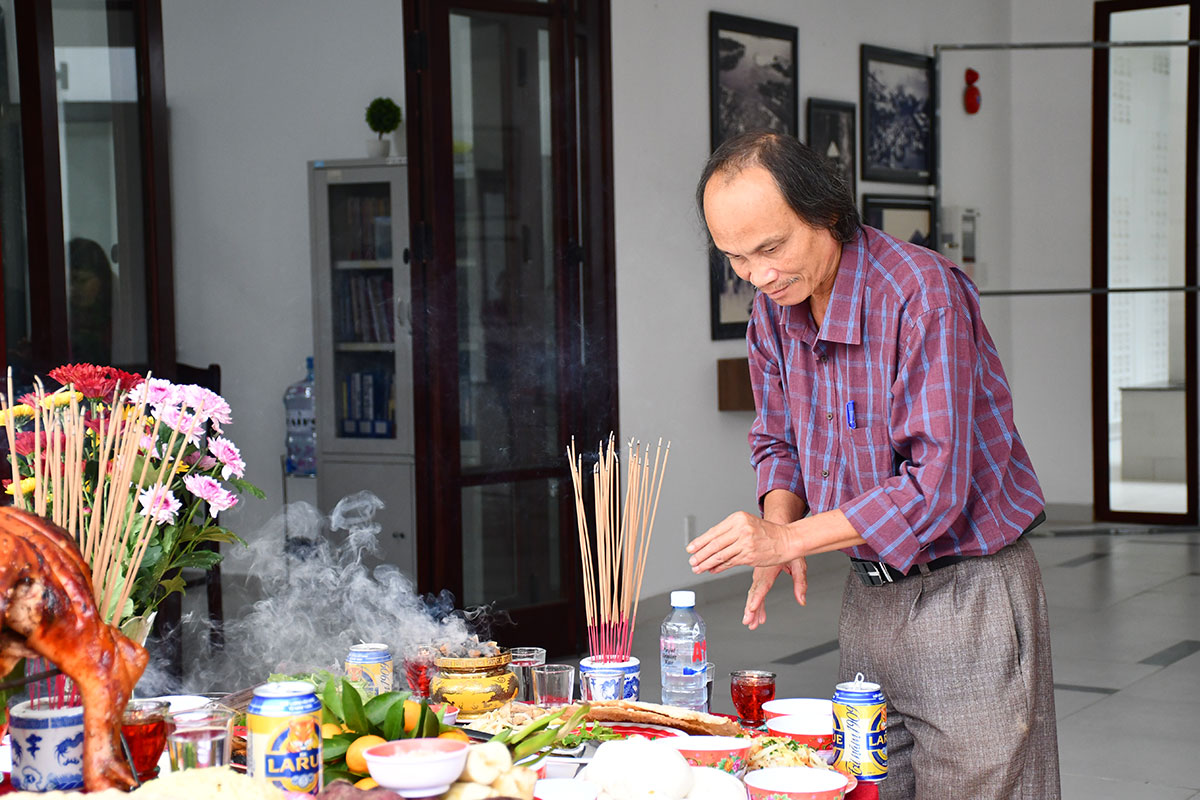
Families engaged in business, trade, or employing workers often held their year-end ceremonies from the 20th day of the twelfth lunar month. The household head performed the ritual to express gratitude to the local tutelary deity, land spirits, and household guardians, and to offer a final meal of the year to wandering spirits. Through this, they prayed for continued protection and blessings for the entire family, wishing for peace and prosperity in the coming cycle of labor and production. Additionally, for households employing workers, the year-end meal was also an occasion to host and thank workers on the last days of the year, settle wages in full, and provide “lì xì” (lucky money) so they could return home to celebrate the New Year with their families. Today, due to changing economic conditions, many businesses in Hội An focus heavily on peak-season trading, so they tend to organize year-end offerings earlier, sometimes even from the 16th day of the twelfth lunar month.
For families not engaged in business, the year-end ceremony is typically held on the last day of the lunar year, combined with the ritual of welcoming ancestral spirits home.
Before the ceremony, households thoroughly clean and organize their living spaces. Altars dedicated to ancestors, household deities, and the Buddha are carefully dusted and purified, new red ceremonial paper is laid, and decorations are refreshed. Sand in incense burners is replaced with clean, dried sand, while old incense ash is respectfully disposed of, often placed at the base of trees. Families usually retain three incense sticks to place back into the newly prepared incense burner, symbolizing continuity between the old and the new. Bronze altar objects are polished to restore their shine, enhancing the solemn and sacred atmosphere of the worship space.
Women typically take responsibility for shopping and preparing offerings, including traditional local sweets such as bánh tổ, bánh nổ, bánh in, bánh da, kumquat jam, and coconut jam, which are used both for worship and for hosting guests. In the past, many families also prepared bánh chưng and bánh tét as offerings. More than 20 years ago, it was still common for neighbors to collectively slaughter a pig to share meat for year-end feasts and for storage during the holiday. The lively sounds of conversation and laughter during these communal preparations contributed to a warm, festive, and neighborly atmosphere.
The year-end offering table is placed in the central front area of the house, usually arranged on two levels. The higher tray, positioned outward, is dedicated to deities and includes ritual garments and symbolic items such as hats and ceremonial accessories. The lower tray is for offering to wandering spirits. Families with ancestral altars prepare an additional tray inside the main worship space to thank ancestors for their protection. Offerings typically include rice, soup, prepared dishes, tea, alcohol, betel and areca, fruits, traditional sweets, paper money and stylized paper (for tailoring) for the deceased.
In earlier times, when animistic beliefs were more influential, households also performed offerings at spaces such as animal pens or wells, expressing gratitude to the spirits governing those areas. Paper offerings were sometimes attached to fruit trees and later burned as a gesture of thanks to tree spirits.
Year-end offerings also took place in markets and clan temples. Market vendors often pooled resources to offer a shared tray to the earth deity, followed by a communal meal where past conflicts were set aside to strengthen mutual support for future business. In clan temples, the head of the lineage led rituals to pray for prosperity, peace, and well-being for all descendants.
Like many other customs in Hội An, the year-end offering ritual is maintained through generational transmission. Elders consciously teach younger members to preserve these traditions. However, reciting traditional prayer texts has become challenging for modern practitioners, leading some to improvise prayers or use pre-written texts included in ritual sets.
At present, a notable social issue has emerged: the mindset of “wealth brings elaborate rituals,” where some people equate sincerity with excessive offerings, particularly the burning of large amounts of votive paper. This practice, not limited to year-end ceremonies but also common in other rituals, has begun to alter the original cultural meaning and poses environmental and fire safety concerns.
To preserve the authentic cultural values of the year-end offering tradition, it is important for the community to reduce the use of votive paper, avoid scattering rice and salt in public spaces, and adhere to civilized practices in ritual observance. At the same time, families should continue transmitting these traditions so younger generations can appreciate and maintain them.
Ultimately, the year-end ceremony is a time for family reunion after a year of labor and hardship. It is an occasion for descendants to return to their ancestral homeland, reconnect with family, and collectively prepare for the New Year. Beyond its ritual form, the ceremony embodies core Vietnamese cultural values: gratitude, filial piety, humanity, and remembrance. It honors ancestors, comforts wandering spirits, acknowledges those who contributed to the family’s livelihood, and strengthens bonds within families and communities. Preserving such traditions in modern life remains an essential way of safeguarding cultural heritage for future generations.
References:
- Tống Quốc Hưng (2001), Report on the Results of the Research Project “Survey and Study of Worship Practices in Area I of Hội An Ancient Town”, Hội An Cultural Heritage Management and Preservation Center.
Author: Thái Thị Liễu Chi
Source: Hoi An Center for the Conservation of World Cultural Heritage
Newer articles
Older articles