Hoi An World Cultural Heritage Conservation Center
Preserving and Promoting the Values of the National Intangible Cultural Heritage: the Nguyên Tiêu Festival in Hội An Ancient Town
The Nguyên Tiêu Festival, also known as the First Full Moon Festival (Thượng Nguyên), is a long-standing traditional cultural and religious practice that reflects the rich spiritual life of the residents of Hội An Ancient Town. Held on the fifteenth day of the first lunar month, it marks the first full moon of the new year.
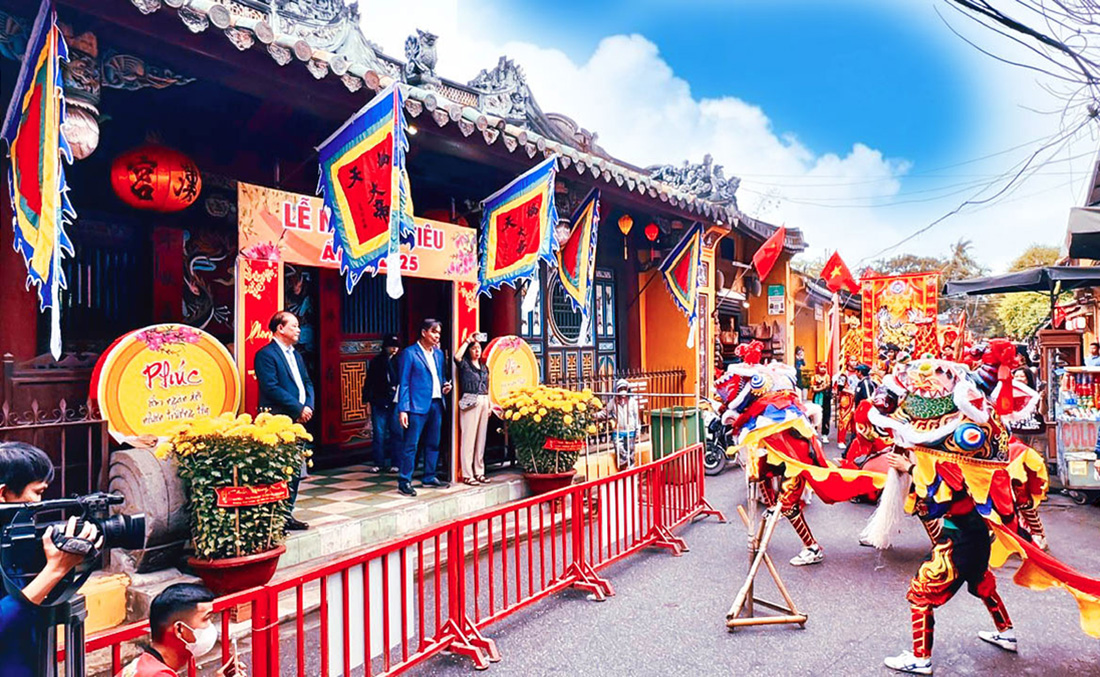
Nguyen Tieu Festival Procession Performing at the Quan Cong Temple
In Vietnamese folk belief, this is a sacred moment when people turn toward heaven, earth, and deities to pray for peace, favorable conditions, and good fortune in the year ahead. Over centuries of development, Nguyên Tiêu in Hội An has become a familiar cultural practice closely tied to local spiritual life, contributing to the distinctive cultural identity of the ancient town.
The formation and evolution of the Nguyên Tiêu Festival in Hội An are closely linked to the historical development of the region. A key milestone occurred in the early seventeenth century, when the Nguyễn lords of Đàng Trong expanded maritime trade, enabling coastal riverine areas to develop into bustling commercial centers. Hội An gradually emerged as one of the most vibrant international trading ports in southern Vietnam at the time, serving as a hub for economic and cultural exchange between domestic and foreign merchants. During this process, various migrant communities settled in Hội An, notably Chinese communities, bringing with them their customs, beliefs, and traditional festivals, including Nguyên Tiêu. Over time, these cultural elements blended with local traditions, creating a distinctive cultural synthesis. This interaction shaped the unique character of Nguyên Tiêu in Hội An, which retains strong Vietnamese cultural identity while also reflecting Chinese influences.
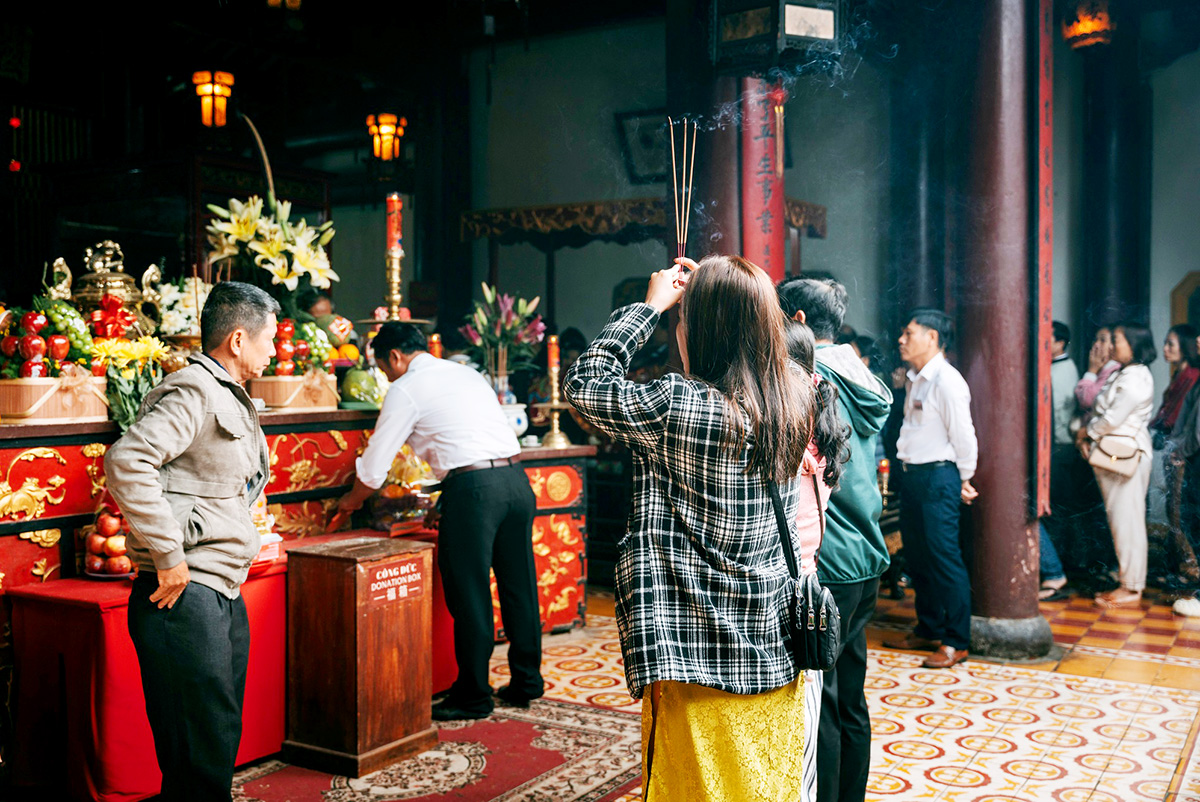
Alongside the development of the ancient town, Nguyên Tiêu became a regular cultural and religious activity for the local community. Beyond its spiritual significance, it also serves as an occasion for social gathering and community bonding after a year of labor and the early days of the new year. During the festival, various rituals are conducted at historical sites, communal houses, pagodas, and assembly halls within the ancient town. These rituals typically include incense offering, ceremonial worship, prayers for national peace and prosperity, and commemoration of ancestors and pioneers who contributed to the establishment and development of Hội An. Through these practices, the Vietnamese tradition of gratitude toward predecessors is clearly expressed.
In the cultural life of Hội An residents, Nguyên Tiêu is manifested through diverse religious and cultural activities. Each year, on the full moon of the first lunar month, locals and visitors gather at traditional communal houses such as Hội An Communal House and Sơn Phong Communal House, as well as at the Quan Công Temple, dedicated to Quan Thánh Đế Quân, a highly revered deity in Chinese belief symbolizing righteousness and loyalty. Here, people offer incense, pray for peace, and express their wishes for the coming year.
In addition to indigenous religious sites, Chinese assembly halls play a central role in Nguyên Tiêu activities. Locations such as the Quảng Triệu Assembly Hall, Phúc Kiến Assembly Hall, and Triều Châu Assembly Hall organize solemn rituals honoring founding ancestors and patron deities, while praying for prosperity and well-being. These practices not only reflect religious beliefs but also highlight the historical role of Chinese communities in Hội An’s development. Over centuries, these assembly halls have functioned as important centers of cultural and religious life, enriching the cultural landscape of the ancient town.
During Nguyên Tiêu, the ancient town is vividly decorated with lanterns and traditional ornaments, creating a festive and colorful atmosphere. Cultural performances such as lion, unicorn, and dragon dances, traditional opera (tuồng), and bài chòi singing are held alongside community activities, contributing to the dissemination of local cultural values. The festival also provides an opportunity for domestic and international visitors to experience the cultural life of Hội An, thereby enhancing the town’s global visibility.
Nguyên Tiêu in Hội An embodies significant historical, cultural, and social values. Historically, it reflects the formation and development of the local community through processes of cultural interaction and adaptation. The continuation of rituals and practices across generations helps preserve historical memory and local traditions. Culturally and spiritually, the festival expresses beliefs in harmony between humans, nature, and the divine, and reflects aspirations for peace, prosperity, and happiness.
Socially, the festival strengthens community cohesion, as people gather, interact, and collaborate in organizing the event. Preparations and celebrations involve multiple generations, from decorating spaces and preparing offerings to organizing performances, thereby transmitting cultural values to younger generations and sustaining local identity. At the same time, the festival contributes to tourism development by attracting increasing numbers of domestic and international visitors interested in exploring traditional culture.
In recent years, efforts to preserve and promote the Nguyên Tiêu Festival have received greater attention. A significant milestone was its recognition as a National Intangible Cultural Heritage in 2023, affirming its representative value within Vietnam’s cultural heritage, particularly in Đà Nẵng and Hội An. This recognition not only raises community awareness of the importance of heritage but also provides a foundation for future conservation and promotion efforts.
Following this recognition, various initiatives have been implemented. Since 2024, annual celebrations have been organized on a larger scale, including notable street processions through the ancient town, attracting wide participation from residents and visitors and creating a vibrant festive atmosphere. Exhibitions of photographs and archival materials have also been held to introduce the history, meanings, and rituals of the festival to the public. These activities contribute both to cultural promotion and to increasing public awareness of heritage preservation.
It can be seen that the Nguyên Tiêu Festival in Hội An is not only a traditional celebration but also a symbol of the cultural and spiritual life of the local community. Over centuries, it has become an integral part of daily life while enhancing the unique appeal of Hội An Ancient Town. In the context of modernization and rapid urbanization, preserving and promoting this festival plays a crucial role in safeguarding cultural identity and supporting sustainable tourism development. Ongoing efforts by authorities and the community have helped maintain and disseminate this valuable heritage, ensuring that the Nguyên Tiêu Festival continues to thrive as a distinctive cultural feature of Hội An.
The formation and evolution of the Nguyên Tiêu Festival in Hội An are closely linked to the historical development of the region. A key milestone occurred in the early seventeenth century, when the Nguyễn lords of Đàng Trong expanded maritime trade, enabling coastal riverine areas to develop into bustling commercial centers. Hội An gradually emerged as one of the most vibrant international trading ports in southern Vietnam at the time, serving as a hub for economic and cultural exchange between domestic and foreign merchants. During this process, various migrant communities settled in Hội An, notably Chinese communities, bringing with them their customs, beliefs, and traditional festivals, including Nguyên Tiêu. Over time, these cultural elements blended with local traditions, creating a distinctive cultural synthesis. This interaction shaped the unique character of Nguyên Tiêu in Hội An, which retains strong Vietnamese cultural identity while also reflecting Chinese influences.
Alongside the development of the ancient town, Nguyên Tiêu became a regular cultural and religious activity for the local community. Beyond its spiritual significance, it also serves as an occasion for social gathering and community bonding after a year of labor and the early days of the new year. During the festival, various rituals are conducted at historical sites, communal houses, pagodas, and assembly halls within the ancient town. These rituals typically include incense offering, ceremonial worship, prayers for national peace and prosperity, and commemoration of ancestors and pioneers who contributed to the establishment and development of Hội An. Through these practices, the Vietnamese tradition of gratitude toward predecessors is clearly expressed.
In the cultural life of Hội An residents, Nguyên Tiêu is manifested through diverse religious and cultural activities. Each year, on the full moon of the first lunar month, locals and visitors gather at traditional communal houses such as Hội An Communal House and Sơn Phong Communal House, as well as at the Quan Công Temple, dedicated to Quan Thánh Đế Quân, a highly revered deity in Chinese belief symbolizing righteousness and loyalty. Here, people offer incense, pray for peace, and express their wishes for the coming year.
In addition to indigenous religious sites, Chinese assembly halls play a central role in Nguyên Tiêu activities. Locations such as the Quảng Triệu Assembly Hall, Phúc Kiến Assembly Hall, and Triều Châu Assembly Hall organize solemn rituals honoring founding ancestors and patron deities, while praying for prosperity and well-being. These practices not only reflect religious beliefs but also highlight the historical role of Chinese communities in Hội An’s development. Over centuries, these assembly halls have functioned as important centers of cultural and religious life, enriching the cultural landscape of the ancient town.
During Nguyên Tiêu, the ancient town is vividly decorated with lanterns and traditional ornaments, creating a festive and colorful atmosphere. Cultural performances such as lion, unicorn, and dragon dances, traditional opera (tuồng), and bài chòi singing are held alongside community activities, contributing to the dissemination of local cultural values. The festival also provides an opportunity for domestic and international visitors to experience the cultural life of Hội An, thereby enhancing the town’s global visibility.
Nguyên Tiêu in Hội An embodies significant historical, cultural, and social values. Historically, it reflects the formation and development of the local community through processes of cultural interaction and adaptation. The continuation of rituals and practices across generations helps preserve historical memory and local traditions. Culturally and spiritually, the festival expresses beliefs in harmony between humans, nature, and the divine, and reflects aspirations for peace, prosperity, and happiness.
Incense Offerings by Locals and Visitors at the Quan Cong Temple during the Nguyen Tieu Festival
Socially, the festival strengthens community cohesion, as people gather, interact, and collaborate in organizing the event. Preparations and celebrations involve multiple generations, from decorating spaces and preparing offerings to organizing performances, thereby transmitting cultural values to younger generations and sustaining local identity. At the same time, the festival contributes to tourism development by attracting increasing numbers of domestic and international visitors interested in exploring traditional culture.
In recent years, efforts to preserve and promote the Nguyên Tiêu Festival have received greater attention. A significant milestone was its recognition as a National Intangible Cultural Heritage in 2023, affirming its representative value within Vietnam’s cultural heritage, particularly in Đà Nẵng and Hội An. This recognition not only raises community awareness of the importance of heritage but also provides a foundation for future conservation and promotion efforts.
Following this recognition, various initiatives have been implemented. Since 2024, annual celebrations have been organized on a larger scale, including notable street processions through the ancient town, attracting wide participation from residents and visitors and creating a vibrant festive atmosphere. Exhibitions of photographs and archival materials have also been held to introduce the history, meanings, and rituals of the festival to the public. These activities contribute both to cultural promotion and to increasing public awareness of heritage preservation.
It can be seen that the Nguyên Tiêu Festival in Hội An is not only a traditional celebration but also a symbol of the cultural and spiritual life of the local community. Over centuries, it has become an integral part of daily life while enhancing the unique appeal of Hội An Ancient Town. In the context of modernization and rapid urbanization, preserving and promoting this festival plays a crucial role in safeguarding cultural identity and supporting sustainable tourism development. Ongoing efforts by authorities and the community have helped maintain and disseminate this valuable heritage, ensuring that the Nguyên Tiêu Festival continues to thrive as a distinctive cultural feature of Hội An.
Author: Đoàn Cẩm Giang
Source: Hoi An Center for the Conservation of World Cultural Heritage
Newer articles
Older articles