Hoi An World Cultural Heritage Conservation Center
Trade Routes of Forest and Mountain Products from the Highlands to the Port of Hội An
Quảng Nam is known as a land rich in natural resources, with terrain gradually descending from west to east, forming distinct ecological zones including high mountains, midlands, plains, coastal areas, and islands. This ecological diversity created favorable conditions for the historical exploitation, processing, and trade of forest products and aromatics, making such activities in Quảng Nam particularly vibrant.
The western and southern mountainous areas of Quảng Nam, such as Trà My, Tiên Phước, Phước Sơn, and Nam Trà My, are home to valuable natural products including agarwood, cinnamon, honey, and forest-based medicinal materials. These resources became key commodities supplying both domestic markets and export trade through the international port of Hội An.
Historical records also document the abundance of these products. In Phủ biên tạp lục, Lê Quý Đôn wrote: “…Quảng Nam is the most fertile land under heaven. The people of Thăng Hoa and Điện Bàn are skilled in weaving silk and fine textiles equal to those of Guangdong; the fields are spacious, rice is abundant and of high quality; agarwood, eaglewood, rhinoceros horn, ivory, gold, silver, tortoiseshell, pearls, cotton, wax, sugar, lacquer oil, betel nut, pepper, salted fish, and timber are all produced here.” Such accounts indicate that the rich forest products of the mountainous regions formed an early foundation for regional commerce.
Historical records also document the abundance of these products. In Phủ biên tạp lục, Lê Quý Đôn wrote: “…Quảng Nam is the most fertile land under heaven. The people of Thăng Hoa and Điện Bàn are skilled in weaving silk and fine textiles equal to those of Guangdong; the fields are spacious, rice is abundant and of high quality; agarwood, eaglewood, rhinoceros horn, ivory, gold, silver, tortoiseshell, pearls, cotton, wax, sugar, lacquer oil, betel nut, pepper, salted fish, and timber are all produced here.” Such accounts indicate that the rich forest products of the mountainous regions formed an early foundation for regional commerce.
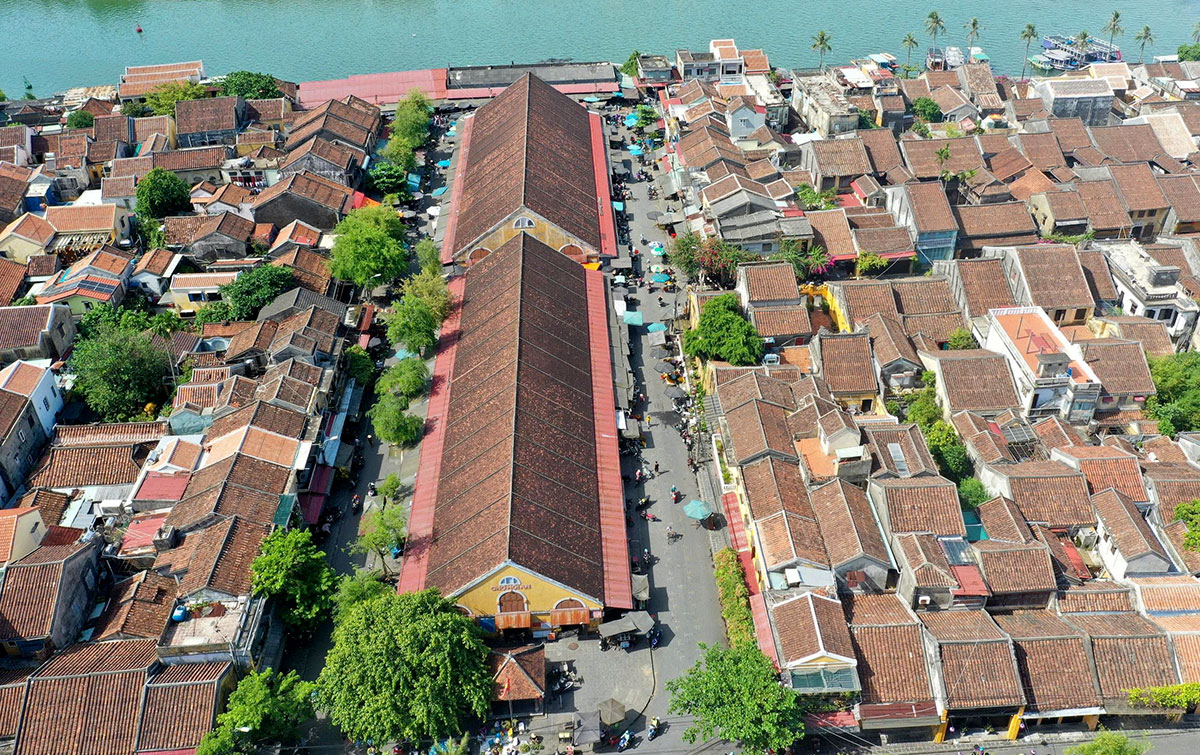
Hoi An market
From the western highlands, these products were primarily harvested by local communities and specialized occupational groups engaged in activities such as agarwood collection, cinnamon extraction, and gathering of medicinal plants. These livelihoods, rooted in long-standing indigenous knowledge, not only generated high-value goods but also established exchange networks linking upland and lowland areas. After harvesting, products such as agarwood, cinnamon, honey, and medicinal materials were preliminarily processed on-site and then transported gradually downstream to midland and lowland regions via overland routes and river systems, before being assembled at Hội An, a major commercial hub for centuries.
Within this trade structure, major river basins functioned as natural transportation axes connecting upland and coastal plains. Rivers such as Thu Bồn, Vu Gia, and Chiên Đàn not only provided water and alluvial resources but also served as key routes for transporting goods from upstream to downstream. To regulate these flows, tax collection stations were established at upstream. Under the Nguyễn dynasty, records note that in 1830 (the 11th year of Minh Mạng), multiple upstream points were assessed for taxes, including Thu Bồn, Hữu Bang, Chiên Đàn, Ô Gia, Lỗ Đông, and Câu Đê, each contributing varying amounts of tax revenue.
The term “nguồn” (literally “source”) in historical documents refers not only to geographic headwaters but also to key production zones in the uplands. Each “nguồn” was associated with a river system and a specific settlement area where forest products were gathered. From these points, goods moved along river routes through multiple transfer stations before reaching downstream markets. Thus, these “nguồn” functioned both as production zones and as integral components of the transport network.
In addition to river systems, markets and trading settlements in the midlands played a crucial role in commodity circulation. These locations served as intermediary hubs where goods from the mountains were collected, exchanged, and redistributed before continuing to the port. Places such as Kim Bồng, Trà Nhiêu, and Phú Chiêm developed into active trading communities, acting as connectors between upland production zones and coastal commercial centers. As noted: “Many Hội An merchants resided across various townships such as Kim Bồng, Trà Nhiêu, Phú Chiêm… These places functioned as satellites in a trading network centered on the port town of Hội An.”
Within this trade structure, major river basins functioned as natural transportation axes connecting upland and coastal plains. Rivers such as Thu Bồn, Vu Gia, and Chiên Đàn not only provided water and alluvial resources but also served as key routes for transporting goods from upstream to downstream. To regulate these flows, tax collection stations were established at upstream. Under the Nguyễn dynasty, records note that in 1830 (the 11th year of Minh Mạng), multiple upstream points were assessed for taxes, including Thu Bồn, Hữu Bang, Chiên Đàn, Ô Gia, Lỗ Đông, and Câu Đê, each contributing varying amounts of tax revenue.
The term “nguồn” (literally “source”) in historical documents refers not only to geographic headwaters but also to key production zones in the uplands. Each “nguồn” was associated with a river system and a specific settlement area where forest products were gathered. From these points, goods moved along river routes through multiple transfer stations before reaching downstream markets. Thus, these “nguồn” functioned both as production zones and as integral components of the transport network.
In addition to river systems, markets and trading settlements in the midlands played a crucial role in commodity circulation. These locations served as intermediary hubs where goods from the mountains were collected, exchanged, and redistributed before continuing to the port. Places such as Kim Bồng, Trà Nhiêu, and Phú Chiêm developed into active trading communities, acting as connectors between upland production zones and coastal commercial centers. As noted: “Many Hội An merchants resided across various townships such as Kim Bồng, Trà Nhiêu, Phú Chiêm… These places functioned as satellites in a trading network centered on the port town of Hội An.”
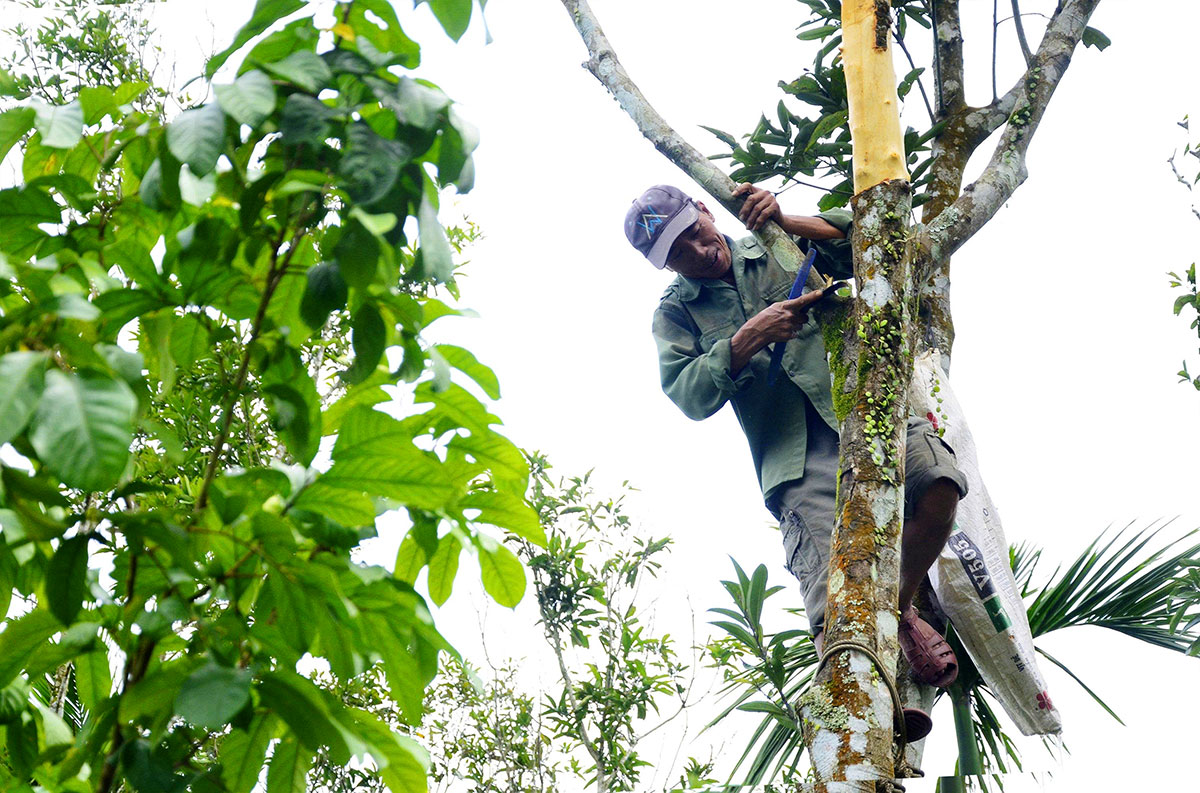
Local people harvesting cinnamon in Tien Phuoc commune
The presence of Hội An merchants in these midland settlements indicates that trade extended beyond the port itself, forming an integrated network. Goods were gathered at intermediary markets and then transported by boat along the Thu Bồn River and its tributaries to Hội An, where they were assembled, sorted, processed, and sold to both domestic and foreign traders.
Thus, the trade route from the mountains to Hội An was not a single route but a multi-layered system of extraction zones, intermediary hubs, and a central port. This system reflects the close economic linkages between upland, midland, and coastal regions, while underscoring Hội An’s central role in regional trade networks.
Within this system, certain forest products became key commodities. These products not only reflected the resourceful potential of the western mountainous area but also showcased the close connection between different local ecosystems. Among them, Trà My cinnamon stands out as one of the most prominent and valuable. The natural conditions of western Quảng Nam, including climate and soil, created an ideal environment for cinnamon cultivation: “Primary forests in the western region… now Trà My, Tiên Phước, Phước Sơn… are highly suitable for cinnamon growth… In the past, cinnamon was regarded as a precious treasure, and Trà My cinnamon was considered the finest.”
This reflects how cinnamon was not only a natural resource but also perceived as a valuable asset. Known for its high essential oil content, strong aroma, and superior quality, Trà My cinnamon became an important trade commodity early on. During the expansion of international trade in Đàng Trong from the 17th century, it became a major export through Hội An: “Under the Nguyễn lords, Hội An port annually sold up to 2,000 tons of various types of cinnamon to foreign traders.”
Alongside cinnamon, other products such as betel nut, tea, sugar, medicinal materials, and agarwood were also integrated into this trade network. These goods were sourced from different areas within Quảng Nam and neighboring regions, then brought to Hội An for exchange and export, not only serving domestic consumption needs but also becoming a valuable source of export in regional trade.
By the early twentieth century, commercial activity in Hội An remained lively, as recorded by the researcher Nguyễn Bội Liên:
“The riverbanks were lined with stone embankments, with deep stepped access leading up from the market wharf; boats would usually moor tightly along the shore. Covered passenger boats (known as ‘đò mui ống’, or Hàn boats) traveled frequently to Vĩnh Điện, Đà Nẵng, Chợ Được, Bến Đá (Thăng Bình), and Tam Kỳ, crowding the riverbanks.
In the late afternoon, around four or five o’clock, the scene became especially bustling. People moved on and off the boats in great numbers: passengers, porters carrying shoulder loads, others with parcels in hand, men and women alike. Boat operators competed to pick up passengers, calling out loudly and scrambling about in a noisy, chaotic rhythm.
From the junction near Bà Pagoda to the Lợi Xuyên corner, the boats arriving from upstream were mostly large river craft. Coming down from upstream areas such as Đại Lộc and Trung Phước, they moored close to the bank to sell goods like bananas, rattan, resin (dầu rái), betel leaves, along with some seagoing vessels.
These seagoing boats transported commodities such as areca nuts, cinnamon, tea, and sugar to Hàn (Đà Nẵng) for export firms, or carried them directly to larger ships anchored at Vũng Thùng.
Further upstream from the Lợi Xuyên corner, boats carrying goods from Tam Kỳ arrived, along with sailboats (nốt mành) from the Thanh and Nghệ regions, and occasionally Hainan trading vessels would dock to collect goods.
In the middle of the channel, large cargo boats (ghe bầu) clustered densely, anchored in overlapping formation, their masts rising thickly like spears pointing toward the sky. These boats came not only from local areas such as Trà Nhiêu, Bàn Thạch, Làng Câu, Cẩm Phô, Thanh Châu, and Phước Trạch, but also from other provinces including Bình Định, Phú Yên, and Phan Thiết. They brought rice and salt to sell, and then purchased goods for the return journey.”
Thanks to its strategic location and the growth of international commerce, Hội An became a major aggregation point for goods from multiple regions. From here, forest products and aromatics were sold to foreign merchants and distributed to wider markets. The trade route from the mountains to Hội An was therefore not only a domestic supply chain but also part of broader international trade networks in Đàng Trong from the 17th–18th centuries onward.
In sum, this trade system emerged from the interaction between natural conditions and commercial demand. The mountainous west of Quảng Nam supplied abundant forest products, while river systems and midland markets facilitated transportation and exchange. As an international port, Hội An served as the central hub for collecting and exporting these goods, illustrating both the economic integration of ecological regions and the city’s pivotal role in Southeast Asian trade networks in the early modern period.
Thus, the trade route from the mountains to Hội An was not a single route but a multi-layered system of extraction zones, intermediary hubs, and a central port. This system reflects the close economic linkages between upland, midland, and coastal regions, while underscoring Hội An’s central role in regional trade networks.
Within this system, certain forest products became key commodities. These products not only reflected the resourceful potential of the western mountainous area but also showcased the close connection between different local ecosystems. Among them, Trà My cinnamon stands out as one of the most prominent and valuable. The natural conditions of western Quảng Nam, including climate and soil, created an ideal environment for cinnamon cultivation: “Primary forests in the western region… now Trà My, Tiên Phước, Phước Sơn… are highly suitable for cinnamon growth… In the past, cinnamon was regarded as a precious treasure, and Trà My cinnamon was considered the finest.”
This reflects how cinnamon was not only a natural resource but also perceived as a valuable asset. Known for its high essential oil content, strong aroma, and superior quality, Trà My cinnamon became an important trade commodity early on. During the expansion of international trade in Đàng Trong from the 17th century, it became a major export through Hội An: “Under the Nguyễn lords, Hội An port annually sold up to 2,000 tons of various types of cinnamon to foreign traders.”
Alongside cinnamon, other products such as betel nut, tea, sugar, medicinal materials, and agarwood were also integrated into this trade network. These goods were sourced from different areas within Quảng Nam and neighboring regions, then brought to Hội An for exchange and export, not only serving domestic consumption needs but also becoming a valuable source of export in regional trade.
By the early twentieth century, commercial activity in Hội An remained lively, as recorded by the researcher Nguyễn Bội Liên:
“The riverbanks were lined with stone embankments, with deep stepped access leading up from the market wharf; boats would usually moor tightly along the shore. Covered passenger boats (known as ‘đò mui ống’, or Hàn boats) traveled frequently to Vĩnh Điện, Đà Nẵng, Chợ Được, Bến Đá (Thăng Bình), and Tam Kỳ, crowding the riverbanks.
In the late afternoon, around four or five o’clock, the scene became especially bustling. People moved on and off the boats in great numbers: passengers, porters carrying shoulder loads, others with parcels in hand, men and women alike. Boat operators competed to pick up passengers, calling out loudly and scrambling about in a noisy, chaotic rhythm.
From the junction near Bà Pagoda to the Lợi Xuyên corner, the boats arriving from upstream were mostly large river craft. Coming down from upstream areas such as Đại Lộc and Trung Phước, they moored close to the bank to sell goods like bananas, rattan, resin (dầu rái), betel leaves, along with some seagoing vessels.
These seagoing boats transported commodities such as areca nuts, cinnamon, tea, and sugar to Hàn (Đà Nẵng) for export firms, or carried them directly to larger ships anchored at Vũng Thùng.
Further upstream from the Lợi Xuyên corner, boats carrying goods from Tam Kỳ arrived, along with sailboats (nốt mành) from the Thanh and Nghệ regions, and occasionally Hainan trading vessels would dock to collect goods.
In the middle of the channel, large cargo boats (ghe bầu) clustered densely, anchored in overlapping formation, their masts rising thickly like spears pointing toward the sky. These boats came not only from local areas such as Trà Nhiêu, Bàn Thạch, Làng Câu, Cẩm Phô, Thanh Châu, and Phước Trạch, but also from other provinces including Bình Định, Phú Yên, and Phan Thiết. They brought rice and salt to sell, and then purchased goods for the return journey.”
Thanks to its strategic location and the growth of international commerce, Hội An became a major aggregation point for goods from multiple regions. From here, forest products and aromatics were sold to foreign merchants and distributed to wider markets. The trade route from the mountains to Hội An was therefore not only a domestic supply chain but also part of broader international trade networks in Đàng Trong from the 17th–18th centuries onward.
In sum, this trade system emerged from the interaction between natural conditions and commercial demand. The mountainous west of Quảng Nam supplied abundant forest products, while river systems and midland markets facilitated transportation and exchange. As an international port, Hội An served as the central hub for collecting and exporting these goods, illustrating both the economic integration of ecological regions and the city’s pivotal role in Southeast Asian trade networks in the early modern period.
Author: Nguyễn Văn Thịnh
Source: Scientific Research Division
Newer articles
Older articles