Hoi An World Cultural Heritage Conservation Center
trao đổi chuyên ngành

A Few Notes on Hội An’s Historical Tradition of Learning and the Examination System
22:51 14/09/2026
Alongside patriotism and humanism, the tradition of valuing education has, for thousands of years, become one of the Vietnamese nation’s enduring and admirable cultural traditions.

Modern Family Conduct and Behaviour in Hội An
22:45 14/09/2026
Ributing to the building of a “prosperous, happy, progressive, and civilized Vietnamese family.” Over the past decades, the Vietnamese family in general, and families in Quảng Nam and Hội An in particular, have undergone important transformations, shifting from the traditional family model to one marked by newer, more modern and more liberal characteristics. The process of international integration, including cultural exchange and integration, has brought about more open views on marriage and family life.

Distinctive and Unique Features of the Cẩm Thanh Bamboo-and-Nipa-Palm House-Building Craft
22:40 14/09/2026
The nipa palm forest in Cẩm Thanh is a particularly important form of local resource in terms of history, culture, ecology, and scenic value. Through ingenuity and practical knowledge, local residents have made use of nipa palm leaves and the abundant supply of bamboo as materials for building houses, producing household items, and later creating souvenirs and handicrafts of commercial value.
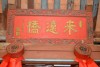
The Preservation, Promotion, and Recognition of Documentary Heritage of Horizontal Lacquered Boards and Parallel Sentences in Hội An
06:07 28/05/2026
Most heritage sites in Hội An contain numerous horizontal lacquered boards (hoành phi), parallel sentences (câu đối), and other inscribed texts. These inscriptions not only enhance the solemnity and aesthetic value of each site but also serve as an important source of documentation for studying individual monuments as well as broader historical and cultural contexts.
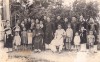
Dress Practices of the People of Hội An
05:55 28/05/2026
Due to extensive cultural contact, the early development of sericulture and silk weaving, and the dress regulations imposed by feudal dynasties, clothing styles in the Cochinchina in general, and Hội An in particular, underwent several changes over time.

Hoi An’s Cultural Heritage: A Foundation for Creative Culture and Cultural Industries
05:49 28/05/2026
With a rich, diverse, and distinctive cultural capital crystallized through the history of a once-thriving international trading port over several centuries, together with the enduring traditions of a gentle, resilient, humble, and dynamic local community, Hội An possesses exceptional opportunities to strengthen its position as a prominent ecological and humane urban center, a city of strong identity, modernity, sustainability, and a hub of creativity and global connection.
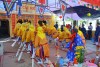
Whale Worship Belief in Hội An
05:36 28/05/2026
n Hội An, every year after the full moon of the first lunar month, fishing communities in the coastal villages begin busily preparing for the Cầu Ngư Festival, held in remembrance of Nam Hải Cự Tộc Ngọc Lân (the Whale, commonly called Cá Ông or “Lord Whale”), who is believed to protect and bless fishermen so that they may go out to sea in safety and return with holds full of fish and shrimp.

Wood Carving Techniques and Tools in Hội An
05:31 28/05/2026
In the book Nguyễn Art, researcher Nguyễn Hữu Thông remarks: “A wooden house cannot fully express its intended beauty if its interior is not ‘clothed’ in carving, inlay, or even lacquer painting and gilding[1].” This is clearly evident when visiting the old wooden houses in Hội An Ancient Town. It can be said that woodcarvers in Hội An have played a highly important role in beautifying the locality’s wooden architectural works.
Female Deity Worship in Kim Bồng Village
04:59 18/05/2026
The worship of female deities is one of the most widespread forms of belief in Vietnamese society. It centers on the veneration of female figures, rooted in a long-standing cultural tradition that values the role of women, especially mothers, within the family and the broader community. From this foundation, religious institutions, rituals, festivals, and related practices have developed, contributing to the diversity of Vietnamese culture. In Hội An in general, these female deities are commonly referred to by the honorific “Bà,” expressing a shared sense of reverence.

Reflections on the Basket Boat in Hội An
04:13 18/05/2026
Across the length of Vietnam, from the uplands to the lowlands, from mountainous and midland areas to delta plains, estuaries, coastal zones, and islands, every region has its own distinctive types of boats and watercraft associated with local riverine and maritime environments. Among these is one particularly unique and long-standing means of transport and fishing in rivers, creeks, and coastal waters: the basket boat.
Early Spring Rituals in Hội An through Archived Hán-Nôm Documents
04:06 18/05/2026
In recent years, the Hội An Center for Cultural Heritage Management and Preservation has carried out extensive efforts to collect Hán-Nôm documents relating to Hội An. These efforts have resulted in the acquisition of thousands of pages of valuable archival materials, including both originals and copies.

Spring Strolling Amid the Fragrance of Trà Quế Herbs
03:42 18/05/2026
The seventh day of the first lunar month is the day of the Cầu Bông Festival of the vegetable-growing community in Trà Quế hamlet, Cẩm Hà commune, Hội An City. Visiting Trà Quế Vegetable Village during this occasion, travellers are invited into a journey through many refreshing emotional shades amid the bright atmosphere of spring.
Events Related to Historic Monuments in Hội An in the Year of the Dragon
23:47 10/05/2026
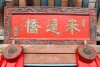
Among the twelve zodiac animals corresponding to the Twelve Earthly Branches (Thập nhị Địa chi: Tý, Sửu, Dần, Mão, Thìn, Tỵ, Ngọ, Mùi, Thân, Dậu, Tuất, Hợi) in the traditional cultural worldview of the Vietnamese people, the dragon (Thìn, Sino-Vietnamese: Long) occupies the fifth position. It is a mythical creature and one of the Four Sacred Creatures (Tứ linh: dragon, kylin, turtle, phoenix). In the lunar calendar, the third month is the Month of the Dragon. Dragon months and Dragon years, according to the Heavenly Stems and Earthly Branches system, include: Giáp Thìn, Bính Thìn, Mậu Thìn, Canh Thìn, and Nhâm Thìn. Each sexagenary cycle lasts sixty years (Lục thập hoa giáp). The Year of the Wood Dragon (Giáp Thìn) 2024 runs from 10 February 2024 to 28 January 2025 in the Gregorian calendar.

Creativity for Preservation and Development Based on Local Cultural Heritage Resources
23:27 10/05/2026
At the end of 2023, Hội An received the good news of officially joining the UNESCO Creative Cities Network. Hội An became the 247th member, recognized in the field of Crafts and Folk Art. This network seeks to foster international cooperation among globally recognized cities by placing cultural resources and cultural creativity at the center of sustainable urban development. This is a major opportunity for the city to strongly activate its cultural and traditional potential as a resource for sustainable development, generating distinctive values for the future and further strengthening Hội An’s appeal in exchange and development.
Apricot Blossom During Tết and Folk Beliefs in Hội An
05:52 06/05/2026
In Hội An, and perhaps throughout nearly the entire stretch of land from Quảng Trị southward, hoa mai (apricot blossom) is regarded as the symbol of spring. The flower is revered not only for its brilliant yellow bloom after a full year, 365 days “holding the gold of sun and moon,” but also because it is a flower that heralds the revival of all living things after the icy days of winter. Apricot blossom is also a symbol of a world overflowing with life, of resilience and firmness, and, with its sweet fragrance and beauty, it creates a powerful emotional impression and announces the arrival of spring.
Some Events Related to Hội An in Dragon Years Through Historical Documents
05:08 06/05/2026
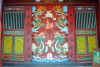
With its historically and culturally strategic location, Hội An became a place of trade and commerce with countries in the region and around the world from a very early period. During the Lâm Ấp - Champa era, Hội An was already a trading port regularly visited by foreign merchant vessels, and a number of works in the Book of Jin (Tấn thư), the Book of Tang (Đường thư), and certain ancient Arabic texts described and introduced valuable information about Hội An. Especially during the period when Hội An flourished as an international port under the Nguyễn Lords, and later during the Tây Sơn period and the reign of Nguyễn Lords, many domestic and foreign works relating to or mentioning Hội An were translated and published, such as Đàng Trong in 1621, Hải ngoại ký sự, Travels and Missions, Ô châu cận lục, Phủ biên tạp lục, and Đại Nam thực lục.

Customs of Lineages in Hội An
04:56 06/05/2026
The residential community of Hội An is formed by the coexistence of many lineages. The village administrative structure in Hội An has historically been relatively loose; in compensation, kinship relations developed strongly. This is reflected in the widespread practice of worshipping lineage groups at communal houses instead of a single village tutelary deity (Thành Hoàng). Each lineage maintains its own ancestral house and lineage-owned land.

The Whale Cult (Cá Ông) in the Belief Life of Coastal Communities in Đà Nẵng in the Contemporary Context
04:35 15/04/2026
In the course of Vietnamese history, Đà Nẵng has functioned not only as a geographical space but also as a site marking early stages of the southward expansion (Nam tiến) of the Vietnamese people. Following the political marriage between King Chế Mân and Princess Huyền Trân in 1306, migration from the North intensified, contributing to the formation and shaping of local populations.

Trading with the Upland Source Regions in Hội An through Folk Poetry
04:42 06/04/2026
Hội An was once a major trading port, where commercial activity flourished and attracted not only domestic merchants but also traders from many countries. As a result, a wide range of trading forms and methods emerged here, from small-scale to large-scale exchange.

Matchmaking Customs through Folk Verses in Hội An
22:19 02/04/2026
There is a five-character quatrain by the child prodigy poet Uông Thù of the Northern Song dynasty in China that speaks of four rare moments of happiness in a person’s life, and it is still often recited today: