Hoi An World Cultural Heritage Conservation Center
The Subtle Meanings of Spring in Hán-Nôm Couplets in Hội An
Parallel sentences (also known as couplets) are commonly used in celebratory occasions such as weddings, longevity celebrations, funerals, and festivals. Hán-Nôm couplets are often displayed in solemn spaces such as communal houses, temples, pagodas, shrines, and ancestral halls.
They represent a harmonious combination of classical literature and folk spirit, serving primarily to educate descendants in morality and character, commemorate the virtues of ancestors, express the sentiments of people living far from home, celebrate joyful family events, or convey reflections on landscapes and natural beauty. Among these, spring-themed couplets are considered a distinctive traditional cultural feature in Vietnamese life.
Spring imagery in Hán-Nôm materials carries rich semantic layers and poetic intention, expressed in gentle yet profound language that vividly conveys the freshness and emotional resonance of a new season. While spring appears frequently in Tang poetry, its expression in couplets possesses a unique stylistic and thematic character.
The word “spring” symbolizes the beginning of a year, as in the saying: “A year’s plan begins in spring; a day’s plan begins in the morning.” Thus, imagery such as “spring flowers and autumn moon” evokes freshness, beauty, and vitality. These poetic elements convey nuanced emotional expressions associated with youth and renewal.
In Hội An, many traditional cultural practices are still preserved, including the display of horizontal boards and couplets in homes. These inscriptions often contain wishes for peace and prosperity, symbolizing stability and abundance. For example: “Peace is heralded by bamboo, bringing joy to the whole family / Prosperity blooms like flowers, filling the house with spring.” Such lines express aspirations for a complete, fortunate, and prosperous life.
Other couplets depict poetic landscapes, such as the beauty of the Cẩm Phô River: “Moonlight over Cẩm River weaves the water into silk / Spring deepens, colors flourish across the trees.” These lines not only describe scenery but also reflect love for the homeland and appreciation for its prosperity and beauty.
Spring is not only a seasonal transition but also a symbol of renewal, growth, and prosperity: “In this age, the universe returns to spring, honoring the merits of ancestors / The nation grows ever more splendid, opening a grand future for descendants.” Spring brings renewed vitality while continuing the heroic traditions of past generations.
Many couplets express wishes for favorable conditions and prosperity, often through imagery of calm seas and smooth sailing: “Spring arrives in the southern sky with favorable winds and rain / Living by the sea, waves are calm and waters peaceful.” These lines reflect hopes for stability, good harvests, and a peaceful life.
Other couplets emphasize moral philosophy and personal character: “Spring is peaceful, waves are still / One lives with integrity, grounded in tranquility.”
There are also couplets expressing gratitude to ancestors and emphasizing continuity across generations: “Spring endures where leaves flourish from strong roots / Virtue is never alone, its light passed down to future generations.” These lines highlight the belief that prosperity stems from strong moral foundations and ancestral virtue.
Overall, spring imagery in couplets conveys optimism, generosity, and aspirations for a fortunate and harmonious new year. Each line carries layered meanings and reflects deep cultural values.
In Hội An’s Chinese-influenced heritage sites, couplets also preserve references to historical figures and classical allusions tied to each site’s history.
Beyond literary value, couplets demonstrate aesthetic harmony in sound, structure, and meaning, along with refined calligraphic artistry across various scripts. Often carved or inscribed on wood, they contribute to the solemn beauty of heritage spaces.
The preservation and study of such materials, including horizontal boards, couplets, and woodblocks, remain essential for understanding and sustaining the documentary heritage of Hội An today.
Spring imagery in Hán-Nôm materials carries rich semantic layers and poetic intention, expressed in gentle yet profound language that vividly conveys the freshness and emotional resonance of a new season. While spring appears frequently in Tang poetry, its expression in couplets possesses a unique stylistic and thematic character.
The word “spring” symbolizes the beginning of a year, as in the saying: “A year’s plan begins in spring; a day’s plan begins in the morning.” Thus, imagery such as “spring flowers and autumn moon” evokes freshness, beauty, and vitality. These poetic elements convey nuanced emotional expressions associated with youth and renewal.
In Hội An, many traditional cultural practices are still preserved, including the display of horizontal boards and couplets in homes. These inscriptions often contain wishes for peace and prosperity, symbolizing stability and abundance. For example: “Peace is heralded by bamboo, bringing joy to the whole family / Prosperity blooms like flowers, filling the house with spring.” Such lines express aspirations for a complete, fortunate, and prosperous life.
Other couplets depict poetic landscapes, such as the beauty of the Cẩm Phô River: “Moonlight over Cẩm River weaves the water into silk / Spring deepens, colors flourish across the trees.” These lines not only describe scenery but also reflect love for the homeland and appreciation for its prosperity and beauty.
Spring is not only a seasonal transition but also a symbol of renewal, growth, and prosperity: “In this age, the universe returns to spring, honoring the merits of ancestors / The nation grows ever more splendid, opening a grand future for descendants.” Spring brings renewed vitality while continuing the heroic traditions of past generations.
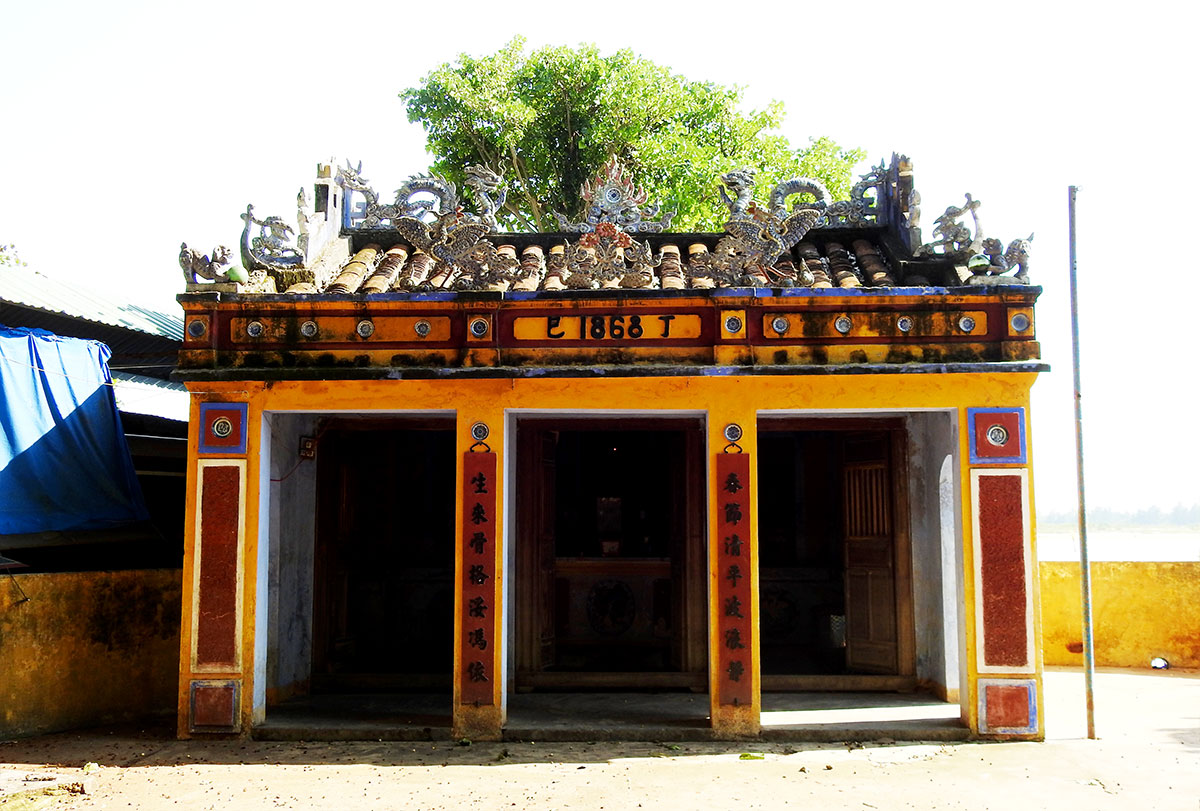
Parallel couplets at the Lang Ong relic, Ha Trung hamlet - Photo: Hong Viet
Many couplets express wishes for favorable conditions and prosperity, often through imagery of calm seas and smooth sailing: “Spring arrives in the southern sky with favorable winds and rain / Living by the sea, waves are calm and waters peaceful.” These lines reflect hopes for stability, good harvests, and a peaceful life.
Other couplets emphasize moral philosophy and personal character: “Spring is peaceful, waves are still / One lives with integrity, grounded in tranquility.”
There are also couplets expressing gratitude to ancestors and emphasizing continuity across generations: “Spring endures where leaves flourish from strong roots / Virtue is never alone, its light passed down to future generations.” These lines highlight the belief that prosperity stems from strong moral foundations and ancestral virtue.
Overall, spring imagery in couplets conveys optimism, generosity, and aspirations for a fortunate and harmonious new year. Each line carries layered meanings and reflects deep cultural values.
In Hội An’s Chinese-influenced heritage sites, couplets also preserve references to historical figures and classical allusions tied to each site’s history.
Beyond literary value, couplets demonstrate aesthetic harmony in sound, structure, and meaning, along with refined calligraphic artistry across various scripts. Often carved or inscribed on wood, they contribute to the solemn beauty of heritage spaces.
The preservation and study of such materials, including horizontal boards, couplets, and woodblocks, remain essential for understanding and sustaining the documentary heritage of Hội An today.
Author: Lê Thị Lưu
Source: Hoi An Center for the Conservation of World Cultural Heritage
Newer articles
Older articles