Hoi An World Cultural Heritage Conservation Center
Matchmaking Customs through Folk Verses in Hội An
There is a five-character quatrain by the child prodigy poet Uông Thù of the Northern Song dynasty in China that speaks of four rare moments of happiness in a person’s life, and it is still often recited today:
After a long drought, sweet rain falls
In a distant land, one meets an old acquaintance
On the wedding night, under flowered candles
One’s name appears on the golden examination list
For that reason, marriage was a major life matter to be arranged according to parental authority, “where the parents place, the children sit,” and this arrangement also had to follow social rules and prejudices regarding equal family standing and status. Men and women were expected to avoid intimate contact, and they had no right to freely get to know one another or decide for themselves to build a family. Everything was decided by the parents and brought about through matchmaking. For a very long time in folk society, the custom of matchmaking was almost indispensable in marriage arrangements. In Hội An, we can imagine this custom through the songs and verses preserved in oral tradition.
Once the ages of the couple had been discreetly inquired into and a fortune-teller had confirmed that their ages were compatible, the groom’s family would choose someone close to the bride’s family and prepare betel, areca, and wine to ask that person to serve as matchmaker. A matchmaker had to be someone of moral standing and good reputation, with both husband and wife still living and children in good order. The matchmaker was not only the bridge that brought the two families together in marriage, but also the person who would later help mediate if there were difficulties between husband and wife or between the two families[1].
When representing the groom’s family to discreetly sound out the intentions of the bride’s family, if matters went smoothly and suited both sides, the intermediary would receive some sign of approval, such as a discussion of bridewealth, or an appointment for the next ceremonial steps. Judging from the sentiment in the following folk verse, it is clear that the bride’s family had consented and agreed:
If anyone is a matchmaker, let me be one then
Speaking carelessly like the tip of a vegetable leaf
Speaking indirectly, hinting and showing off in matchmaking
Speaking to the old man and old woman but missing the mark
Hair newly wrapped round, everyone staring and peeking
The tray of betel and cups of wine all in vain
Like a fish entering a cave and getting trapped in a weir
Why should this side wait while that side delays?
My child is growing up, let me wait another year or two
The wind blows a jackfruit over the fence
Tomorrow afternoon they’re coming to ask, but how shall I greet them?
If I greet, I greet mother and father
Greet the man carrying the offerings, greet the lady matchmaker
If one does matchmaking, it must be settled to the end
Money for the pig, money for the wedding cloth, money for earrings, money for gold
The land sold for the betrothal rite covers four long square rod
To visit the bride and bow to the kin costs two hundred coins
My house is narrow, I dare not invite too many
I invite twenty kin, half men and half women
The men wear leather clogs and sandals
The women wear Huế-style hats with crimson chin straps
In my hand I hold a sweet little bánh ít cake
In my hand I carry a foaming cup of wine and cry aloud
Oh matchmaker, the lamp hangs before the wind, its flame shining bright
If one does not consent from the heart, what Heaven could force such a marriage?
Who can climb up to the moon’s palace
And ask the Old Man Under the Moon where he tied the red marriage thread?
Which thread was tied to the North, which to the East
Which thread tied wife to husband, and where?
Situations of irony and heartbreak caused by imposed marriage in old society were by no means rare, and the matchmaker often became the target of many reproaches and complaints from the unhappy. Yet in terms of its social meaning, matchmaking was a way of bringing people together in pairs and helping them establish families. In the end, it remained a deeply positive custom that earlier generations had created.
In a distant land, one meets an old acquaintance
On the wedding night, under flowered candles
One’s name appears on the golden examination list
The first joy is when a long dry spell is broken by a life-giving rain; the second is meeting someone familiar while far from home in a strange land; the third is the wedding night lit by brilliant candles; and the last is having one’s name inscribed on the imperial honor roll.
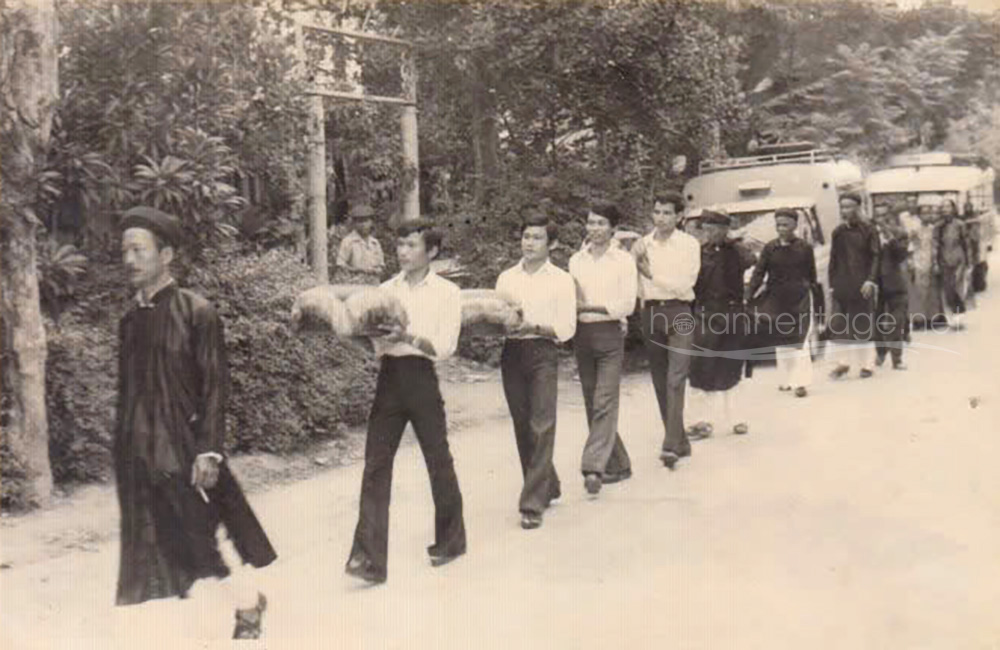
Among these four great joys, marriage, taking a wife and giving a daughter in marriage, was regarded by the ancients as something of the utmost importance: “Buying a buffalo, taking a wife, and building a house, among these three things, all are difficult indeed.” If the buffalo was considered the foundation of one’s livelihood, then marriage affected an entire lifetime, the family, and both lineages:
Matchmaker Leading the Wedding Procession – Archival Photo
Among these four great joys, marriage, taking a wife and giving a daughter in marriage, was regarded by the ancients as something of the utmost importance: “Buying a buffalo, taking a wife, and building a house, among these three things, all are difficult indeed.” If the buffalo was considered the foundation of one’s livelihood, then marriage affected an entire lifetime, the family, and both lineages:
For a man, to marry a virtuous wife
Is like holding a coin and buying a fine delicacy
For a woman, to marry a worthy husband
Is like a carp leaping the Dragon Gate and becoming a dragon
Is like holding a coin and buying a fine delicacy
For a woman, to marry a worthy husband
Is like a carp leaping the Dragon Gate and becoming a dragon
For that reason, marriage was a major life matter to be arranged according to parental authority, “where the parents place, the children sit,” and this arrangement also had to follow social rules and prejudices regarding equal family standing and status. Men and women were expected to avoid intimate contact, and they had no right to freely get to know one another or decide for themselves to build a family. Everything was decided by the parents and brought about through matchmaking. For a very long time in folk society, the custom of matchmaking was almost indispensable in marriage arrangements. In Hội An, we can imagine this custom through the songs and verses preserved in oral tradition.
For three days the in-laws gather in this life
We speak just to have something to say and enjoy
If you have money and want to marry a wife
You must go ask old Mr. Matchmaker
We speak just to have something to say and enjoy
If you have money and want to marry a wife
You must go ask old Mr. Matchmaker
Once the ages of the couple had been discreetly inquired into and a fortune-teller had confirmed that their ages were compatible, the groom’s family would choose someone close to the bride’s family and prepare betel, areca, and wine to ask that person to serve as matchmaker. A matchmaker had to be someone of moral standing and good reputation, with both husband and wife still living and children in good order. The matchmaker was not only the bridge that brought the two families together in marriage, but also the person who would later help mediate if there were difficulties between husband and wife or between the two families[1].
When representing the groom’s family to discreetly sound out the intentions of the bride’s family, if matters went smoothly and suited both sides, the intermediary would receive some sign of approval, such as a discussion of bridewealth, or an appointment for the next ceremonial steps. Judging from the sentiment in the following folk verse, it is clear that the bride’s family had consented and agreed:
If anyone is a matchmaker, let me be one, now I tuck an umbrella under my arm
Strolling around to ask for a bride, asking whether mister and missus agree or not
My house is all bustling and bent over with worry
I’ve got five or seven children, are they married yet?
One was married last year, long ago
This year her husband left, as though she had never had a husband at all
Strolling around to ask for a bride, asking whether mister and missus agree or not
My house is all bustling and bent over with worry
I’ve got five or seven children, are they married yet?
One was married last year, long ago
This year her husband left, as though she had never had a husband at all
But when the bridewealth demands were too high, or when the bride’s family was still waiting and hoping for another proposal, then no matter how skillful and tactful the matchmaker might be, however gifted in persuasion and arrangement, he or she would still have to return empty-handed:
If anyone is a matchmaker, let me be one then
Speaking carelessly like the tip of a vegetable leaf
Speaking indirectly, hinting and showing off in matchmaking
Speaking to the old man and old woman but missing the mark
Hair newly wrapped round, everyone staring and peeking
The tray of betel and cups of wine all in vain
Like a fish entering a cave and getting trapped in a weir
Why should this side wait while that side delays?
My child is growing up, let me wait another year or two
The matchmaker took part in and presided over nearly every ceremonial stage through which the young couple could officially become husband and wife. First came the offering of betel and areca, then the formal name inquiry and engagement, then the wedding itself, and the ceremonial consultation of the auspicious wedding date. Even after the wedding, three days later, when the groom’s family performed the return-visit ritual at the bride’s family home, the matchmaker was still called upon to represent the family in opening conversation, conveying intentions, and establishing the initial relationship between the two sets of in-laws.
The wind blows a jackfruit over the fence
Tomorrow afternoon they’re coming to ask, but how shall I greet them?
If I greet, I greet mother and father
Greet the man carrying the offerings, greet the lady matchmaker
If one does matchmaking, it must be settled to the end
Money for the pig, money for the wedding cloth, money for earrings, money for gold
The land sold for the betrothal rite covers four long square rod
To visit the bride and bow to the kin costs two hundred coins
My house is narrow, I dare not invite too many
I invite twenty kin, half men and half women
The men wear leather clogs and sandals
The women wear Huế-style hats with crimson chin straps
The girl about to leave for her husband’s house is anxious, joyful, frightened, and uneasy all at once. It is difficult to describe those feelings fully. Yet the anonymous folk poet expressed them with great subtlety, vividly revealing the psychology of the person involved, while also weaving an entire lively and colorful picture of the wedding day, with its customs, ceremonies, betrothal gifts, and traditional dress. It is also possible that this young woman, like many girls in the past, still had not clearly seen the groom’s face until just before the wedding. Whether happiness or suffering awaited her ahead was by no means certain.
Private meetings between young couples were only permitted after the matchmaker had formally spoken and the bride’s family had given their approval. They had very few chances to court one another or to speak privately in order to understand each other’s temperament and feelings. Thus, marriages that failed to bring fulfillment were also a common occurrence. And the disadvantage usually fell on women, because social attitudes at that time were much harsher toward women and girls: men might have many wives and concubines, but a woman was expected to remain faithful to only one husband. Once the matter had become irreversible, “the boat already nailed shut,” they could only lament their fate, blame the Matchmaker Gods, or blame the human matchmakers, and endure a lifetime:
In my hand I hold a sweet little bánh ít cake
In my hand I carry a foaming cup of wine and cry aloud
Oh matchmaker, the lamp hangs before the wind, its flame shining bright
If one does not consent from the heart, what Heaven could force such a marriage?
Who can climb up to the moon’s palace
And ask the Old Man Under the Moon where he tied the red marriage thread?
Which thread was tied to the North, which to the East
Which thread tied wife to husband, and where?
Or those who loved one another but could not be together would also resent the matchmakers, because after all, every marriage began with the intervention and arrangement of such people:
The southern wind blows down to the lime kiln
I hear that you have found your pair, and so I grieve
I grieve and borrow the sound of the monochord
Tình tang tang tích, sending sorrow to whom?
It is also because of the matchmaker, man and woman
That the butterfly has faded and the bee has withered in resentment
My parents’ will is like a stake driven into the ground
How could I ever be the one who was faithless?
It is only because we were not fated in bamboo and plum
Silently I swallow my tears as I send you off to marry
I marry only in obedience to my parents
As you rejoice in your new bond, will you still remember the way back?
The road back to the old hamlet and village
Where moonlight once shone upon our vow of love
Now I live in lonely abandonment
Because someone has split that moon in two across a long road
Now I am like the cuckoo crying in the dew
You have become like a willow leaf, yet still burdened with lingering love
(Bài chòi: the card-song “Lá Liễu”)
I hear that you have found your pair, and so I grieve
I grieve and borrow the sound of the monochord
Tình tang tang tích, sending sorrow to whom?
It is also because of the matchmaker, man and woman
That the butterfly has faded and the bee has withered in resentment
My parents’ will is like a stake driven into the ground
How could I ever be the one who was faithless?
It is only because we were not fated in bamboo and plum
Silently I swallow my tears as I send you off to marry
I marry only in obedience to my parents
As you rejoice in your new bond, will you still remember the way back?
The road back to the old hamlet and village
Where moonlight once shone upon our vow of love
Now I live in lonely abandonment
Because someone has split that moon in two across a long road
Now I am like the cuckoo crying in the dew
You have become like a willow leaf, yet still burdened with lingering love
(Bài chòi: the card-song “Lá Liễu”)
Situations of irony and heartbreak caused by imposed marriage in old society were by no means rare, and the matchmaker often became the target of many reproaches and complaints from the unhappy. Yet in terms of its social meaning, matchmaking was a way of bringing people together in pairs and helping them establish families. In the end, it remained a deeply positive custom that earlier generations had created.
Author: Thái Thị Liễu Chi
Source: Hoi An Center for the Conservation of World Cultural Heritage
Newer articles
Older articles