Hoi An World Cultural Heritage Conservation Center
The Preservation, Promotion, and Recognition of Documentary Heritage of Horizontal Lacquered Boards and Parallel Sentences in Hội An
Most heritage sites in Hội An contain numerous horizontal lacquered boards (hoành phi), parallel sentences (câu đối), and other inscribed texts. These inscriptions not only enhance the solemnity and aesthetic value of each site but also serve as an important source of documentation for studying individual monuments as well as broader historical and cultural contexts.
Beyond their historical and cultural significance, these texts embody artistic, philosophical, literary, and educational values. They form a distinctive and essential component of documentary heritage, contributing significantly to the “soul” of Hội An as a World Cultural Heritage site.
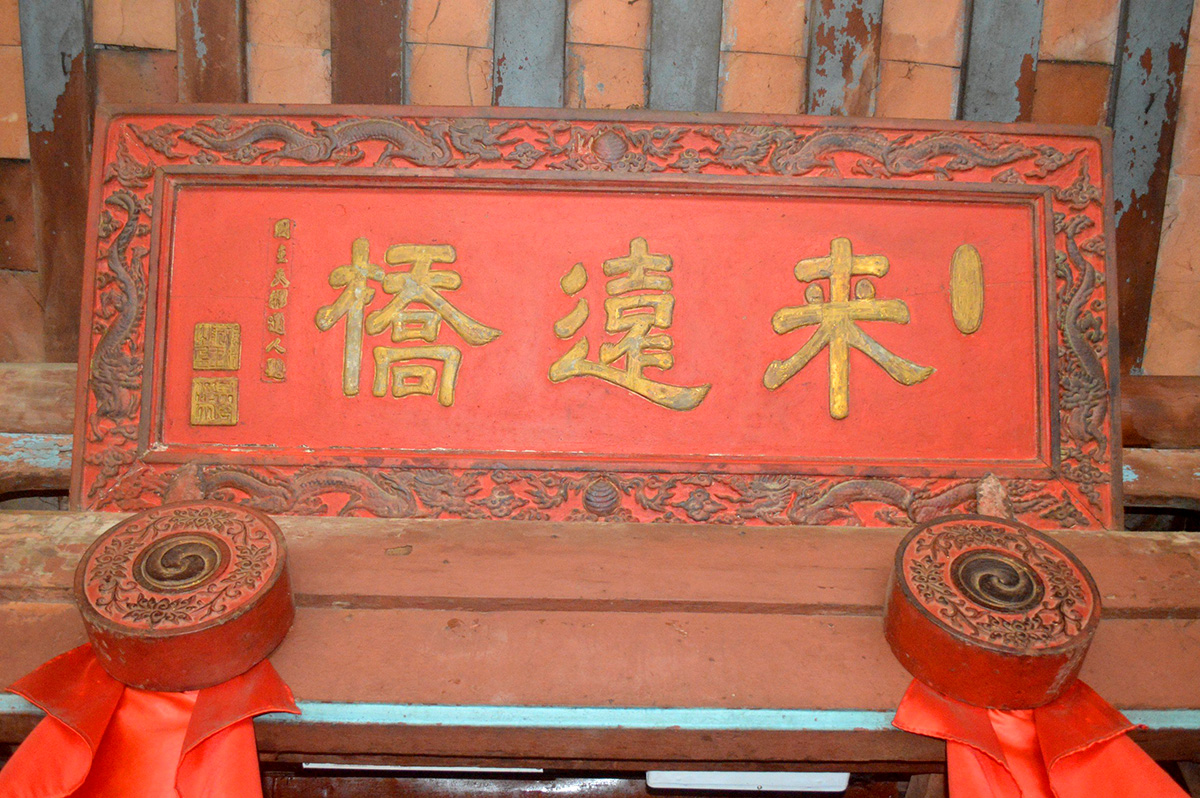
Horizontal Lacquered Boards Lai Vien Kieu. Photo by Hong Viet
Recognizing these multifaceted values, in recent years, through regular surveys and field investigations of heritage sites both within and beyond Hội An Ancient Town, professional staff of the Hoi An Center for the Conservation of World Cultural Heritage have carried out documentation activities such as photographing and transcribing the content and form of horizontal boards and parallel sentences. These efforts are integrated into the development of scientific records for heritage sites, ensuring long-term storage for research and conservation purposes.
In addition to the Center’s work, several local researchers have conducted studies involving transcription and translation of inscriptions found at various sites, leading to the publication of a number of related works. Moreover, research papers and articles on hoành phi and câu đối in Hội An have been published in specialized journals. These activities have gradually built a rich body of data, supporting more effective research and identification of this documentary heritage component, both within Hội An and in the broader cultural history of the region.
Despite these achievements, the preservation and promotion of this heritage require more systematic, comprehensive, and long-term attention.
Over time, many horizontal boards and parallel sentences in Hội An have faced significant risks of deterioration due to harsh weather conditions and environmental factors, leading to mold, termite damage, and structural decay. In some cases, changes in property ownership have resulted in the removal or replacement of inscriptions associated with former owners’ beliefs or aesthetic preferences. There are also instances of irreparable damage or loss caused by negligence and lack of awareness. In reality, some owners of old houses, whether due to lack of knowledge or other reasons, have repurposed old lacquered boards as tabletops or supports for goods, unintentionally causing irreversible damage or loss. Therefore, raising awareness among authorities and local communities about the value of this heritage is an urgent priority, in order to mobilize collective efforts for its sustainable preservation and promotion.
Furthermore, aside from communal religious sites, inscriptions associated with private residences and personal cultural practices have not yet been systematically surveyed or identified. It is therefore necessary to intensify efforts in inventorying and documenting these materials. Investment should also be made in digitization and documentation using modern technologies to support long-term storage, research, and dissemination.
Owners of heritage properties should be encouraged to adopt proper conservation measures, including regular inspection and cleaning, to prevent deterioration caused by termites and adverse environmental conditions.
During restoration processes, attention must be given to assessing the technical condition and preservation status of inscriptions in order to apply appropriate conservation treatments, ensuring their longevity in connection with the heritage sites.
As classical Chinese characters are no longer widely understood within the community, priority should be given to transcription and translation efforts. The integration of QR codes at heritage sites, providing accessible information about hoành phi and câu đối, would enable visitors and the public to better understand this heritage component, while also enhancing its appeal.
Efforts should also be strengthened to promote and introduce this unique heritage to wider audiences through research, publications, exhibitions, and displays, thereby further disseminating the humanistic values of Hội An’s culture to both domestic and international audiences.
The city should organize community-based activities such as festivals, competitions, and creative events related to horizontal boards and parallel sentences. These initiatives would help revive traditional practices, cultural appreciation, and the use of such inscriptions in homes, religious sites, and public institutions.
Preliminary research indicates that the documentary heritage of hoành phi and câu đối in Hội An holds significant scientific and historical value, as well as unique characteristics shaped by the convergence of multiple cultures over time within an international trading port. This contributes to the Outstanding Universal Value of Hội An as a World Cultural Heritage site. Therefore, comprehensive research and documentation, leading toward the preparation of formal dossiers for national and international recognition as documentary heritage, are both necessary and urgent. Such efforts would not only honor the heritage itself but also acknowledge the contributions of generations of local communities in preserving it.
In conclusion, horizontal lacquered boards and parallel sentences in Hội An represent a unique and valuable component of the town’s documentary heritage. They preserve enduring cultural values of families, lineages, and the wider community across historical periods. Through these inscriptions, one can observe distinctive features of customs, traditions, and urban lifestyles shaped by centuries of East–West cultural exchange in a vibrant international trading port. The preservation and promotion of this heritage must therefore go hand in hand with the safeguarding of Hội An Ancient Town as a World Cultural Heritage site for present and future generations.
Author: MA. Quảng Văn Qúy
Source: Hoi An Center for the Conservation of World Cultural Heritage
Newer articles
Older articles