Hoi An World Cultural Heritage Conservation Center
Hoi An’s Cultural Heritage: A Foundation for Creative Culture and Cultural Industries
With a rich, diverse, and distinctive cultural capital crystallized through the history of a once-thriving international trading port over several centuries, together with the enduring traditions of a gentle, resilient, humble, and dynamic local community, Hội An possesses exceptional opportunities to strengthen its position as a prominent ecological and humane urban center, a city of strong identity, modernity, sustainability, and a hub of creativity and global connection.
A Perspective on Creative Culture
Hội An’s culture embodies many layers of creativity marked by distinctive characteristics, forming a complex of heritage, history, humanity, and urban architecture. Joining the UNESCO Creative Cities Network has first and foremost enabled Hội An to more fully and accurately recognize its cultural capital, social capital, and human capital, as well as the city’s potential and creative capacity, while also allowing it to absorb UNESCO’s initiatives and learn from the experiences of creative cities in Vietnam and around the world.
In modern society, culture has assumed a new position and a new importance for development that it did not previously hold. Culture is no longer viewed merely as the crystallization of refined values, but must also harmoniously combine scholarly and popular dimensions. It is no longer seen solely as a domain of pure values, but also as one capable of making meaningful contributions to economic development. Modern society has recognized the economic power of culture and is actively harnessing its economic potential. Therefore, our perspective on culture must change: we should not limit our cultural vision to preservation and identity safeguarding alone, but must also engage proactively with the global cultural industries system, transforming culture into a driving force for economic development.
Preliminary statistics show that Hội An’s cultural industries sector, including handicrafts as well as arts, entertainment, and recreation, contributed 5.2% of the city’s total gross output in 2019, 4.6% in 2020, 3.6% in 2021, and 6.2% in 2022. The city currently has 658 establishments and 1,710 households engaged in production and business activities related to handicrafts and folk arts. This sector involves 3,013 workers and 700 performers and musicians, with an average monthly income of 250–350 USD per worker. A core workforce of more than 200 artisans, skilled craftspeople, scriptwriters, choreographers, musicians, designers, and sound and lighting technicians is organized into teams, groups, and clubs that undertake the city’s regular cultural activities and support local communities and schools.
Clearly, the creative culture rooted in the heritage of Hội An’s communities has contributed to sustainable and multidimensional development goals, including the preservation and promotion of cultural identity, economic prosperity, social cohesion, and ecological protection. More importantly, it has helped reinforce and continue a long-rooted tradition of creativity in the city’s history while adapting it to a new contemporary level, based on innovation and the effective use of Hội An’s cultural, social, and human capital, together with its other resources.
In modern society, culture has assumed a new position and a new importance for development that it did not previously hold. Culture is no longer viewed merely as the crystallization of refined values, but must also harmoniously combine scholarly and popular dimensions. It is no longer seen solely as a domain of pure values, but also as one capable of making meaningful contributions to economic development. Modern society has recognized the economic power of culture and is actively harnessing its economic potential. Therefore, our perspective on culture must change: we should not limit our cultural vision to preservation and identity safeguarding alone, but must also engage proactively with the global cultural industries system, transforming culture into a driving force for economic development.
Preliminary statistics show that Hội An’s cultural industries sector, including handicrafts as well as arts, entertainment, and recreation, contributed 5.2% of the city’s total gross output in 2019, 4.6% in 2020, 3.6% in 2021, and 6.2% in 2022. The city currently has 658 establishments and 1,710 households engaged in production and business activities related to handicrafts and folk arts. This sector involves 3,013 workers and 700 performers and musicians, with an average monthly income of 250–350 USD per worker. A core workforce of more than 200 artisans, skilled craftspeople, scriptwriters, choreographers, musicians, designers, and sound and lighting technicians is organized into teams, groups, and clubs that undertake the city’s regular cultural activities and support local communities and schools.
Clearly, the creative culture rooted in the heritage of Hội An’s communities has contributed to sustainable and multidimensional development goals, including the preservation and promotion of cultural identity, economic prosperity, social cohesion, and ecological protection. More importantly, it has helped reinforce and continue a long-rooted tradition of creativity in the city’s history while adapting it to a new contemporary level, based on innovation and the effective use of Hội An’s cultural, social, and human capital, together with its other resources.
Typical Examples of Creative Culture in Hội An
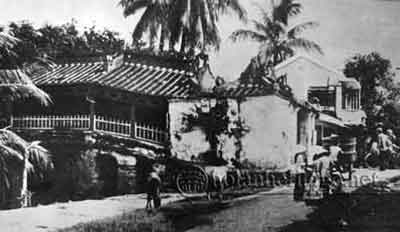
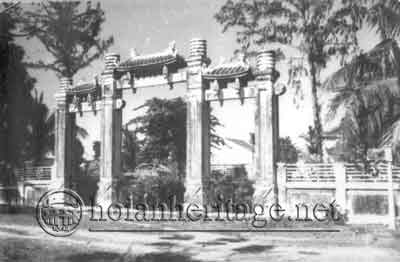
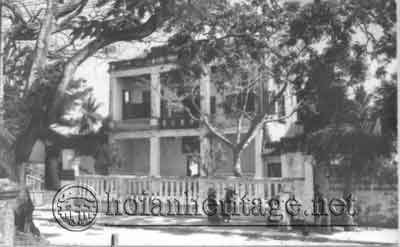
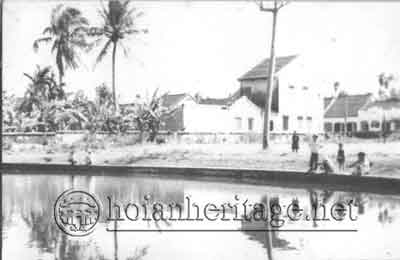
The adaptability and creativity of Hội An’s residents can be seen in the unique character of the Hội An Ancient Town urban architectural complex, which holds the appeal of a “living museum” of architecture, habitation, daily life, communication, labor, and cultural memory. Within ordinary living spaces such as street corners, sidewalks, wells, banyan trees, communal courtyards, clan houses, pagodas, temples, assembly halls, alleys, and flower gardens, one finds deep traces of ways of life, religious practices, folk performance traditions, and the refined artistry of many handicraft occupations shaped by generations of Hội An residents. These cultural heritage values, together with the virtues of “nhân tình thuần hậu” (kind and sincere human sentiment), a strong spirit of community cohesion, and an urban form that interweaves streets and villages within a diverse ecological landscape, constitute the nucleus, foundation, and environment for creativity and sustainable development in Hội An.
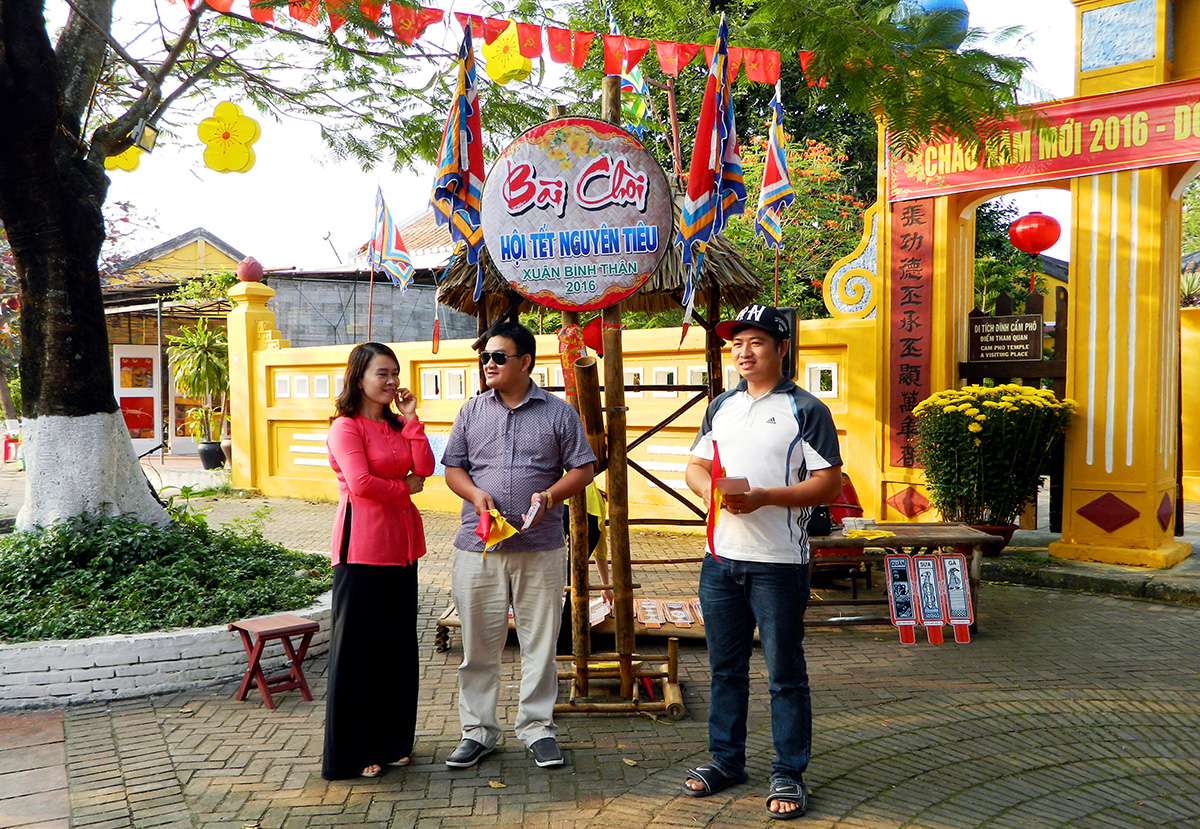
The folk artistic products created by Hội An’s communities are extraordinarily rich and attractive. In addition to Bài Chòi, already widely known and recognized by UNESCO as an Intangible Cultural Heritage of Humanity, in 2023 both Tết Nguyên Tiêu and Tết Trung Thu in Hội An were inscribed on Vietnam’s National List of Intangible Cultural Heritage. Other forms include folk songs, hát bội (classical opera), hò khoan, bả trạo, sắc bùa, the dance of the Four Sacred Creatures, and hò đưa linh, all of which are relatively common in Hội An and serve as core materials for highly creative and distinctive cultural-tourism products such as Ancient Town Night, Night Street, Pedestrian Street, Hoài River Night, and Bài Chòi singing and play performances. Among these, the Hội An Full Moon Festival (Ancient Town Full Moon Night) has been ranked by readers of several well-known international travel magazines as one of the most fascinating places for experiencing and enjoying nightlife. More significantly, Hội An’s folk performance traditions have appeared throughout Vietnam and have been invited to perform in Japan, Hong Kong, China, Thailand, South Korea, Italy, Hungary, and Germany, among others.
Traditional craft villages are vibrant cultural entities, closely tied to the historical development of specific lands and communities, as well as to local communal practices, cultural spaces, and ecological-geographical landscapes. Through sustained efforts in preservation and promotion, the crafts of Thanh Châu bird’s nest harvesting, Kim Bồng carpentry, Thanh Hà pottery, and Trà Quế vegetable cultivation have all been inscribed on the National List of Intangible Cultural Heritage. In addition, Hội An is also well known for handicrafts such as lantern making, leatherwork, tailoring, lion heads, masks, flower lanterns, carving, sculpture, relief decoration, and ornamental plasterwork. More recently, Hội An has seen the emergence of pioneering artisans who create unique works of art from clay, bamboo, driftwood, nipa palm sheaths, tree roots, recycled materials, and waste objects. Typical creative spaces include Lê Ngọc Thuận’s Driftwood Art Village, Nguyễn Quốc Dân’s Rebirth Workshop, CAB Hội An by Chinh Ba, Võ Tấn Tân’s Taboo Bamboo workshop, Phạm Ngọc Trâm’s silk painting studio, and Trương Tấn Thọ’s Việt Paper Garden made from nipa palm. Tân Thành fishing village has also become a creative space for many domestic and international specialists involved in cultural and community-based tourism development projects.
Typical creative cultural spaces associated with cultural industries include Hoi An Memories Land, an entertainment and tourism complex built on the foundation of cultural and artistic performances, craft demonstrations, representative handicraft products, and traditional cuisine. At its core is the live outdoor spectacle Hoi An Memories, featuring more than 500 artists and performers, and recognized as one of the largest and most outstanding real-scene performance shows in Vietnam. The Lune Center Hội An is the only bamboo theater in Vietnam, presenting distinctive performances that combine circus arts with folk traditions.
Cồn Bắp Ecotourism Area also serves as a space for cultural exchange and outdoor performance, featuring displays of traditional products and production tools, as well as a museum dedicated to the late composer Trịnh Công Sơn. Meanwhile, the Terracotta Park at the center of Thanh Hà Traditional Pottery Village is a unique architectural space that brings together architects, artists, and artisans from both Vietnam and abroad for workshops, model-making, cultural exchange, and intergenerational craft transmission for children.
The folk artistic products created by Hội An’s communities are extraordinarily rich and attractive. In addition to Bài Chòi, already widely known and recognized by UNESCO as an Intangible Cultural Heritage of Humanity, in 2023 both Tết Nguyên Tiêu and Tết Trung Thu in Hội An were inscribed on Vietnam’s National List of Intangible Cultural Heritage. Other forms include folk songs, hát bội (classical opera), hò khoan, bả trạo, sắc bùa, the dance of the Four Sacred Creatures, and hò đưa linh, all of which are relatively common in Hội An and serve as core materials for highly creative and distinctive cultural-tourism products such as Ancient Town Night, Night Street, Pedestrian Street, Hoài River Night, and Bài Chòi singing and play performances. Among these, the Hội An Full Moon Festival (Ancient Town Full Moon Night) has been ranked by readers of several well-known international travel magazines as one of the most fascinating places for experiencing and enjoying nightlife. More significantly, Hội An’s folk performance traditions have appeared throughout Vietnam and have been invited to perform in Japan, Hong Kong, China, Thailand, South Korea, Italy, Hungary, and Germany, among others.
Traditional craft villages are vibrant cultural entities, closely tied to the historical development of specific lands and communities, as well as to local communal practices, cultural spaces, and ecological-geographical landscapes. Through sustained efforts in preservation and promotion, the crafts of Thanh Châu bird’s nest harvesting, Kim Bồng carpentry, Thanh Hà pottery, and Trà Quế vegetable cultivation have all been inscribed on the National List of Intangible Cultural Heritage. In addition, Hội An is also well known for handicrafts such as lantern making, leatherwork, tailoring, lion heads, masks, flower lanterns, carving, sculpture, relief decoration, and ornamental plasterwork. More recently, Hội An has seen the emergence of pioneering artisans who create unique works of art from clay, bamboo, driftwood, nipa palm sheaths, tree roots, recycled materials, and waste objects. Typical creative spaces include Lê Ngọc Thuận’s Driftwood Art Village, Nguyễn Quốc Dân’s Rebirth Workshop, CAB Hội An by Chinh Ba, Võ Tấn Tân’s Taboo Bamboo workshop, Phạm Ngọc Trâm’s silk painting studio, and Trương Tấn Thọ’s Việt Paper Garden made from nipa palm. Tân Thành fishing village has also become a creative space for many domestic and international specialists involved in cultural and community-based tourism development projects.
Typical creative cultural spaces associated with cultural industries include Hoi An Memories Land, an entertainment and tourism complex built on the foundation of cultural and artistic performances, craft demonstrations, representative handicraft products, and traditional cuisine. At its core is the live outdoor spectacle Hoi An Memories, featuring more than 500 artists and performers, and recognized as one of the largest and most outstanding real-scene performance shows in Vietnam. The Lune Center Hội An is the only bamboo theater in Vietnam, presenting distinctive performances that combine circus arts with folk traditions.
Cồn Bắp Ecotourism Area also serves as a space for cultural exchange and outdoor performance, featuring displays of traditional products and production tools, as well as a museum dedicated to the late composer Trịnh Công Sơn. Meanwhile, the Terracotta Park at the center of Thanh Hà Traditional Pottery Village is a unique architectural space that brings together architects, artists, and artisans from both Vietnam and abroad for workshops, model-making, cultural exchange, and intergenerational craft transmission for children.
Creativity as a Driving Force for Action
Hội An has identified a vision and policy orientation to become a pioneering city in Vietnam and Southeast Asia in terms of a sustainable development model grounded in culture and ecology. Culture, ecology, and people are always placed at the center of all development strategies, as reflected in planning frameworks, projects, and programs aimed at building Hội An into an ecological, cultural, and tourism city that is rich in identity, internationally integrated, and harmonious across cultural, social, economic, and environmental dimensions.
Hội An has persistently made efforts and achieved significant results in preserving and promoting traditional values, fostering creativity in handicrafts and folk arts, contributing to livelihoods, employment, and income generation for local people, and producing distinctive and attractive cultural-tourism products. However, the city currently faces many difficulties and challenges. Human resources in handicrafts and folk arts are declining. Products remain insufficiently diverse and often lack market opportunities. Facilities and infrastructure are still inadequate, particularly those needed for training and nurturing young talent and for organizing practical activities that encourage and spread creative participation within the community.
In the context of globalization, Hội An needs mechanisms, policies, and solutions to continue proactively expanding international cooperation in scientific research, heritage conservation and promotion, natural resource management, landscape enhancement, and environmental protection. The city needs to selectively absorb external influences in order to continually enrich its local culture and generate added value from indigenous cultural resources in a sustainable way. To achieve this, Hội An has been implementing a Resilience and Recovery Strategy based on the 17 Sustainable Development Goals adopted by the Vietnamese Government under the United Nations 2030 Agenda. This strategy includes numerous action programs, focusing in particular on building a facilitative government; enabling businesses and specialists to maximize their creative capacities; and moving toward the development of an innovation ecosystem that affirms Hội An’s vision as a globally innovative city.
At the heart of this process is the mobilization of broad participation from local residents, artisans, artists, everyday cultural elites, entrepreneurs, and specialists in decisions related to creativity and development, as well as in creative practices for livelihoods and community connection. It also involves leveraging collaborative resources; promoting the design of projects, models, and creative spaces; expanding start-up programs; encouraging young people to develop skills and creativity; and supporting handicraft production through a balance of preservation and development, green innovation, improved quality, diversification, and value creation in line with advanced creative design trends.
Ultimately, the key lies in a transformation of both awareness and action, so that creativity truly becomes a source of inspiration for everyone, and is understood not merely as a talent, but as a human quality in every individual.
Hội An has persistently made efforts and achieved significant results in preserving and promoting traditional values, fostering creativity in handicrafts and folk arts, contributing to livelihoods, employment, and income generation for local people, and producing distinctive and attractive cultural-tourism products. However, the city currently faces many difficulties and challenges. Human resources in handicrafts and folk arts are declining. Products remain insufficiently diverse and often lack market opportunities. Facilities and infrastructure are still inadequate, particularly those needed for training and nurturing young talent and for organizing practical activities that encourage and spread creative participation within the community.
In the context of globalization, Hội An needs mechanisms, policies, and solutions to continue proactively expanding international cooperation in scientific research, heritage conservation and promotion, natural resource management, landscape enhancement, and environmental protection. The city needs to selectively absorb external influences in order to continually enrich its local culture and generate added value from indigenous cultural resources in a sustainable way. To achieve this, Hội An has been implementing a Resilience and Recovery Strategy based on the 17 Sustainable Development Goals adopted by the Vietnamese Government under the United Nations 2030 Agenda. This strategy includes numerous action programs, focusing in particular on building a facilitative government; enabling businesses and specialists to maximize their creative capacities; and moving toward the development of an innovation ecosystem that affirms Hội An’s vision as a globally innovative city.
At the heart of this process is the mobilization of broad participation from local residents, artisans, artists, everyday cultural elites, entrepreneurs, and specialists in decisions related to creativity and development, as well as in creative practices for livelihoods and community connection. It also involves leveraging collaborative resources; promoting the design of projects, models, and creative spaces; expanding start-up programs; encouraging young people to develop skills and creativity; and supporting handicraft production through a balance of preservation and development, green innovation, improved quality, diversification, and value creation in line with advanced creative design trends.
Ultimately, the key lies in a transformation of both awareness and action, so that creativity truly becomes a source of inspiration for everyone, and is understood not merely as a talent, but as a human quality in every individual.
Author: MA. Nguyễn Văn Lanh
Source: Hoi An Center for the Conservation of World Cultural Heritage
Newer articles
Older articles