<!DOCTYPE html>
	<html lang="en" xmlns="http://www.w3.org/1999/xhtml" prefix="og: http://ogp.me/ns#">
	<head>
<title>Đô thị cổ Hội An</title>
<meta name="description" content="Dress Practices of the People of Hội An - Savefile - specialised exchanges -...">
<meta name="language" content="english">
<meta name="author" content="Hoi An Ancient Town">
<meta name="copyright" content="Hoi An Ancient Town [ngoctq16@gmail.com]">
<meta name="robots" content="index, archive, follow, noodp">
<meta name="googlebot" content="index,archive,follow,noodp">
<meta name="msnbot" content="all,index,follow">
<meta name="generator" content="NukeViet v4.5">
<meta name="viewport" content="width=device-width, initial-scale=1">
<meta http-equiv="Content-Type" content="text/html; charset=utf-8">
<meta http-equiv="content-language" content="en">
<meta property="og:title" content="Dress Practices of the People of Hội An">
<meta property="og:type" content="website">
<meta property="og:description" content="Savefile - specialised exchanges - https&#x3A;&#x002F;&#x002F;hoianheritage.net&#x002F;en&#x002F;specialised-exchanges&#x002F;savefile&#x002F;research-exchange&#x002F;dress-practices-of-the-people-of-hoi-an-48.html">
<meta property="og:site_name" content="Hoi An Ancient Town">
<meta property="og:url" content="https://hoianheritage.net/en/specialised-exchanges/savefile/research-exchange/dress-practices-of-the-people-of-hoi-an-48.html">
<link rel="shortcut icon" href="https://hoianheritage.net/themes/ngocsinhds/favicon.ico">
<link rel="apple-touch-icon" href="https://hoianheritage.net/themes/ngocsinhds/apple-touch-icon.png">
<link rel="canonical" href="https://hoianheritage.net/en/specialised-exchanges/savefile/research-exchange/dress-practices-of-the-people-of-hoi-an-48.html">
<link rel="alternate" href="https://hoianheritage.net/en/specialised-exchanges/rss.html" title="specialised exchanges" type="application/rss+xml">
<link rel="alternate" href="https://hoianheritage.net/en/specialised-exchanges/rss/research-exchange.html" title="specialised exchanges - Research exchange" type="application/rss+xml">
<link rel="preload" as="style" href="https://hoianheritage.net/assets/css/font-awesome.min.css" type="text/css">
<link rel="preload" as="style" href="https://hoianheritage.net/themes/ngocsinhds/css/bootstrap.min.css" type="text/css">
<link rel="preload" as="style" href="https://hoianheritage.net/themes/ngocsinhds/css/style.css" type="text/css">
<link rel="preload" as="style" href="https://hoianheritage.net/themes/ngocsinhds/css/style.responsive.css" type="text/css">
<link rel="preload" as="style" href="https://hoianheritage.net/themes/ngocsinhds/css/news.css" type="text/css">
<link rel="preload" as="style" href="https://hoianheritage.net/themes/ngocsinhds/css/bgslide.css" type="text/css">
<link rel="preload" as="script" href="https://hoianheritage.net/assets/js/jquery/jquery.min.js" type="text/javascript">
<link rel="preload" as="script" href="https://hoianheritage.net/assets/js/language/en.js" type="text/javascript">
<link rel="preload" as="script" href="https://hoianheritage.net/assets/js/DOMPurify/purify3.js" type="text/javascript">
<link rel="preload" as="script" href="https://hoianheritage.net/assets/js/global.js" type="text/javascript">
<link rel="preload" as="script" href="https://hoianheritage.net/assets/js/site.js" type="text/javascript">
<link rel="preload" as="script" href="https://hoianheritage.net/themes/ngocsinhds/js/news.js" type="text/javascript">
<link rel="preload" as="script" href="https://hoianheritage.net/themes/ngocsinhds/js/main.js" type="text/javascript">
<link rel="preload" as="script" href="https://hoianheritage.net/themes/ngocsinhds/js/jquery.bxslider.js" type="text/javascript">
<link rel="preload" as="script" href="https://sp.zalo.me/plugins/sdk.js" type="text/javascript">
<link rel="preload" as="script" href="https://hoianheritage.net/themes/ngocsinhds/js/bootstrap.min.js" type="text/javascript">
<link rel="StyleSheet" href="https://hoianheritage.net/assets/css/font-awesome.min.css">
<link rel="StyleSheet" href="https://hoianheritage.net/themes/ngocsinhds/css/bootstrap.min.css">
<link rel="StyleSheet" href="https://hoianheritage.net/themes/ngocsinhds/css/style.css">
<link rel="StyleSheet" href="https://hoianheritage.net/themes/ngocsinhds/css/style.responsive.css">
<link rel="StyleSheet" href="https://hoianheritage.net/themes/ngocsinhds/css/news.css">
<link rel="Stylesheet" href="https://hoianheritage.net/themes/ngocsinhds/css/bgslide.css" type="text/css" />
<style>
	body{background: #fff;}
</style>
<script>(function(i,s,o,g,r,a,m){i['GoogleAnalyticsObject']=r;i[r]=i[r]||function(){
(i[r].q=i[r].q||[]).push(arguments)},i[r].l=1*new Date();a=s.createElement(o),
m=s.getElementsByTagName(o)[0];a.async=1;a.src=g;m.parentNode.insertBefore(a,m)
})(window,document,'script','https://www.google-analytics.com/analytics.js','ga');
ga('create', 'UA-33613464-1', '.hoianheritage.net');
ga('send', 'pageview');
</script>
</head>
	<body>
<div id="print">
	<div id="hd_print">
		<h2 class="pull-left">Hoi An Ancient Town</h2>
		<p class="pull-right"><a title="Hoi An Ancient Town" href="https://hoianheritage.net/">https://hoianheritage.net</a></p>
	</div>
	<div class="clear"></div>
	<hr />
	<div id="content">
		<h1>Dress Practices of the People of Hội An</h1>
		<ul class="list-inline">
			<li>Thursday - 28/05/2026 05:55</li>
			<li class="hidden-print txtrequired"><em class="fa fa-print">&nbsp;</em><a title="Print" href="javascript:;" onclick="window.print()">Print</a></li>
			<li class="hidden-print txtrequired"><em class="fa fa-power-off">&nbsp;</em><a title="Close page" href="javascript:;" onclick="window.close()">Close page</a></li>
		</ul>
		<div class="clear"></div>
		<div id="hometext">
			Due to extensive cultural contact, the early development of sericulture and silk weaving, and the dress regulations imposed by feudal dynasties, clothing styles in the Cochinchina in general, and Hội An in particular, underwent several changes over time.
		</div>
		<div id="bodytext" class="clearfix">
			<div style="text-align: justify;"><span style="font-size:12pt"><span style="font-family:&#039;Times New Roman&#039;,serif"><span lang="X-NONE" style="font-size:14.0pt">When the Nguyễn Lords came to govern Thuận Quảng, they issued edicts to alter the customs and attire of the region: <em>“It is said that Lộc Khê hầu, while devising strategies against the Trịnh Lords, advised Lord Hy Tông to require the people to change their customs so as to differ completely from those in the North: abandoning ordinary hats in favor of pointed hats, replacing black trousers with brown ones, having women give up the four-panel tunic and yếm bodice in favor of the five-panel buttoned tunic, abandoning wrapped hair for buns, and replacing skirts with trouser</em></span><em><span lang="VI" style="font-size:14.0pt">s</span></em><a href="https://hoianheritage.net/#_ftn1" name="_ftnref1" title=""><span class="MsoFootnoteReference" style="vertical-align:super"><i><span lang="VI" style="font-size:14.0pt"><span class="MsoFootnoteReference" style="vertical-align:super"><b><span lang="VI" style="font-size:14.0pt"><span style="line-height:115%"><span style="font-family:&#039;Times New Roman&#039;,serif">&#91;1&#93;</span></span></span></b></span></span></i></span></a><em><span lang="X-NONE" style="font-size:14.0pt">.”</span></em></span></span><span style="font-size:12pt"><span style="font-family:&#039;Times New Roman&#039;,serif"><span lang="X-NONE" style="font-size:14.0pt">At first, these changes encountered some resistance, but over time, as people gradually adapted and recognized the practicality and advantages of the new clothing in daily life and labor, they came to be accepted and widely adopted.</span></span></span><br />
<br />
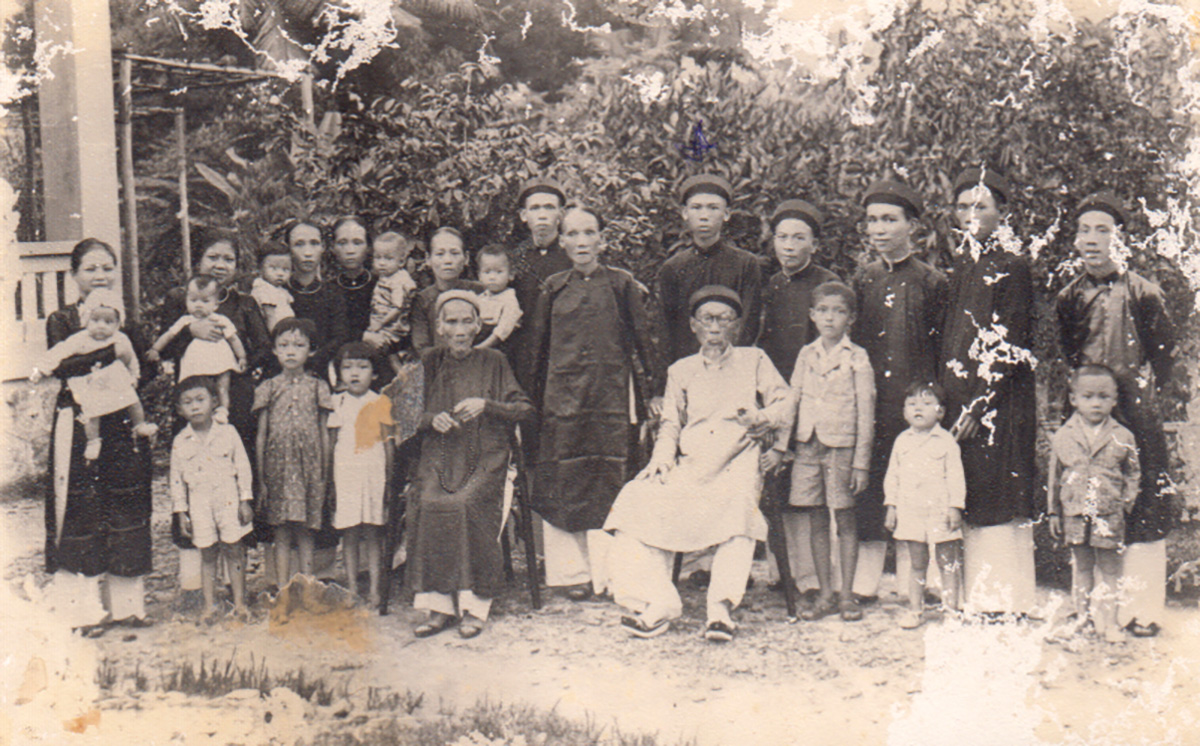
<span style="font-size:12pt"><span style="font-family:&#039;Times New Roman&#039;,serif"><span lang="X-NONE" style="font-size:14.0pt">The first Vietnamese settlers in this region likely dressed in the style of Đàng Ngoài (northern Vietnam). Women wore skirts, four-panel tunics, and yếm bodices, while men wore loincloths and went bare-chested or wore short-sleeved shirts. On important occasions, they would put on a long-sleeved outer garment and long trousers tied at the waist or secured with a drawstring. Formal dress consisted of a long gown fastened on the right side, with a standing collar and narrow sleeves. Both men and women wore hats woven from leaves and went barefoot or used sandals made from areca spathes or wooden clogs.</span></span></span><br />
<br />
<span style="font-size:12pt"><span style="font-family:&#039;Times New Roman&#039;,serif"><span lang="X-NONE" style="font-size:14.0pt">Later, due to the demands of urban life, contact with neighboring regions and foreign cultures, and advances in weaving techniques, the people of Hội An quickly refined their style of dress, making the town a well-known center of fashion in </span><span lang="VI" style="font-size:14.0pt">Cochinchina</span><span lang="X-NONE" style="font-size:14.0pt">.<br />
<br />
<img alt="" height="746" src="https://hoianheritage.net/uploads/specialised-exchanges/2026_05/hoi-an-xua.jpg" width="1200" /></span></span></span></div>

<div style="text-align: center;"><em><span style="font-size:12px;"><span style="font-family:Arial,Helvetica,sans-serif;"><span style="color:rgb(149, 165, 166);">Traditional clothing- Photo:&nbsp;<span style="line-height:107%"><span style="line-height:107%">Hoi An Center for the Conservation of World Cultural Heritage</span></span></span></span></span></em></div>

<div style="text-align: justify;"><br />
<span style="font-size:12pt"><span style="font-family:&#039;Times New Roman&#039;,serif"><span lang="X-NONE" style="font-size:14.0pt">Historical sources suggest that when Vietnamese settlers first arrived in Quảng Nam in general, and Hội An in particular, they came into contact with the dress of the Cham people. <em>Ô Châu cận lục</em>, describing the customs of Điện Bàn district (which included present-day Hội An), records: <em>“Women wear Cham-style garments, boys carry Chinese fans; both the wealthy and the poor use bowls and chopsticks decorated with dragons and phoenixes; people of high and low status alike wear garments entirely in red and pink hues</em><a href="https://hoianheritage.net/#_ftn2" name="_ftnref2" title=""><span class="MsoFootnoteReference" style="vertical-align:super"><i><span class="MsoFootnoteReference" style="vertical-align:super"><b><span lang="X-NONE" style="font-size:14.0pt"><span style="line-height:115%"><span style="font-family:&#039;Times New Roman&#039;,serif">&#91;2&#93;</span></span></span></b></span></i></span></a><em>.”</em></span></span></span><br />
<br />
<span style="font-size:12pt"><span style="font-family:&#039;Times New Roman&#039;,serif"><span lang="X-NONE" style="font-size:14.0pt">By the 16th and 17th centuries, the people of Hội An also came into broad contact with the clothing styles of the Chinese, Japanese, and Europeans. When the Buddhist monk Thích Đại Sán visited Hội An in 1696, he described the town as follows: <em>“...along the riverbank stretches a main road three to four dặm long, called Đại Đường Cái, with rows of houses tightly packed on both sides; the shop owners are all from Fujian and still dress in the style of the former dynasty (the Ming)</em><a href="https://hoianheritage.net/#_ftn3" name="_ftnref3" title=""><span class="MsoFootnoteReference" style="vertical-align:super"><i><span class="MsoFootnoteReference" style="vertical-align:super"><b><span lang="X-NONE" style="font-size:14.0pt"><span style="line-height:115%"><span style="font-family:&#039;Times New Roman&#039;,serif">&#91;3&#93;</span></span></span></b></span></i></span></a><em>.”</em></span></span></span><br />
<br />
<span style="font-size:12pt"><span style="font-family:&#039;Times New Roman&#039;,serif"><span lang="X-NONE" style="font-size:14.0pt">A number of paintings depicting Japanese people who came to and lived in Hội An during the 17th century show that they continued to wear Japanese-style clothing. This demonstrates that, in the past, the inhabitants of Hội An had favorable conditions for exchange with the outside world, including in matters of dress. Such exchange was made possible by the strong pull of the commodity economy and the international trading port. From being an economic hub, Hội An also became a center of cultural interaction in</span> <span lang="VI" style="font-size:14.0pt">the</span> <span lang="VI" style="font-size:14.0pt">Cochinchina</span><span lang="X-NONE" style="font-size:14.0pt">. Its character of exchange and convergence thus gradually took shape.</span></span></span><br />
<span style="font-size:12pt"><span style="font-family:&#039;Times New Roman&#039;,serif"><span lang="X-NONE" style="font-size:14.0pt">Unlike Huế, the style of dress in Hội An was primarily that of laborers and townspeople. It was less elaborate and less formalized than the dress of Huế. Although contact with outside influences was extensive, local economic and social conditions, together with the psychology of the people, meant that the adoption of foreign elements was active yet selective. What was accepted had to meet several requirements: suitability for labor and daily life, alignment with a preference for durability, compatibility with a taste for beauty, and conformity with communal values.</span></span></span><br />
<br />
<span style="font-size:12pt"><span style="font-family:&#039;Times New Roman&#039;,serif"><span lang="X-NONE" style="font-size:14.0pt">A fondness for dressing well, combined with a strong sense of community, helped shape the distinctive character of Hội An dress compared with the rest of the region. Beyond durability, the people of Hội An also valued elegance in dress. This attitude is reflected in the following folk verse:</span></span></span><br />
&nbsp;</div>

<div style="text-align: center;"><span style="font-size:12pt"><span style="font-family:&#039;Times New Roman&#039;,serif"><em><span lang="X-NONE" style="font-size:14.0pt">Mother, I will not marry a peasant,</span></em><br />
<span lang="X-NONE" style="font-size:14.0pt"><em>Whether near or far, I will only marry a merchant.</em><br />
<em>If I marry a merchant, I can wear double-layered gowns,</em><br />
<em>Wear red shoes and sit on a high chair.</em><br />
<em>(Folk verse)</em></span></span></span><br />
&nbsp;</div>

<div style="text-align: justify;"><span style="font-size:12pt"><span style="line-height:normal"><span style="font-family:&#039;Times New Roman&#039;,serif"><span style="font-size:14.0pt">This mentality developed and was satisfied by the growth of the commodity economy, including the trade in clothing and jewelry. Historical records indicate that garments and adornments were among the best-selling commodities in</span><span style="font-size:14.0pt"> the </span><span lang="en-US" style="font-size:14.0pt"><span style="background:white"><span style="color:rgb(8, 27, 58);"><span style="letter-spacing:.15pt">Cochinchina<a href="https://hoianheritage.net/#_ftn4" name="_ftnref4" title=""><span class="MsoFootnoteReference" style="vertical-align:super"><span class="MsoFootnoteReference" style="vertical-align:super"><span lang="en-US" style="font-size:14.0pt"><span style="background:white"><span style="line-height:115%"><span style="font-family:&#039;Times New Roman&#039;,serif"><span style="color:rgb(8, 27, 58);"><span style="letter-spacing:.15pt">&#91;4&#93;</span></span></span></span></span></span></span></span></a></span></span></span></span><span style="font-size:14.0pt">.</span><sup> </sup><span style="font-size:14.0pt">With such access to goods, the people of Hội An did not merely aspire to dress well, they actually did so:</span></span></span></span><br />
&nbsp;</div>

<div style="text-align: center;"><span style="font-size:12pt"><span style="font-family:&#039;Times New Roman&#039;,serif"><em><span lang="X-NONE" style="font-size:14.0pt">This morning I went out and met a lady of noble grace and beauty,</span></em><br />
<span lang="X-NONE" style="font-size:14.0pt"><em>Wearing black satin trousers from the North,</em><br />
<em>And a Tam Giang bodice,</em><br />
<em>A gauze scarf on her head, shoes on her feet,</em><br />
<em>A floral kerchief and a northern fan in hand,</em><br />
<em>White in the morning, yellow by evening.</em><br />
<em>(Folk verse)</em></span></span></span><br />
&nbsp;</div>

<div style="text-align: justify;"><span style="font-size:12pt"><span style="font-family:&#039;Times New Roman&#039;,serif"><span lang="X-NONE" style="font-size:14.0pt">This verse partly reveals the richness and cosmopolitanism of Hội An dress culture. Diversity in style, color, and material was indeed a defining feature of clothing in the old town. This richness was in some measure related to the forms of attire described by Cristophoro Borri in his account of his journey to</span> <span lang="VI" style="font-size:14.0pt">the</span> <span lang="VI" style="font-size:14.0pt">Cochinchina</span><span lang="X-NONE" style="font-size:14.0pt"> in 1618.</span></span></span><br />
<br />
<span style="font-size:12pt"><span style="font-family:&#039;Times New Roman&#039;,serif"><span lang="X-NONE" style="font-size:14.0pt">In terms of style, Hội An was among the earliest places in Vietnam to experience cultural exchange with foreign countries and with major domestic political and economic centers. As a result, a number of foreign fashion items were adopted by local residents, including shoes, hats, stockings, fans, umbrellas, glass earrings, bracelets, mirrors, combs, and textiles. These items were brought to Hội An quite early by foreign merchant ships.</span></span></span><br />
<br />
<span style="font-size:12pt"><span style="font-family:&#039;Times New Roman&#039;,serif"><span lang="X-NONE" style="font-size:14.0pt">As for color, in addition to indigo and brown, the people of Hội An early on developed a preference for brightly colored garments. This tendency is widely noted in old written sources. Even today, residents in the coastal areas of Hội An still favor clothes in strong primary colors such as blue, red, and yellow. In the urban area, people tend to prefer softer, more elegant shades. Overall, the palette of clothing colors in Hội An was very rich, including blue, red, yellow, russet, sky blue, pink, green, white, brown, and indigo.</span></span></span><br />
<br />
<span style="font-size:12pt"><span style="font-family:&#039;Times New Roman&#039;,serif"><span lang="X-NONE" style="font-size:14.0pt">Regarding materials, fine fabrics such as <em>the</em> (gauze silk), <em>trừu</em>, <em>đoạn</em> (satin), <em>lãnh</em> (glossy black silk), silk, and brocade were widely used. Even poor households tried to own at least one long gown made of silk or <em>lãnh</em> for important occasions. As a major economic center, Hội An had relatively abundant supplies of textiles, which made them more accessible and affordable than in many other places. It was precisely this widespread use of luxurious fabrics that led to the clothing restrictions imposed by Hoàng Ngũ Phúc in 1776 when he invaded Thuận Quảng:<em>“...As for clothing, people should follow the customs of the realm and ordinarily use cloth and silk; only officials are permitted to use gauze silk, satin, and fine silks, while brocades and fabrics decorated with dragon and phoenix motifs are no longer to be worn as before in presumptuous imitation</em><a href="https://hoianheritage.net/#_ftn5" name="_ftnref5" title=""><span class="MsoFootnoteReference" style="vertical-align:super"><i><span class="MsoFootnoteReference" style="vertical-align:super"><b><span lang="X-NONE" style="font-size:14.0pt"><span style="line-height:115%"><span style="font-family:&#039;Times New Roman&#039;,serif">&#91;5&#93;</span></span></span></b></span></i></span></a><em>.”</em></span></span></span><br />
<br />
<span style="font-size:12pt"><span style="font-family:&#039;Times New Roman&#039;,serif"><span lang="X-NONE" style="font-size:14.0pt">This desire to dress beautifully was tempered by a communal mentality. Although the people of Hội An were in regular contact with outside fashions, they still preserved traditional modes of dress. Because the commodity economy had not yet developed strongly enough to dissolve the institutions of the rural communal order, communal values remained firmly rooted alongside urban sensibilities. Any expression that exceeded communal norms was subject to criticism. As a result, the adoption of outside fashion trends proceeded slowly and selectively. This characteristic has persisted to the present day. Even today, the acceptance of modern clothing styles tends to occur cautiously and selectively, rather than rapidly and indiscriminately as in some other places.</span></span></span></div>

<div>
<div style="text-align: justify;">&nbsp;</div>

<hr align="left" size="1" width="33%" />
<div id="ftn1" style="text-align: justify;"><span style="font-size:12pt"><span style="line-height:normal"><span style="font-family:&#039;Times New Roman&#039;,serif"><a href="https://hoianheritage.net/#_ftnref1" name="_ftn1" title=""><span class="MsoFootnoteReference" style="vertical-align:super"><span style="font-size:10.0pt"><span class="MsoFootnoteReference" style="vertical-align:super"><span style="font-size:10.0pt"><span style="line-height:115%"><span style="font-family:&#039;Times New Roman&#039;,serif">&#91;1&#93;</span></span></span></span></span></span></a> <span lang="en-US" style="font-size:10.0pt">Phan Khoang (1969), <i>Việt sử xứ Đàng Trong</i>, Khai Trí Publishing House, Saigon, p. 615.</span></span></span></span></div>

<div id="ftn2" style="text-align: justify;"><span style="font-size:12pt"><span style="line-height:normal"><span style="font-family:&#039;Times New Roman&#039;,serif"><a href="https://hoianheritage.net/#_ftnref2" name="_ftn2" title=""><span class="MsoFootnoteReference" style="vertical-align:super"><span class="MsoFootnoteReference" style="vertical-align:super"><span style="font-size:12.0pt"><span style="line-height:115%"><span style="font-family:&#039;Times New Roman&#039;,serif">&#91;2&#93;</span></span></span></span></span></a> <span lang="en-US" style="font-size:10.0pt">Dương Văn An (1951), <i>Ô Châu cận lục</i>, translated by Bùi Lương, Văn Hóa Á Châu Publishing House, Saigon, p. 46.</span></span></span></span><br />
<br />
&nbsp;</div>

<div id="ftn3" style="text-align: justify;"><span style="font-size:12pt"><span style="line-height:normal"><span style="font-family:&#039;Times New Roman&#039;,serif"><a href="https://hoianheritage.net/#_ftnref3" name="_ftn3" title=""><span class="MsoFootnoteReference" style="vertical-align:super"><span style="font-size:10.0pt"><span class="MsoFootnoteReference" style="vertical-align:super"><span style="font-size:10.0pt"><span style="line-height:115%"><span style="font-family:&#039;Times New Roman&#039;,serif">&#91;3&#93;</span></span></span></span></span></span></a> <span lang="en-US" style="font-size:10.0pt">Thích Đại Sán (1963), <i>Hải ngoại kỷ sự</i>, Huế University, Committee for the Translation of Vietnamese Historical Sources, Saigon, p. 154.</span></span></span></span></div>

<div id="ftn4" style="text-align: justify;"><span style="font-size:12pt"><span style="line-height:normal"><span style="font-family:&#039;Times New Roman&#039;,serif"><a href="https://hoianheritage.net/#_ftnref4" name="_ftn4" title=""><span class="MsoFootnoteReference" style="vertical-align:super"><span style="font-size:10.0pt"><span class="MsoFootnoteReference" style="vertical-align:super"><span style="font-size:10.0pt"><span style="line-height:115%"><span style="font-family:&#039;Times New Roman&#039;,serif">&#91;4&#93;</span></span></span></span></span></span></a> <span lang="en-US" style="font-size:10.0pt">Cristophoro Borri (1998), <i>Xứ Đàng Trong năm 1621</i> &#91;<i>Cochinchina in 1621</i>&#93;, translated by Hồng Nhuệ, Nguyễn Khắc Xuyên, and Nguyễn Nghị, Hồ Chí Minh City Publishing House, pp. 90–91.</span></span></span></span></div>

<div id="ftn5" style="text-align: justify;"><span style="font-size:12pt"><span style="line-height:normal"><span style="font-family:&#039;Times New Roman&#039;,serif"><a href="https://hoianheritage.net/#_ftnref5" name="_ftn5" title=""><span class="MsoFootnoteReference" style="vertical-align:super"><span style="font-size:10.0pt"><span class="MsoFootnoteReference" style="vertical-align:super"><span style="font-size:10.0pt"><span style="line-height:115%"><span style="font-family:&#039;Times New Roman&#039;,serif">&#91;5&#93;</span></span></span></span></span></span></a> <span lang="en-US" style="font-size:10.0pt">Phan Khoang (1969), <i>Việt sử xứ Đàng Trong</i>, op.</span> <span lang="VI" style="font-size:10.0pt">cit.</span><span lang="en-US" style="font-size:10.0pt">, p. 617.</span></span></span></span></div>
</div>

<div style="text-align: center;">&nbsp;</div>
		</div>
				<div id="author">
						<p>
				<strong>Author:</strong>
				Trần Văn An
			</p>
						<p>
				<strong>Source:</strong>
				Hoi An Center for the Conservation of World Cultural Heritage
			</p>
		</div>
	</div>
	<div id="footer" class="clearfix">
		<div id="url">
			<strong>URL of this newsletter: </strong><a href="https://hoianheritage.net/en/specialised-exchanges/savefile/research-exchange/dress-practices-of-the-people-of-hoi-an-48.html" title="Dress Practices of the People of Hội An">https://hoianheritage.net/en/specialised-exchanges/savefile/research-exchange/dress-practices-of-the-people-of-hoi-an-48.html</a>

		</div>
		<div class="clear"></div>
		<div class="copyright">
			&copy; Hoi An Ancient Town
		</div>
		<div id="contact">
			<a href="mailto:ngoctq16@gmail.com">ngoctq16@gmail.com</a>
		</div>
	</div>
</div>
        <div id="timeoutsess" class="chromeframe">
            You did not use the site, <a onclick="timeoutsesscancel();" href="https://hoianheritage.net/#">Click here to remain logged</a>. Timeout: <span id="secField"> 60 </span> second
        </div>
        <div id="openidResult" class="nv-alert" style="display:none"></div>
        <div id="openidBt" data-result="" data-redirect=""></div>
<div id="run_cronjobs" style="visibility:hidden;display:none;"><img alt="cron" src="/index.php?second=cronjobs&amp;p=h767v9sC" width="1" height="1" /></div>
<script src="https://hoianheritage.net/assets/js/jquery/jquery.min.js"></script>
<script>var nv_base_siteurl="/",nv_lang_data="en",nv_lang_interface="en",nv_name_variable="nv",nv_fc_variable="op",nv_lang_variable="language",nv_module_name="specialised-exchanges",nv_func_name="savefile",nv_is_user=0, nv_my_ofs=-4,nv_my_abbr="EDT",nv_cookie_prefix="nv4c_Cd6th",nv_check_pass_mstime=1738000,nv_area_admin=0,nv_safemode=0,theme_responsive=1,nv_recaptcha_ver=2,nv_recaptcha_sitekey="",nv_recaptcha_type="image",XSSsanitize=1;</script>
<script src="https://hoianheritage.net/assets/js/language/en.js"></script>
<script src="https://hoianheritage.net/assets/js/DOMPurify/purify3.js"></script>
<script src="https://hoianheritage.net/assets/js/global.js"></script>
<script src="https://hoianheritage.net/assets/js/site.js"></script>
<script src="https://hoianheritage.net/themes/ngocsinhds/js/news.js"></script>
<script src="https://hoianheritage.net/themes/ngocsinhds/js/main.js"></script>
<script src="https://hoianheritage.net/themes/ngocsinhds/js/jquery.bxslider.js" type="text/javascript"></script>
<script src="https://sp.zalo.me/plugins/sdk.js"></script>
<script src="https://hoianheritage.net/themes/ngocsinhds/js/bootstrap.min.js"></script>
</body>
</html>